The word archangel refers to an angel of high or chief rank. The term appears in religious writing, historical texts, art, literature, names, and everyday discussions of different faith traditions.
If you want to know how to say archangel in different languages, this guide gives you 70 translations from Europe, Asia, Africa, and the Middle East.
Each entry includes the native phrase, an easy English pronunciation, a practical example sentence, and its English meaning.
if you are researching archangel in all languages, looking for archangel translations, studying languages, choosing wording for a creative project.
What Does “Archangel” Mean?
An archangel is generally understood as an angel of particularly high rank. The exact terminology and religious meaning can differ between traditions, so a direct translation in one language may not always carry precisely the same theological nuance in another.
In many European languages, the word is closely related to the Greek-rooted international term. Other languages use expressions meaning “chief angel,” “great angel,” or “principal angel.”
That difference is important when searching for archangel translations, because the most natural native expression may not be a word-for-word translation.
Archangel in Different Languages: 70 Translations
| # | Language | Native phrase | Easy English pronunciation | Example sentence | English meaning |
|---|---|---|---|---|---|
| 1 | English | archangel | ARK-ayn-juhl | I saw the archangel in the painting. | I saw the archangel in the painting. |
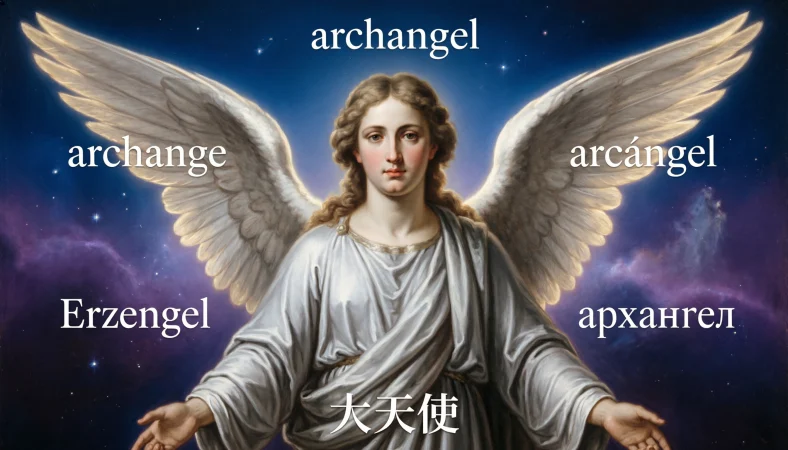
| 2 | Spanish | arcángel | ar-KAHN-hel | Vi al arcángel en la iglesia. | I saw the archangel in the church. |
| 3 | French | archange | ar-KAHNZH | J’ai vu l’archange dans l’église. | I saw the archangel in the church. |
| 4 | German | Erzengel | ERTS-eng-el | Ich sah den Erzengel im Bild. | I saw the archangel in the picture. |
| 5 | Italian | arcangelo | ar-KAHN-jeh-lo | Ho visto l’arcangelo nel dipinto. | I saw the archangel in the painting. |
| 6 | Portuguese | arcanjo | ar-KAHN-zhoo | Vi o arcanjo na pintura. | I saw the archangel in the painting. |
| 7 | Dutch | aartsengel | AARTS-eng-el | Ik zag de aartsengel in de kerk. | I saw the archangel in the church. |
| 8 | Afrikaans | aartsengel | AARTS-eng-el | Ek het die aartsengel in die kerk gesien. | I saw the archangel in the church. |
| 9 | Swedish | ärkeängel | AIR-keh-eng-el | Jag såg ärkeängeln i kyrkan. | I saw the archangel in the church. |
| 10 | Danish | ærkeengel | AIR-keh-eng-el | Jeg så ærkeenglen i kirken. | I saw the archangel in the church. |
| 11 | Norwegian | erkeengel | AIR-keh-eng-el | Jeg så erkeengelen i kirken. | I saw the archangel in the church. |
| 12 | Icelandic | erkiengill | AIR-kih-eng-itl | Ég sá erkiengilinn í kirkjunni. | I saw the archangel in the church. |
| 13 | Finnish | arkkienkeli | ARK-kee-en-keh-lee | Näin arkkienkelin kirkossa. | I saw the archangel in the church. |
| 14 | Estonian | peaingel | PEH-ah-ing-el | Ma nägin peainglit kirikus. | I saw the archangel in the church. |
| 15 | Latvian | erceņģelis | ER-tseh-nyeh-lis | Es redzēju erceņģeli baznīcā. | I saw the archangel in the church. |
| 16 | Lithuanian | arkangelas | ar-kan-GEH-las | Mačiau arkangelą bažnyčioje. | I saw the archangel in the church. |
| 17 | Polish | archanioł | ar-KHA-nyow | Widziałem archanioła w kościele. | I saw the archangel in the church. |
| 18 | Czech | archanděl | ar-KHAN-dyel | Viděl jsem archanděla v kostele. | I saw the archangel in the church. |
| 19 | Slovak | archanjel | ar-KHAN-yel | Videl som archanjela v kostole. | I saw the archangel in the church. |
| 20 | Slovenian | nadangel | nah-DAN-gel | V cerkvi sem videl nadangela. | I saw the archangel in the church. |
| 21 | Croatian | arkanđeo | ar-KAN-djeh-oh | Vidio sam arkanđela u crkvi. | I saw the archangel in the church. |
| 22 | Serbian | arhanđeo | ar-HAN-djeh-oh | Video sam arhanđela u crkvi. | I saw the archangel in the church. |
| 23 | Bosnian | arhanđeo | ar-HAN-djeh-oh | Vidio sam arhanđela u crkvi. | I saw the archangel in the church. |
| 24 | Macedonian | архангел | ar-KHAN-gel | Го видов архангелот во црквата. | I saw the archangel in the church. |
| 25 | Bulgarian | архангел | ar-KHAN-gel | Видях архангела в църквата. | I saw the archangel in the church. |
| 26 | Russian | архангел | ar-KHAN-gel | Я увидел архангела в церкви. | I saw the archangel in the church. |
| 27 | Ukrainian | архангел | ar-KHAN-hel | Я побачив архангела в церкві. | I saw the archangel in the church. |
| 28 | Belarusian | архангел | ar-KHAN-gel | Я ўбачыў архангела ў царкве. | I saw the archangel in the church. |
| 29 | Romanian | arhanghel | ar-han-GHEL | Am văzut arhanghelul în biserică. | I saw the archangel in the church. |
| 30 | Hungarian | arkangyal | AR-kan-dyal | Láttam az arkangyalt a templomban. | I saw the archangel in the church. |
| 31 | Greek | αρχάγγελος | ar-KHAN-jeh-los | Είδα τον αρχάγγελο στην εκκλησία. | I saw the archangel in the church. |
| 32 | Albanian | kryeengjëll | kree-ehn-GYEL | E pashë kryeengjëllin në kishë. | I saw the archangel in the church. |
| 33 | Armenian | հրեշտակապետ | hresh-ta-ka-PET | Ես տեսա հրեշտակապետին եկեղեցում։ | I saw the archangel in the church. |
| 34 | Georgian | მთავარანგელოზი | mtah-var-an-ge-LO-zi | მთავარანგელოზი ეკლესიაში ვნახე. | I saw the archangel in the church. |
| 35 | Turkish | başmelek | bash-MEH-lek | Başmeleği kilisede gördüm. | I saw the archangel in the church. |
| 36 | Azerbaijani | baş mələk | bash MEH-lek | Baş mələyi kilsədə gördüm. | I saw the archangel in the church. |
| 37 | Kazakh | бас періште | bas peh-RISH-teh | Мен шіркеуде бас періштені көрдім. | I saw the archangel in the church. |
| 38 | Uzbek | bosh farishta | bosh fa-RISH-ta | Men cherkovda bosh farishtani ko’rdim. | I saw the archangel in the church. |
| 39 | Kyrgyz | башкы периште | BASH-ky peh-RISH-teh | Мен чиркөөдөн башкы периштени көрдүм. | I saw the archangel in the church. |
| 40 | Tajik | фариштаи арш | fa-rish-TAH-yee arsh | Ман фариштаи аршро дар калисо дидам. | I saw the archangel in the church. |
| 41 | Arabic | رئيس الملائكة | ra-EES al-ma-laa-i-kah | رأيت رئيس الملائكة في الكنيسة. | I saw the archangel in the church. |
| 42 | Hebrew | מלאך עליון | ma-LAKH el-YON | ראיתי מלאך עליון בכנסייה. | I saw the archangel in the church. |
| 43 | Persian | فرشته مقرب | feh-RESH-teh mo-KHAR-rab | فرشته مقرب را در کلیسا دیدم. | I saw the archangel in the church. |
| 44 | Hindi | प्रधान देवदूत | pra-DHAAN de-va-DOOT | मैंने प्रधान देवदूत को चर्च में देखा। | I saw the archangel in the church. |
| 45 | Bengali | প্রধান দেবদূত | pro-DHAN de-bo-DUT | আমি গির্জায় প্রধান দেবদূতকে দেখেছি। | I saw the archangel in the church. |
| 46 | Urdu | مقرب فرشتہ | mo-KAR-rab fer-ISH-tah | میں نے کلیسا میں مقرب فرشتہ دیکھا۔ | I saw the archangel in the church. |
| 47 | Gujarati | મુખ્ય દેવદૂત | MUKH-ya de-va-DOOT | મેં ચર્ચમાં મુખ્ય દેવદૂતને જોયો. | I saw the archangel in the church. |
| 48 | Marathi | मुख्य देवदूत | MUKH-ya de-va-DOOT | मी चर्चमध्ये मुख्य देवदूत पाहिला. | I saw the archangel in the church. |
| 49 | Punjabi | ਮੁੱਖ ਦੇਵਦੂਤ | MUKH de-va-DOOT | ਮੈਂ ਚਰਚ ਵਿੱਚ ਮੁੱਖ ਦੇਵਦੂਤ ਨੂੰ ਦੇਖਿਆ। | I saw the archangel in the church. |
| 50 | Nepali | प्रधान दूत | pra-DHAN DOOT | मैले चर्चमा प्रधान दूतलाई देखें। | I saw the archangel in the church. |
| 51 | Tamil | தேவதூதர் | de-va-THOO-thar | நான் தேவாலயத்தில் தேவதூதரைப் பார்த்தேன். | I saw the archangel in the church. |
| 52 | Telugu | ఆర్చ్ఏంజిల్ | arch-AN-jil | నేను చర్చిలో ఆర్చ్ఏంజిల్ను చూశాను. | I saw the archangel in the church. |
| 53 | Kannada | ಆರ್ಚಾಂಗೆಲ್ | arch-AHN-gel | ನಾನು ಚರ್ಚಿನಲ್ಲಿ ಆರ್ಚಾಂಗೆಲ್ ಅನ್ನು ನೋಡಿದೆ. | I saw the archangel in the church. |
| 54 | Malayalam | പ്രധാനദൂതൻ | pra-DHA-na DOO-than | ഞാൻ പള്ളിയിൽ പ്രധാനദൂതനെ കണ്ടു. | I saw the archangel in the church. |
| 55 | Sinhala | අග්ර දේවදූතයා | ag-ra de-va-DOO-ta-ya | මම දේවස්ථානයේ අග්ර දේවදූතයා දුටුවෙමි. | I saw the archangel in the church. |
| 56 | Chinese (Simplified) | 大天使 | dà tiānshǐ | 我在教堂看到了大天使。 | I saw the archangel in the church. |
| 57 | Chinese (Traditional) | 大天使 | dà tiānshǐ | 我在教堂看到了大天使。 | I saw the archangel in the church. |
| 58 | Japanese | 大天使 | daitenshi | 教会で大天使を見ました。 | I saw the archangel in the church. |
| 59 | Korean | 대천사 | dae-cheon-sa | 나는 교회에서 대천사를 보았다. | I saw the archangel in the church. |
| 60 | Indonesian | malaikat agung | ma-LAI-kat A-gung | Saya melihat malaikat agung di gereja. | I saw the archangel in the church. |
| 61 | Malay | penghulu malaikat | peng-HOO-loo ma-LAI-kat | Saya melihat penghulu malaikat di gereja. | I saw the archangel in the church. |
| 62 | Filipino | arkanghel | ar-KANG-hel | Nakita ko ang arkanghel sa simbahan. | I saw the archangel in the church. |
| 63 | Thai | หัวหน้าทูตสวรรค์ | hua-na thoot sa-WAN | ฉันเห็นหัวหน้าทูตสวรรค์ในโบสถ์ | I saw the archangel in the church. |
| 64 | Vietnamese | tổng thiên thần | tong tee-en THAN | Tôi đã thấy tổng thiên thần trong nhà thờ. | I saw the archangel in the church. |
| 65 | Lao | ປະມຸບທູດສານ | pa-mup thoot-saan | ຂ້ອຍເຫັນປະມຸບທູດສານໃນໂບດ. | I saw the archangel in the church. |
| 66 | Korean | 대천사 | dae-cheon-sa | 교회에서 대천사를 보았습니다. | I saw the archangel in the church. |
| 67 | Latin | archangelus | ar-kan-GHEH-loos | Archangelum in ecclesia vidi. | I saw the archangel in the church. |
| 68 | Irish | archangel | ARK-ayn-gel | Chonaic mé an t-archangel sa séipéal. | I saw the archangel in the church. |
| 69 | Maltese | arkanġel | ar-KAN-jel | Rajt l-arkanġel fil-knisja. | I saw the archangel in the church. |
| 70 | Malagasy | arkanjely | ar-kan-JEH-lee | Nahita ny arkanjely tao am-piangonana aho. | I saw the archangel in the church. |
How to Say “Archangel” in Different Languages
Many European languages use a word that resembles the international form of archangel. Spanish uses arcángel, Italian uses arcangelo, Portuguese uses arcanjo, and Romanian uses arhanghel.
German takes a different form with Erzengel, while several Slavic languages use forms related to archangel. These similarities can make it easier for multilingual readers to recognize the word.
In several Asian languages, the translation is more descriptive. Chinese uses 大天使, literally expressing the idea of a “great” or “chief” angel. Japanese uses 大天使, while Korean uses 대천사.
South Asian languages may use terms built around words for “chief,” “principal,” “angel,” or “divine messenger.” Because religious vocabulary can vary between communities, more than one expression may sometimes be found.
Archangel in All Languages: Why Translations Differ
The English word combines the idea of an angel with the prefix “arch-,” which indicates a higher or chief rank. Some languages preserve that structure, while others express the same general idea through a phrase.
This is especially important when researching archangel in all languages for a tattoo, book title, website, character name, artwork, or religious study. A dictionary translation may be grammatically correct but less natural in a particular cultural or religious context.
For formal religious writing, it is therefore useful to check the terminology used by the specific tradition or community involved.
Archangel Translations in Europe
European languages offer some of the clearest examples of related vocabulary.
Romance languages such as Spanish, French, Italian, Portuguese, and Romanian have forms that are historically related or closely resemble one another. Germanic languages such as Dutch, Swedish, Danish, Norwegian, and Icelandic have their own established forms.
Slavic languages also show a recognizable family pattern. Russian, Ukrainian, Belarusian, Bulgarian, Macedonian, Polish, Czech, Slovak, Serbian, Croatian, and Bosnian all use terminology that identifies a high-ranking angel.
These similarities are useful for language learners because recognizing common word roots can make unfamiliar vocabulary easier to remember.
Archangel Translations in Asia
Asian languages demonstrate greater variation in how the concept is expressed.
Chinese uses 大天使, while Japanese uses 大天使 and Korean uses 대천사. In Indonesian, malaikat agung conveys the idea of a great or exalted angel. Malay uses penghulu malaikat, a phrase associated with a chief or leader among angels.
Indian languages can use terminology involving devaduta, doot, or related words for divine messengers or angels. Exact usage can depend on religious context, denomination, and regional vocabulary.
Archangel Around the World
The concept of an archangel appears in many religious and cultural contexts, but the vocabulary is not identical everywhere.
Pronunciation is another important difference. The English-style pronunciation shown in this article is only an easy guide for English speakers. It is not intended to replace native pronunciation.
For serious language learning, listening to native speakers and learning the sound system of the target language will produce a more accurate result.
Tips for Using Archangel Translations Correctly
- Keep accents and diacritics. Forms such as arcángel should not automatically be stripped of their accents.
- Respect native spelling. Do not replace a native-script term with an English spelling when the original script is important.
- Treat pronunciation guides as approximations. English spelling cannot perfectly reproduce every foreign-language sound.
- Check regional usage. A term may be familiar in one country but less common in another.
- Use the correct grammatical form. Nouns can change depending on case, gender, number, or sentence structure.
- For religious publications, verify terminology. A denomination or religious community may prefer a particular expression.
Frequently Asked Questions About Archangel in Different Languages
1. What is “archangel” in Spanish?
The Spanish word for archangel is arcángel. It is commonly used when referring to a high-ranking angel, such as an archangel in religious writing.
2. How do you say archangel in French?
In French, archangel is archange. The word is used in religious and literary contexts.
3. What is archangel in German?
The German term is Erzengel. It is the standard German word used for an archangel.
4. How do you say archangel in Japanese?
In Japanese, archangel is commonly expressed as 大天使 (daitenshi). The term combines the idea of “great” with “angel.”
5. What is the most common translation of archangel in different languages?
There is no single translation that is most common worldwide. Many European languages have closely related forms, while other languages use expressions meaning a chief, great, or principal angel. The appropriate term depends on the language and context.
Conclusion
Learning how to say archangel in different languages is a useful way to explore vocabulary, religion, culture, and the connections between languages.
Across these 70 languages, the concept appears as single words, compound words, and descriptive expressions.
For everyday language learning, the native phrase and pronunciation guide provide a convenient starting point.
For religious, academic, or professional use, however, context matters because terminology can vary between traditions and regions.

I am Jimmy Michael, a language enthusiast and writer passionate about exploring different languages, words, and cultures. I create simple, useful content that helps readers understand languages better and discover new ways to communicate globally.