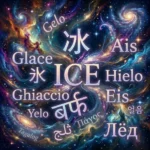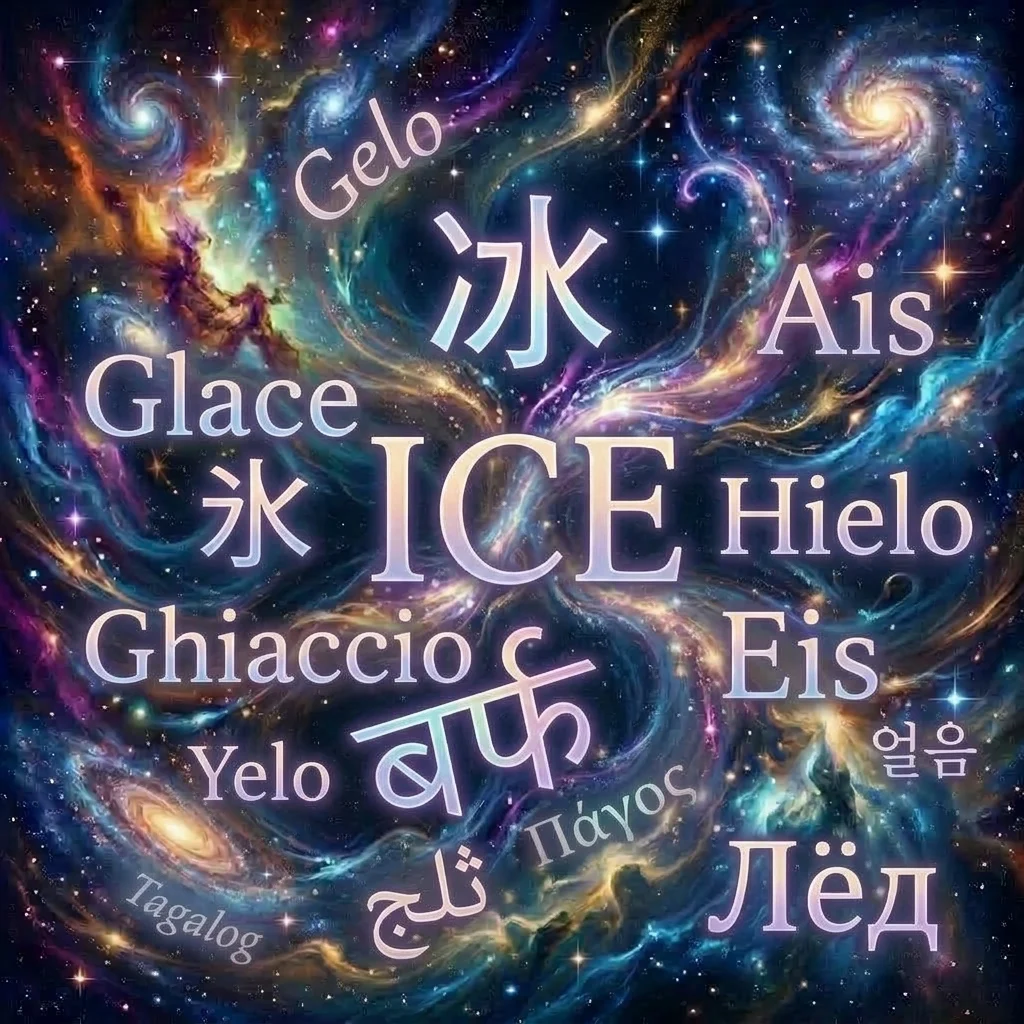
Have you ever wondered how to say ice in different languages?
Whether you are learning a new language, traveling, studying international vocabulary, or simply curious about words from around the world, “ice” is a simple and useful word to know.
Ice is a familiar part of everyday life. We use it in drinks, desserts, food preservation, winter activities, and countless cultural traditions.
Yet the word for ice can sound very different from one language to another.
In this guide, you will discover 70 ways to say ice in different languages, including the native word, an easy English pronunciation, a short example sentence, and its English meaning.
This makes the list useful for language learners, travelers, students, and anyone searching for ice in all languages.
Ice in Different Languages: 70 Translations
The following table provides ice translations in 70 languages. The example sentences are kept short and practical so you can see how each word is naturally used.
| # | Language | Native Phrase | Easy English Pronunciation | Example Sentence | English Meaning |
|---|---|---|---|---|---|
| 1 | English | Ice | eyes | The ice is cold. | The ice is cold. |
| 2 | Spanish | Hielo | YEH-loh | El hielo está frío. | The ice is cold. |
| 3 | French | Glace | glahs | La glace est froide. | The ice is cold. |
| 4 | German | Eis | eyes | Das Eis ist kalt. | The ice is cold. |
| 5 | Italian | Ghiaccio | GYAH-choh | Il ghiaccio è freddo. | The ice is cold. |
| 6 | Portuguese | Gelo | ZHEH-loh | O gelo está frio. | The ice is cold. |
| 7 | Dutch | IJs | eyes | Het ijs is koud. | The ice is cold. |
| 8 | Swedish | Is | ees | Isen är kall. | The ice is cold. |
| 9 | Norwegian | Is | ees | Isen er kald. | The ice is cold. |
| 10 | Danish | Is | ees | Isen er kold. | The ice is cold. |
| 11 | Finnish | Jää | yah | Jää on kylmää. | The ice is cold. |
| 12 | Icelandic | Ís | ees | Ísinn er kaldur. | The ice is cold. |
| 13 | Irish | Oighear | EE-yur | Tá an t-oighear fuar. | The ice is cold. |
| 14 | Welsh | Iâ | yah | Mae’r iâ yn oer. | The ice is cold. |
| 15 | Scottish Gaelic | Deigh | jay | Tha an deigh fuar. | The ice is cold. |
| 16 | Polish | Lód | lood | Lód jest zimny. | The ice is cold. |
| 17 | Czech | Led | let | Led je studený. | The ice is cold. |
| 18 | Slovak | Ľad | lyat | Ľad je studený. | The ice is cold. |
| 19 | Slovenian | Led | let | Led je hladen. | The ice is cold. |
| 20 | Croatian | Led | let | Led je hladan. | The ice is cold. |
| 21 | Serbian | Led | let | Led je hladan. | The ice is cold. |
| 22 | Bosnian | Led | let | Led je hladan. | The ice is cold. |
| 23 | Bulgarian | Лед | let | Ледът е студен. | The ice is cold. |
| 24 | Macedonian | Мраз | mraz | Мразот е студен. | The ice is cold. |
| 25 | Russian | Лёд | lyot | Лёд холодный. | The ice is cold. |
| 26 | Ukrainian | Лід | leed | Лід холодний. | The ice is cold. |
| 27 | Belarusian | Лёд | lyot | Лёд халодны. | The ice is cold. |
| 28 | Lithuanian | Ledas | LEH-dahs | Ledas yra šaltas. | The ice is cold. |
| 29 | Latvian | Ledus | LEH-doos | Ledus ir auksts. | The ice is cold. |
| 30 | Estonian | Jää | yah | Jää on külm. | The ice is cold. |
| 31 | Romanian | Gheață | GYATS-uh | Gheața este rece. | The ice is cold. |
| 32 | Hungarian | Jég | yayg | A jég hideg. | The ice is cold. |
| 33 | Greek | Πάγος | PAH-ghos | Ο πάγος είναι κρύος. | The ice is cold. |
| 34 | Albanian | Akull | AH-kool | Akulli është i ftohtë. | The ice is cold. |
| 35 | Turkish | Buz | booz | Buz soğuk. | The ice is cold. |
| 36 | Maltese | Silġ | silj | Is-silġ huwa kiesaħ. | The ice is cold. |
| 37 | Arabic | جليد | ja-LEED | الجليد بارد. | The ice is cold. |
| 38 | Hebrew | קרח | KEH-rakh | הקרח קר. | The ice is cold. |
| 39 | Persian | یخ | yakh | یخ سرد است. | The ice is cold. |
| 40 | Urdu | برف | barf | برف ٹھنڈی ہے۔ | The ice is cold. |
| 41 | Hindi | बर्फ़ | barf | बर्फ़ ठंडी है। | The ice is cold. |
| 42 | Bengali | বরফ | bo-rof | বরফ ঠান্ডা। | The ice is cold. |
| 43 | Punjabi | ਬਰਫ਼ | barf | ਬਰਫ਼ ਠੰਡੀ ਹੈ। | The ice is cold. |
| 44 | Gujarati | બરફ | ba-raf | બરફ ઠંડી છે. | The ice is cold. |
| 45 | Marathi | बर्फ | barf | बर्फ थंड आहे. | The ice is cold. |
| 46 | Nepali | बरफ | ba-raf | बरफ चिसो छ। | The ice is cold. |
| 47 | Sinhala | අයිස් | ais | අයිස් සීතලයි. | The ice is cold. |
| 48 | Tamil | பனி | pa-nee | பனி குளிராக இருக்கிறது. | The ice is cold. |
| 49 | Telugu | మంచు | man-choo | మంచు చల్లగా ఉంది. | The ice is cold. |
| 50 | Kannada | ಮಂಜುಗಡ್ಡೆ | man-ju-gad-de | ಮಂಜುಗಡ್ಡೆ ತಂಪಾಗಿದೆ. | The ice is cold. |
| 51 | Malayalam | മഞ്ഞ് | man-j | മഞ്ഞ് തണുപ്പാണ്. | The ice is cold. |
| 52 | Chinese | 冰 | bīng | 冰很冷。 | The ice is very cold. |
| 53 | Japanese | 氷 | kōri | 氷は冷たいです。 | The ice is cold. |
| 54 | Korean | 얼음 | eo-reum | 얼음이 차가워요. | The ice is cold. |
| 55 | Vietnamese | Đá | dah | Đá rất lạnh. | The ice is very cold. |
| 56 | Thai | น้ำแข็ง | náam-khǎeng | น้ำแข็งเย็นมาก | The ice is very cold. |
| 57 | Indonesian | Es | ess | Esnya dingin. | The ice is cold. |
| 58 | Malay | Ais | eyes | Ais itu sejuk. | The ice is cold. |
| 59 | Filipino | Yelo | YEH-loh | Malamig ang yelo. | The ice is cold. |
| 60 | Javanese | Ès | ess | Ès kuwi adhem. | The ice is cold. |
| 61 | Mongolian | Мөс | mohs | Мөс хүйтэн байна. | The ice is cold. |
| 62 | Georgian | ყინული | q’i-noo-lee | ყინული ცივია. | The ice is cold. |
| 63 | Armenian | Սառույց | sa-ROO-yoots | Սառույցը սառն է։ | The ice is cold. |
| 64 | Azerbaijani | Buz | booz | Buz soyuqdur. | The ice is cold. |
| 65 | Kazakh | Мұз | mooz | Мұз суық. | The ice is cold. |
| 66 | Uzbek | Muz | mooz | Muz sovuq. | The ice is cold. |
| 67 | Swahili | Barafu | ba-RAH-foo | Barafu ni baridi. | The ice is cold. |
| 68 | Afrikaans | Ys | ays | Die ys is koud. | The ice is cold. |
| 69 | Zulu | Iqhwa | ee-KHWA | Iqhwa liyabanda. | The ice is cold. |
| 70 | Haitian Creole | Glas | glahs | Glas la frèt. | The ice is cold. |
What Does “Ice” Mean?
Ice is the solid form of water. It forms when water reaches a temperature low enough to freeze.
In everyday language, “ice” can refer to frozen water in many forms, including:
- Ice cubes
- Crushed ice
- Shaved ice
- Natural ice
- Sea ice
- Glacial ice
- Frozen surfaces
- Ice used in drinks
The basic meaning is similar across languages, although individual cultures may have different words for particular types of ice.
How to Say Ice in Different Languages
If you are searching for how to say ice in different languages, some of the easiest translations to remember are short words.
For example:
- Spanish: hielo
- French: glace
- German: Eis
- Italian: ghiaccio
- Portuguese: gelo
- Turkish: buz
- Arabic: جليد
- Persian: یخ
- Chinese: 冰
- Japanese: 氷
- Korean: 얼음
- Vietnamese: đá
- Indonesian: es
- Swahili: barafu
Many of these words are short enough to learn quickly, making them useful when traveling or practicing everyday vocabulary.
Ice in All Languages: Interesting Word Patterns
Looking at ice in all languages reveals some interesting similarities.
Several European languages have words that are closely related historically. For example, Swedish, Norwegian, and Danish use forms of is, while Polish, Czech, Slovenian, Croatian, and Serbian use closely related forms such as lód or led.
Other languages have completely different words. Japanese uses 氷 (kōri), Chinese uses 冰 (bīng), and Korean uses 얼음 (eoreum).
This variety shows how everyday vocabulary can differ dramatically even when people are describing the same familiar object.
Ice Around the World
Ice has a role in everyday life across the globe.
In hot climates, ice is commonly used to cool drinks and food. In colder regions, naturally occurring ice has historically played an important role in transportation, storage, winter sports, and seasonal traditions.
Ice is also central to many popular foods and drinks. From iced coffee and cold beverages to shaved-ice desserts, frozen treats, and cocktails, ice appears in cuisines across continents.
So, when exploring ice around the world, you are not just learning translations. You are also discovering how different cultures interact with one of nature’s simplest forms of water.
Ice vs. Snow: What Is the Difference?
Ice and snow are both frozen forms of water, but they are not the same thing.
Ice is generally solid water that forms when liquid water freezes. It can appear as a hard, transparent or cloudy solid.
Snow forms when water vapor freezes into ice crystals in clouds and falls to the ground.
Some languages use related vocabulary for ice and snow, while others have clearly separate terms. This distinction is important when learning vocabulary because translating “ice” as “snow” can change the meaning entirely.
Common Types of Ice
The English word “ice” covers several forms and uses.
Ice Cubes
Ice cubes are small pieces of frozen water commonly added to beverages.
Crushed Ice
Crushed ice consists of smaller pieces of ice and is often used in cold drinks and desserts.
Shaved Ice
Shaved ice is made by finely shaving a block of ice. It is popular in many dessert traditions.
Natural Ice
Natural ice forms outdoors in cold conditions, including frozen lakes and rivers.
Glacial Ice
Glacial ice forms from accumulated snow that has been compressed over long periods.
Understanding these distinctions can help when looking for more specific ice translations in another language.
Why Ice Translations Can Vary
A basic word such as “ice” may appear straightforward, but translation can depend on context.
For example, a language may use one general word for frozen water while having separate expressions for:
- Ice cubes
- Sea ice
- Glacial ice
- Black ice
- Frozen water
- Ice on a lake
- Shaved ice
Regional vocabulary can also differ. A word that is standard in one country may be less common in another.
For everyday language learning, however, the basic word for “ice” is usually the best place to begin.
How to Remember the Word for Ice
A simple way to learn vocabulary is to connect the new word with something familiar.
Try these techniques:
- Use the word in a sentence. Short sentences are easier to remember.
- Connect it with food. Think about ice in a cold drink.
- Practice pronunciation aloud. Repetition helps build familiarity.
- Learn the native spelling. This is especially useful for languages using non-Latin scripts.
- Compare related languages. Similar words can help you recognize patterns.
- Use the word while traveling. Real-life situations make vocabulary memorable.
Learning one useful word at a time can gradually build a much larger vocabulary.
Frequently Asked Questions About Ice in Different Languages
1. How do you say ice in different languages?
“Ice” has many different translations. Examples include hielo in Spanish, glace in French, Eis in German, ghiaccio in Italian, buz in Turkish, 冰 in Chinese, 氷 in Japanese, and barafu in Swahili.
2. What is ice called in Spanish?
Ice is called hielo in Spanish. A simple example is “El hielo está frío,” which means “The ice is cold.”
3. What is the word for ice in Japanese?
The Japanese word for ice is 氷, pronounced kōri. It is commonly used when referring to frozen water or ice.
4. What is ice called in Chinese?
In Chinese, ice is 冰, pronounced bīng. For example, 冰很冷 means “The ice is very cold.”
5. Why are the words for ice different in every language?
Languages developed independently and borrowed vocabulary from different sources throughout history. As a result, the same everyday object can have completely different names. Regional culture and different types of ice can also influence vocabulary.
Conclusion
Learning ice in different languages is a simple way to expand your vocabulary while discovering how languages describe everyday things. From hielo in Spanish and Eis in German to 氷 in Japanese and 冰 in Chinese, the word changes significantly from one language to another.
This list of 70 ice translations can help language learners, travelers, students, and anyone interested in ice around the world understand and use this common word with confidence.
Start with a few languages, practice the pronunciation, and use each word in a short sentence. Everyday vocabulary becomes much easier to remember when you connect it with real situations.

I am Danny James, an Administrator at LingoHives, passionate about languages, communication, and cultural diversity. I enjoy helping people discover languages, understand words, and connect with different cultures through simple, useful, and engaging content.