Food is one of the easiest ways to connect with different cultures, and appetizers are often the perfect place to start.
Whether you are reading an international menu, traveling abroad, learning a new language, or simply curious about food vocabulary, knowing how to say appetizer in different languages can make the experience more enjoyable.
The English word “appetizer” generally refers to a small dish or bite served before the main course.
Depending on the country, however, people may use words such as “starter,” “hors d’oeuvre,” “small dish,” or a culturally specific term.
In this guide, you will discover appetizer translations in 70 languages, along with simple pronunciations and practical example sentences. This makes it easy to understand how the idea of an appetizer is expressed around the world.
Appetizer in Different Languages
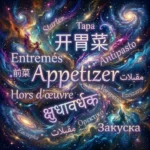
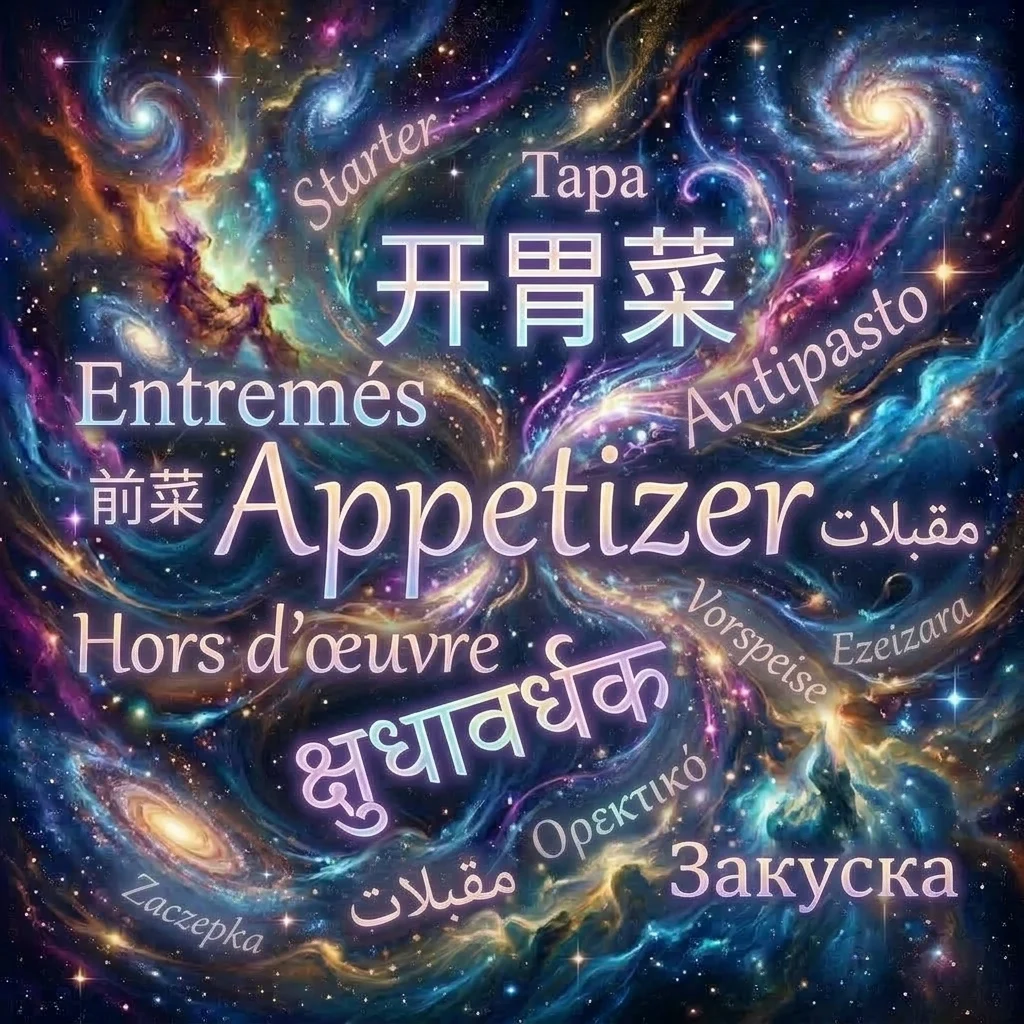
The table below gives 70 ways to express “appetizer” or the closest commonly used equivalent in each language. Because food terminology can vary by region, some languages use a word that more closely means “starter” or “small dish.”
| # | Language | Native Phrase | Easy English Pronunciation | Example Sentence | English Meaning |
|---|---|---|---|---|---|
| 1 | English | Appetizer | AP-uh-ty-zur | The appetizer was delicious. | The appetizer was delicious. |
| 2 | Spanish | Aperitivo | ah-peh-ree-TEE-voh | El aperitivo estaba delicioso. | The appetizer was delicious. |
| 3 | French | Entrée | ahn-TRAY | L’entrée était délicieuse. | The appetizer was delicious. |
| 4 | German | Vorspeise | FOR-shpy-zuh | Die Vorspeise war lecker. | The appetizer was tasty. |
| 5 | Italian | Antipasto | an-tee-PAH-stoh | L’antipasto era delizioso. | The appetizer was delicious. |
| 6 | Portuguese | Aperitivo | ah-peh-ree-TEE-voh | O aperitivo estava delicioso. | The appetizer was delicious. |
| 7 | Dutch | Voorgerecht | VOHR-khuh-rekht | Het voorgerecht was heerlijk. | The appetizer was delicious. |
| 8 | Swedish | Förrätt | FUR-ret | Förrätten var god. | The appetizer was good. |
| 9 | Norwegian | Forrett | FOR-ret | Forretten var deilig. | The appetizer was delicious. |
| 10 | Danish | Forret | FOR-ret | Forretten var lækker. | The appetizer was delicious. |
| 11 | Finnish | Alkupala | AL-koo-pah-lah | Alkupala oli herkullinen. | The appetizer was delicious. |
| 12 | Icelandic | Forréttur | FOR-ret-tur | Forrétturinn var góður. | The appetizer was good. |
| 13 | Irish | Tosaitheoir | TOSH-uh-hor | Bhí an tosaitheoir blasta. | The appetizer was tasty. |
| 14 | Scottish Gaelic | Blasad | BLAH-sut | Bha am blasad blasta. | The appetizer was tasty. |
| 15 | Welsh | Cwrs cyntaf | KOORS KAN-taavt | Roedd y cwrs cyntaf yn flasus. | The first course was tasty. |
| 16 | Polish | Przystawka | pshih-STAV-kah | Przystawka była pyszna. | The appetizer was delicious. |
| 17 | Czech | Předkrm | PRET-krm | Předkrm byl výborný. | The appetizer was excellent. |
| 18 | Slovak | Predjedlo | PRET-yed-loh | Predjedlo bolo chutné. | The appetizer was tasty. |
| 19 | Slovenian | Predjed | PRET-yed | Predjed je bil okusen. | The appetizer was tasty. |
| 20 | Croatian | Predjelo | PRET-yeh-loh | Predjelo je bilo ukusno. | The appetizer was tasty. |
| 21 | Serbian | Предјело | PRET-yeh-loh | Предјело је било укусно. | The appetizer was tasty. |
| 22 | Bosnian | Predjelo | PRET-yeh-loh | Predjelo je bilo ukusno. | The appetizer was tasty. |
| 23 | Bulgarian | Предястие | preh-DYAS-tee-eh | Предястието беше вкусно. | The appetizer was tasty. |
| 24 | Macedonian | Предјадење | preh-DYA-deh-nyeh | Предјадењето беше вкусно. | The appetizer was tasty. |
| 25 | Russian | Закуска | zah-KOOS-kah | Закуска была вкусной. | The appetizer was tasty. |
| 26 | Ukrainian | Закуска | zah-KOOS-kah | Закуска була смачна. | The appetizer was tasty. |
| 27 | Belarusian | Закуска | zah-KOOS-kah | Закуска была смачная. | The appetizer was tasty. |
| 28 | Lithuanian | Užkandis | oozh-KAN-dis | Užkandis buvo skanus. | The appetizer was tasty. |
| 29 | Latvian | Uzkoda | ooze-KOH-dah | Uzkoda bija garšīga. | The appetizer was tasty. |
| 30 | Estonian | Eelroog | AY-lohkh | Eelroog oli maitsev. | The appetizer was tasty. |
| 31 | Romanian | Aperitiv | ah-peh-ree-TEEV | Aperitivul a fost delicios. | The appetizer was delicious. |
| 32 | Hungarian | Előétel | EH-loh-ay-tel | Az előétel finom volt. | The appetizer was delicious. |
| 33 | Greek | Ορεκτικό | oh-rek-tee-KOH | Το ορεκτικό ήταν νόστιμο. | The appetizer was delicious. |
| 34 | Albanian | Meze | MEH-zeh | Mezeja ishte e shijshme. | The appetizer was delicious. |
| 35 | Turkish | Meze | MEH-zeh | Meze çok lezzetliydi. | The appetizer was very tasty. |
| 36 | Maltese | Appetizer | AP-uh-ty-zur | L-appetizer kien tajjeb. | The appetizer was good. |
| 37 | Arabic | مقبلات | muq-BI-lat | كانت المقبلات لذيذة. | The appetizers were delicious. |
| 38 | Hebrew | מתאבן | meh-TAH-ben | המתאבן היה טעים. | The appetizer was tasty. |
| 39 | Persian | پیشغذا | pish-GHAH | پیشغذا خوشمزه بود. | The appetizer was delicious. |
| 40 | Urdu | لوازماتِ طعام / بھوک بڑھانے والی غذا | law-AH-zimaat-e-ta’aam / bhook barhane wali ghiza | بھوک بڑھانے والی غذا مزیدار تھی۔ | The appetizer was delicious. |
| 41 | Hindi | क्षुधावर्धक | kshoo-dhaa-VAR-dhak | क्षुधावर्धक बहुत स्वादिष्ट था। | The appetizer was very tasty. |
| 42 | Bengali | মুখরোচক | moo-kho-RO-chok | মুখরোচক খাবারটি সুস্বাদু ছিল। | The appetizer was delicious. |
| 43 | Punjabi | ਭੁੱਖ ਵਧਾਉਣ ਵਾਲਾ ਖਾਣਾ | bhukk vadhaa-un vaala khaana | ਭੁੱਖ ਵਧਾਉਣ ਵਾਲਾ ਖਾਣਾ ਸੁਆਦਲਾ ਸੀ। | The appetizer was tasty. |
| 44 | Gujarati | ભૂખ વધારનાર નાસ્તો | bhookh vadhaar-naar naasto | ભૂખ વધારનાર નાસ્તો સ્વાદિષ્ટ હતો. | The appetizer was delicious. |
| 45 | Marathi | भूक वाढवणारा पदार्थ | bhook vaadh-vanara padarth | भूक वाढवणारा पदार्थ चविष्ट होता. | The appetizer was tasty. |
| 46 | Nepali | अग्राहार | ag-ra-HAAR | अग्राहार स्वादिष्ट थियो। | The appetizer was delicious. |
| 47 | Sinhala | පෙර ආහාරය | per aaha-raya | පෙර ආහාරය රසවත් විය. | The appetizer was delicious. |
| 48 | Tamil | பசியைத் தூண்டும் உணவு | pasiyai thoondum unavu | பசியைத் தூண்டும் உணவு சுவையாக இருந்தது. | The appetizer was tasty. |
| 49 | Telugu | ఆకలి పెంచే ఆహారం | aakali penche aahaaram | ఆకలి పెంచే ఆహారం రుచిగా ఉంది. | The appetizer was tasty. |
| 50 | Kannada | ಹಸಿವು ಹೆಚ್ಚಿಸುವ ಆಹಾರ | hasivu hechchisuva aahaara | ಹಸಿವು ಹೆಚ್ಚಿಸುವ ಆಹಾರ ರುಚಿಯಾಗಿತ್ತು. | The appetizer was tasty. |
| 51 | Malayalam | വിശപ്പുണ്ടാക്കുന്ന ഭക്ഷണം | vishappundaakkunna bhakshanam | വിശപ്പുണ്ടാക്കുന്ന ഭക്ഷണം രുചികരമായിരുന്നു. | The appetizer was delicious. |
| 52 | Chinese | 开胃菜 | kāi wèi cài | 开胃菜很好吃。 | The appetizer was delicious. |
| 53 | Japanese | 前菜 | zensai | 前菜はおいしかったです。 | The appetizer was delicious. |
| 54 | Korean | 전채 | jeonchae | 전채가 맛있었어요. | The appetizer was delicious. |
| 55 | Vietnamese | Món khai vị | mon khai vee | Món khai vị rất ngon. | The appetizer was very delicious. |
| 56 | Thai | อาหารเรียกน้ำย่อย | aa-hǎan rîak náam-yôi | อาหารเรียกน้ำย่อยอร่อยมาก | The appetizer was very delicious. |
| 57 | Indonesian | Hidangan pembuka | hee-DAH-ngan pem-BOO-kah | Hidangan pembukanya lezat. | The appetizer was delicious. |
| 58 | Malay | Hidangan pembuka | hee-DAH-ngan pem-BOO-kah | Hidangan pembuka itu sedap. | The appetizer was tasty. |
| 59 | Filipino | Pampagana | pam-pa-GA-na | Masarap ang pampagana. | The appetizer is delicious. |
| 60 | Javanese | Panganan pambuka | pang-AH-nan pam-BOO-kah | Panganan pambuka kuwi enak. | The appetizer is delicious. |
| 61 | Mongolian | Зууш | zoosh | Зууш амттай байсан. | The appetizer was tasty. |
| 62 | Georgian | აპეტაიზერი | ah-peh-TAY-zeh-ree | აპეტაიზერი გემრიელი იყო. | The appetizer was delicious. |
| 63 | Armenian | Նախուտեստ | nah-khoo-TEST | Նախուտեստը համեղ էր։ | The appetizer was tasty. |
| 64 | Azerbaijani | Qəlyanaltı | geh-lyah-nal-tuh | Qəlyanaltı dadlı idi. | The appetizer was tasty. |
| 65 | Kazakh | Тіскебасар | tisk-eh-bah-SAR | Тіскебасар дәмді болды. | The appetizer was tasty. |
| 66 | Uzbek | Gazak | gah-ZAHK | Gazak juda mazali edi. | The appetizer was very tasty. |
| 67 | Swahili | Kitafunwa | kee-tah-FOON-wah | Kitafunwa kilikuwa kitamu. | The appetizer was tasty. |
| 68 | Afrikaans | Voorgereg | FOOR-khuh-rekh | Die voorgereg was heerlik. | The appetizer was delicious. |
| 69 | Zulu | Isiqalo sokudla | ee-see-QA-loh soh-KOOD-lah | Isiqalo sokudla sasimnandi. | The appetizer was delicious. |
| 70 | Haitian Creole | Antre | AHN-tray | Antre a te bon gou. | The appetizer was tasty. |
What Does “Appetizer” Mean?
An appetizer is a relatively small portion of food served before the main course. Its purpose is often to stimulate the appetite and introduce the flavors of a meal.
Common appetizers include:
- Bruschetta
- Spring rolls
- Soup
- Salads
- Dips
- Stuffed vegetables
- Small seafood dishes
- Cheese and meat plates
- Fried snacks
- Vegetable fritters
The exact meaning can change depending on culinary tradition. In some countries, the first course may be more substantial than what English speakers normally consider an appetizer.
Appetizer vs. Starter: Are They the Same?
In everyday restaurant English, appetizer and starter often refer to the same general idea: food served before the main course.
“Appetizer” is particularly common in American English, while “starter” is widely used in British English and many other English-speaking settings.
For example:
- American English: “Would you like an appetizer?”
- British English: “Would you like a starter?”
Both terms usually describe a small first course, although restaurant menus can use them differently.
How to Say Appetizer in Different Languages
When learning how to say appetizer in different languages, it is important to remember that direct word-for-word translation does not always produce the most natural expression.
For example, Italian commonly uses antipasto, which refers to food served before a meal. French uses entrée, a term that has a different meaning from “entrée” in modern American English, where the word commonly refers to the main course.
Similarly, languages such as Turkish and Albanian commonly use meze, referring to small dishes traditionally served as part of a meal or alongside drinks.
This is why learning the cultural context behind appetizer translations can be just as useful as learning the vocabulary itself.
Appetizer in All Languages: Common Patterns
Looking at appetizer vocabulary across 70 languages reveals several interesting patterns.
Words Related to Starting a Meal
Many languages use terms that literally or conceptually describe the first food served.
Examples include:
- German: Vorspeise, meaning a food served before the main course
- Dutch: Voorgerecht, referring to the first course
- Swedish: Förrätt, meaning a preliminary course
- Indonesian: Hidangan pembuka, meaning an opening dish
- Malay: Hidangan pembuka, with the same basic meaning
Words Connected With Appetite
Some languages describe an appetizer according to its function: something that stimulates or increases appetite.
This idea appears particularly clearly in several South Asian languages, where longer descriptive expressions can be used instead of a single everyday equivalent.
International Culinary Words
Some food terms cross language boundaries. Antipasto, meze, and similar culinary expressions are recognized in many international food contexts.
These terms may describe not only one specific appetizer but also a style of small dishes.
Appetizer Around the World
The concept of an appetizer is found in many different culinary traditions, but the foods themselves can be very different.
In Mediterranean cuisines, small plates, olives, cheeses, vegetables, and cured meats are common before or alongside a meal. In East Asia, restaurants may serve small preliminary dishes that introduce flavors and textures before the main dishes arrive.
In South Asia, snacks and small savory foods can sometimes serve a role similar to appetizers, particularly when meals are served in several courses.
Across Africa, Europe, the Middle East, and the Americas, the first course can range from simple snacks to carefully prepared restaurant dishes.
Therefore, appetizer around the world is not one fixed type of food. It is a broad culinary concept expressed differently from culture to culture.
Why Appetizer Translations Can Differ
There is not always a perfect one-word equivalent for “appetizer.”
Translation depends on:
- Local food culture – Some cuisines traditionally serve several small dishes rather than one defined appetizer.
- Restaurant terminology – Menus may use specialized culinary terms.
- Regional language – A word used in one country may sound unusual in another.
- Historical influence – Culinary vocabulary can be borrowed from neighboring languages.
- Context – “Appetizer” may refer to a snack, first course, or small plate depending on the situation.
For this reason, the translations in this guide focus on natural culinary equivalents rather than forcing an identical English structure into every language.
How to Use Appetizer Vocabulary in Real Life
If you are traveling, ordering food, or learning a language, you do not always need to memorize all 70 translations.
Start with the language you are most likely to use. Learn the native word, practice its pronunciation, and then use it in a short sentence.
For example, you might learn how to ask for an appetizer on a restaurant menu or recognize the word when reading a menu abroad.
Learning the word together with a real-life sentence is especially useful because it shows how the expression functions naturally.
Quick Guide to Appetizer Vocabulary
Here are some of the most recognizable terms from the list:
- Antipasto — Italian
- Aperitivo — Spanish and Portuguese
- Entrée — French
- Vorspeise — German
- Meze — Turkish and Albanian
- مقبلات — Arabic
- מתאבן — Hebrew
- 前菜 — Japanese
- 开胃菜 — Chinese
- 전채 — Korean
- Món khai vị — Vietnamese
- Hidangan pembuka — Indonesian and Malay
- Pampagana — Filipino
These terms are useful starting points for anyone interested in food vocabulary, international travel, translation, or language learning.
Frequently Asked Questions About Appetizer in Different Languages
1. What is the word for appetizer in different languages?
There are many different words for appetizer depending on the language and culinary culture. Examples include antipasto in Italian, Vorspeise in German, entrée in French, meze in Turkish, 前菜 in Japanese, and 开胃菜 in Chinese.
2. How do you say appetizer in Spanish?
In Spanish, “appetizer” can commonly be translated as aperitivo. Depending on the country and context, other food terms may also be used for small dishes served before or as part of a meal.
3. What is appetizer called in French?
In French, a common culinary term for an appetizer or first course is entrée. The meaning should be understood from the French culinary context because “entrée” has a different common meaning in American English.
4. What is the difference between an appetizer and a starter?
They generally refer to the same part of a meal: a small dish served before the main course. “Appetizer” is especially common in American English, while “starter” is common in British English and several other varieties of English.
5. Why are appetizer translations different across languages?
Languages reflect their own food traditions. Some cultures have a specific word for a first course, while others use a broader word for snacks, small dishes, or foods that stimulate appetite. As a result, the most natural translation depends on both language and culinary context.
Conclusion
Learning appetizer in different languages offers more than a simple vocabulary lesson. It provides a small window into how different cultures organize meals, describe food, and welcome diners to the table.
From Italian antipasto and Turkish meze to Japanese 前菜 and Chinese 开胃菜, the idea of an appetizer appears in many forms around the world.
Whether you are studying languages, preparing for international travel, reading foreign menus, or exploring food culture, these 70 appetizer translations give you a practical starting point for understanding how this popular culinary concept is expressed worldwide.

I am Jimmy Michael, a language enthusiast and writer passionate about exploring different languages, words, and cultures. I create simple, useful content that helps readers understand languages better and discover new ways to communicate globally.