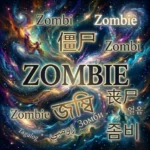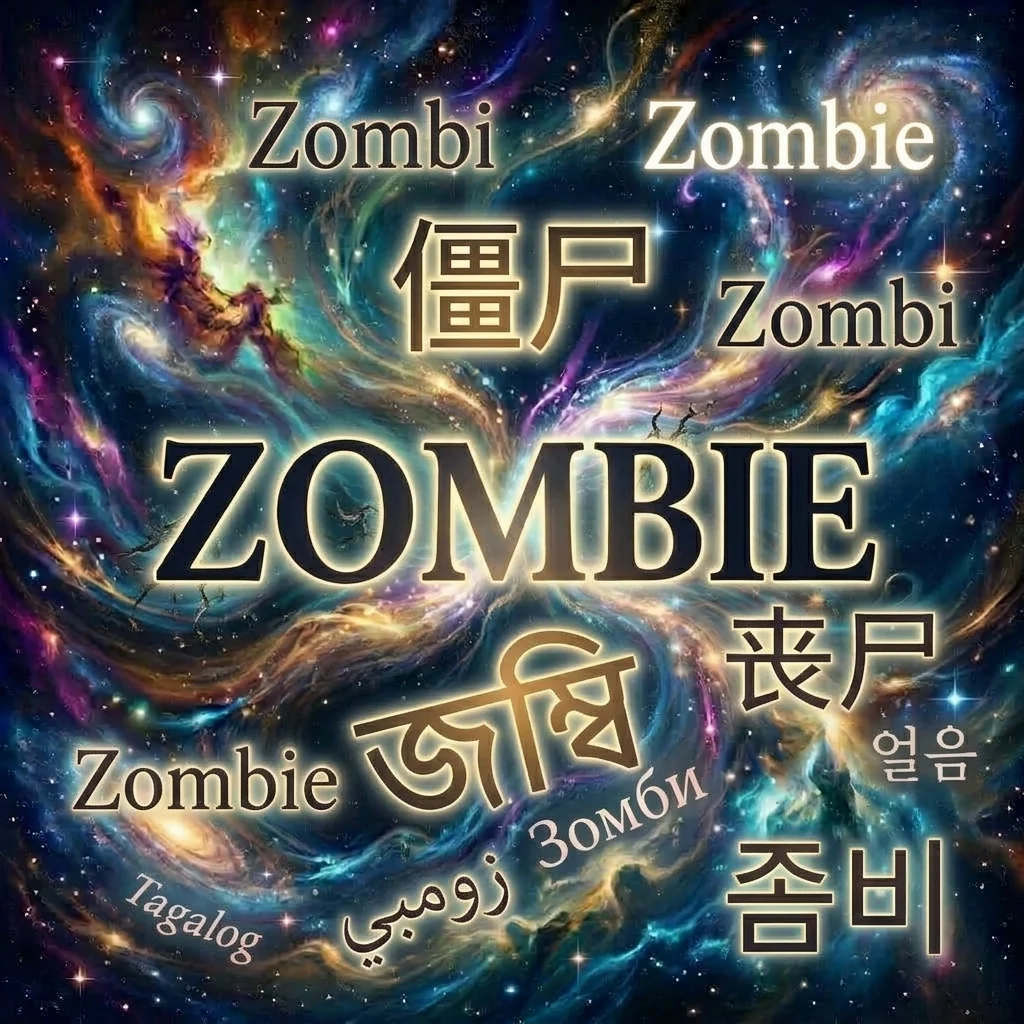
The word “zombie” is recognized in movies, books, video games, folklore, and Halloween stories around the world.
But how do you say zombie in Spanish, French, Japanese, Arabic, or other languages?
In many languages, the word is borrowed from English or adapted to fit local spelling and pronunciation.
Other languages use traditional terms associated with the undead, reanimated corpses, or supernatural beings. The exact word can vary depending on cultural context.
This guide explores zombie in different languages, including native spellings, easy English pronunciations, and short example sentences with English meanings.
Whether you are learning vocabulary, writing a story, translating a game, or exploring zombie translations for fun, this list will help you discover how the word is used around the world.
Zombie in Different Languages: Complete List of 70 Translations
The following table includes 70 languages, their commonly used word for “zombie,” an approximate English pronunciation, and a short example sentence with its meaning.
Some languages use a direct adaptation of the English word, while others have a distinct traditional or descriptive term. Pronunciations are simplified for English speakers.
| No. | Language | Native word | Easy pronunciation | Example sentence | English meaning |
|---|---|---|---|---|---|
| 1 | English | Zombie | ZOM-bee | The zombie is here. | The zombie is here. |
| 2 | Spanish | Zombi | ZOM-bee | El zombi está aquí. | The zombie is here. |
| 3 | French | Zombie | ZOM-bee | Le zombie est ici. | The zombie is here. |
| 4 | German | Zombie | TSOM-bee | Der Zombie ist hier. | The zombie is here. |
| 5 | Italian | Zombie | DZOM-bee | Lo zombie è qui. | The zombie is here. |
| 6 | Portuguese | Zumbi | zoom-BEE | O zumbi está aqui. | The zombie is here. |
| 7 | Dutch | Zombie | ZOM-bee | De zombie is hier. | The zombie is here. |
| 8 | Swedish | Zombie | ZOM-bee | Zombien är här. | The zombie is here. |
| 9 | Norwegian | Zombie | ZOM-bee | Zombien er her. | The zombie is here. |
| 10 | Danish | Zombie | ZOM-bee | Zombien er her. | The zombie is here. |
| 11 | Finnish | Zombi | ZOM-bee | Zombi on täällä. | The zombie is here. |
| 12 | Icelandic | Uppvakningur | UP-vak-ning-ur | Uppvakningurinn er hér. | The undead creature is here. |
| 13 | Polish | Zombi | ZOM-bee | Zombi jest tutaj. | The zombie is here. |
| 14 | Czech | Zombie | ZOM-bee | Zombie je tady. | The zombie is here. |
| 15 | Slovak | Zombík | ZOM-beek | Zombík je tu. | The little zombie is here. |
| 16 | Slovenian | Zombi | ZOM-bee | Zombi je tukaj. | The zombie is here. |
| 17 | Croatian | Zombi | ZOM-bee | Zombi je ovdje. | The zombie is here. |
| 18 | Serbian | Зомби | ZOM-bee | Зомби је овде. | The zombie is here. |
| 19 | Bulgarian | Зомби | ZOM-bee | Зомбито е тук. | The zombie is here. |
| 20 | Russian | Зомби | ZOM-bee | Зомби здесь. | The zombie is here. |
| 21 | Ukrainian | Зомбі | ZOM-bee | Зомбі тут. | The zombie is here. |
| 22 | Greek | Ζόμπι | ZO-bee | Το ζόμπι είναι εδώ. | The zombie is here. |
| 23 | Romanian | Zombi | ZOM-bee | Zombiul este aici. | The zombie is here. |
| 24 | Hungarian | Zombi | ZOM-bee | A zombi itt van. | The zombie is here. |
| 25 | Albanian | Zombi | ZOM-bee | Zombi është këtu. | The zombie is here. |
| 26 | Basque | Zonbi | ZON-bee | Zonbia hemen dago. | The zombie is here. |
| 27 | Catalan | Zombi | ZOM-bee | El zombi és aquí. | The zombie is here. |
| 28 | Welsh | Sombi | SOM-bee | Mae’r sombi yma. | The zombie is here. |
| 29 | Irish | Zombaí | ZOM-bee | Tá an zombaí anseo. | The zombie is here. |
| 30 | Afrikaans | Zombie | ZOM-bee | Die zombie is hier. | The zombie is here. |
| 31 | Haitian Creole | Zonbi | ZON-bee | Zonbi a la a. | The zombie is here. |
| 32 | Turkish | Zombi | ZOM-bee | Zombi burada. | The zombie is here. |
| 33 | Arabic | زومبي | ZOOM-bee | الزومبي هنا. | The zombie is here. |
| 34 | Persian (Farsi) | زامبی | ZAM-bee | زامبی اینجاست. | The zombie is here. |
| 35 | Hebrew | זומבי | ZOOM-bee | הזומבי כאן. | The zombie is here. |
| 36 | Armenian | Զոմբի | ZOM-bee | Զոմբին այստեղ է։ | The zombie is here. |
| 37 | Georgian | ზომბი | ZOM-bee | ზომბი აქ არის. | The zombie is here. |
| 38 | Azerbaijani | Zombi | ZOM-bee | Zombi buradadır. | The zombie is here. |
| 39 | Hindi | ज़ोंबी | ZOM-bee | ज़ोंबी यहाँ है। | The zombie is here. |
| 40 | Urdu | زومبی | ZOOM-bee | زومبی یہاں ہے۔ | The zombie is here. |
| 41 | Bengali | জম্বি | JOM-bee | জম্বিটি এখানে আছে। | The zombie is here. |
| 42 | Punjabi | ਜ਼ੌਂਬੀ | ZOM-bee | ਜ਼ੌਂਬੀ ਇੱਥੇ ਹੈ। | The zombie is here. |
| 43 | Gujarati | ઝોમ્બી | ZOM-bee | ઝોમ્બી અહીં છે. | The zombie is here. |
| 44 | Marathi | झोम्बी | ZHOM-bee | झोम्बी इथे आहे. | The zombie is here. |
| 45 | Nepali | जोम्बी | JOM-bee | जोम्बी यहाँ छ। | The zombie is here. |
| 46 | Sinhala | සොම්බි | SOM-bee | සොම්බියා මෙතැනයි. | The zombie is here. |
| 47 | Tamil | சோம்பி | CHOM-bee | சோம்பி இங்கே இருக்கிறது. | The zombie is here. |
| 48 | Telugu | జాంబీ | JAAM-bee | జాంబీ ఇక్కడ ఉంది. | The zombie is here. |
| 49 | Kannada | ಝಾಂಬಿ | ZHAAM-bee | ಝಾಂಬಿ ಇಲ್ಲಿದೆ. | The zombie is here. |
| 50 | Malayalam | സോംബി | SOM-bee | സോംബി ഇവിടെയുണ്ട്. | The zombie is here. |
| 51 | Chinese (Mandarin) | 僵尸 | JYANG-shr | 僵尸在这里。 | The zombie is here. |
| 52 | Chinese (Traditional) | 殭屍 | JYANG-shr | 殭屍在這裡。 | The zombie is here. |
| 53 | Japanese | ゾンビ | ZON-bee | ゾンビがここにいる。 | The zombie is here. |
| 54 | Korean | 좀비 | JOM-bee | 좀비가 여기 있어요. | The zombie is here. |
| 55 | Vietnamese | Thây ma | TIE-mah | Thây ma ở đây. | The zombie is here. |
| 56 | Thai | ซอมบี้ | SOM-bee | ซอมบี้อยู่ที่นี่ | The zombie is here. |
| 57 | Indonesian | Zombi | ZOM-bee | Zombi itu di sini. | The zombie is here. |
| 58 | Malay | Zombi | ZOM-bee | Zombi itu di sini. | The zombie is here. |
| 59 | Filipino (Tagalog) | Sombi | SOM-bee | Nandito ang sombi. | The zombie is here. |
| 60 | Javanese | Zombie | ZOM-bee | Zombine ana ing kéné. | The zombie is here. |
| 61 | Burmese | ဖုတ်ကောင် | PHOOT-gown | ဖုတ်ကောင် ဒီမှာရှိတယ်။ | The zombie is here. |
| 62 | Khmer | ខ្មោចរស់ | KMAO-ross | ខ្មោចរស់នៅទីនេះ។ | The zombie is here. |
| 63 | Lao | ຊອມບີ | SOM-bee | ຊອມບີຢູ່ນີ້. | The zombie is here. |
| 64 | Mongolian | Зомби | ZOM-bee | Зомби энд байна. | The zombie is here. |
| 65 | Kazakh | Зомби | ZOM-bee | Зомби осында. | The zombie is here. |
| 66 | Uzbek | Zombi | ZOM-bee | Zombi shu yerda. | The zombie is here. |
| 67 | Swahili | Zombi | ZOM-bee | Zombi yuko hapa. | The zombie is here. |
| 68 | Somali | Zombie | ZOM-bee | Zombie-gu waa halkan. | The zombie is here. |
| 69 | Amharic | ዞምቢ | ZOM-bee | ዞምቢው እዚህ አለ። | The zombie is here. |
| 70 | Esperanto | Zombio | zom-BEE-oh | La zombio estas ĉi tie. | The zombie is here. |
Note: The table uses common modern equivalents and simplified pronunciations. Some forms, especially those describing traditional undead beings, may not match the exact meaning of a fictional zombie in every cultural setting.
How to Say Zombie in Different Languages: Common Patterns
When you learn how to say zombie in different languages, you will notice three main patterns.
- Borrowed words: Many languages use a form of “zombie,” such as zombi, zombie, or zombi written in a different script.
- Sound-based adaptations: Japanese ゾンビ and Korean 좀비 represent the borrowed word using their own writing systems.
- Descriptive or traditional terms: Vietnamese thây ma refers to a reanimated corpse, while Mandarin 僵尸 is a traditional term for a stiff or reanimated corpse-like being.
These differences matter when translating horror stories, subtitles, games, or cultural references.
What Does the Word “Zombie” Mean?
A zombie is commonly described as a dead body that has returned to activity, often without normal human awareness or independent thought. Zombies appear in horror films, folklore, novels, comics, and video games.
The word can also describe someone who seems extremely tired, unresponsive, or to be moving without much thought. For example, someone who has slept only a few hours might say, “I feel like a zombie.”
The meaning depends on the context: a fictional monster, a folkloric figure, or a figurative description of a person.
Zombie Translations Around the World
Zombie translations reflect the way languages borrow words and adapt them to local culture. In some countries, the English-derived term is widely used in popular entertainment. In others, a traditional word may better describe a supernatural creature from local folklore.
Here are a few notable examples:
- Spanish: Zombi is a common spelling, although zombie is also used.
- Portuguese: Zumbi is especially common in Brazilian Portuguese.
- Chinese: 僵尸 (jiāngshī) is associated with traditional Chinese reanimated corpses, while 丧尸 (sàngshī) is also used for modern zombie fiction.
- Japanese: ゾンビ is the standard modern borrowed term used in films, games, and manga.
- Vietnamese: Thây ma is a descriptive term for a reanimated corpse.
- Haitian Creole: Zonbi is an important form of the word in the Haitian cultural context.
These examples show why a direct translation does not always capture every cultural meaning.
Tips for Learning Zombie in All Languages
If you want to remember zombie vocabulary in multiple languages, try these simple techniques:
- Learn the writing system. Start by recognizing the native word, especially in scripts such as Arabic, Devanagari, Japanese, and Chinese.
- Practice pronunciation aloud. English pronunciation guides are useful starting points, but they cannot capture every local sound.
- Use a complete sentence. Remembering a word in context makes it easier to recall.
- Watch films in the target language. Horror movies and subtitles can help you recognize how zombie vocabulary is used in everyday media.
- Check regional differences. Some countries use different spellings or terms depending on local conventions.
Frequently Asked Questions
1. How do you say zombie in different languages?
The word varies by language. For example, it is zombi in Spanish, zombie in French, ゾンビ in Japanese, 좀비 in Korean, and زومبي in Arabic.
2. What is the word for zombie in all languages?
There is no single universal translation. Many languages adapt the word “zombie,” while others use local terms for undead creatures or reanimated corpses. The table above covers 70 languages.
3. What is zombie in Japanese?
Zombie in Japanese is ゾンビ, pronounced approximately “zon-bee.” It is commonly used in Japanese horror movies, manga, anime, and video games.
4. What is zombie in Spanish?
Zombie is commonly written as zombi in Spanish. The spelling zombie is also used. An example is “El zombi está aquí,” meaning “The zombie is here.”
5. Are zombie translations the same in every culture?
No. Some translations refer directly to modern fictional zombies, while others have connections to traditional folklore or different kinds of supernatural beings. The intended meaning and context can affect which term is appropriate.
Conclusion
Learning zombie in different languages is a simple way to explore vocabulary, pronunciation, and cultural differences around the world. From Spanish zombi to Japanese ゾンビ and Mandarin 僵尸, the word takes different forms while remaining familiar to fans of horror and fantasy.
Use this list of 70 languages to practice pronunciation, write multilingual stories, explore international entertainment, or expand your vocabulary. Remember that some translations carry cultural meanings beyond the familiar movie monster.

I am Jimmy Michael, a language enthusiast and writer passionate about exploring different languages, words, and cultures. I create simple, useful content that helps readers understand languages better and discover new ways to communicate globally.