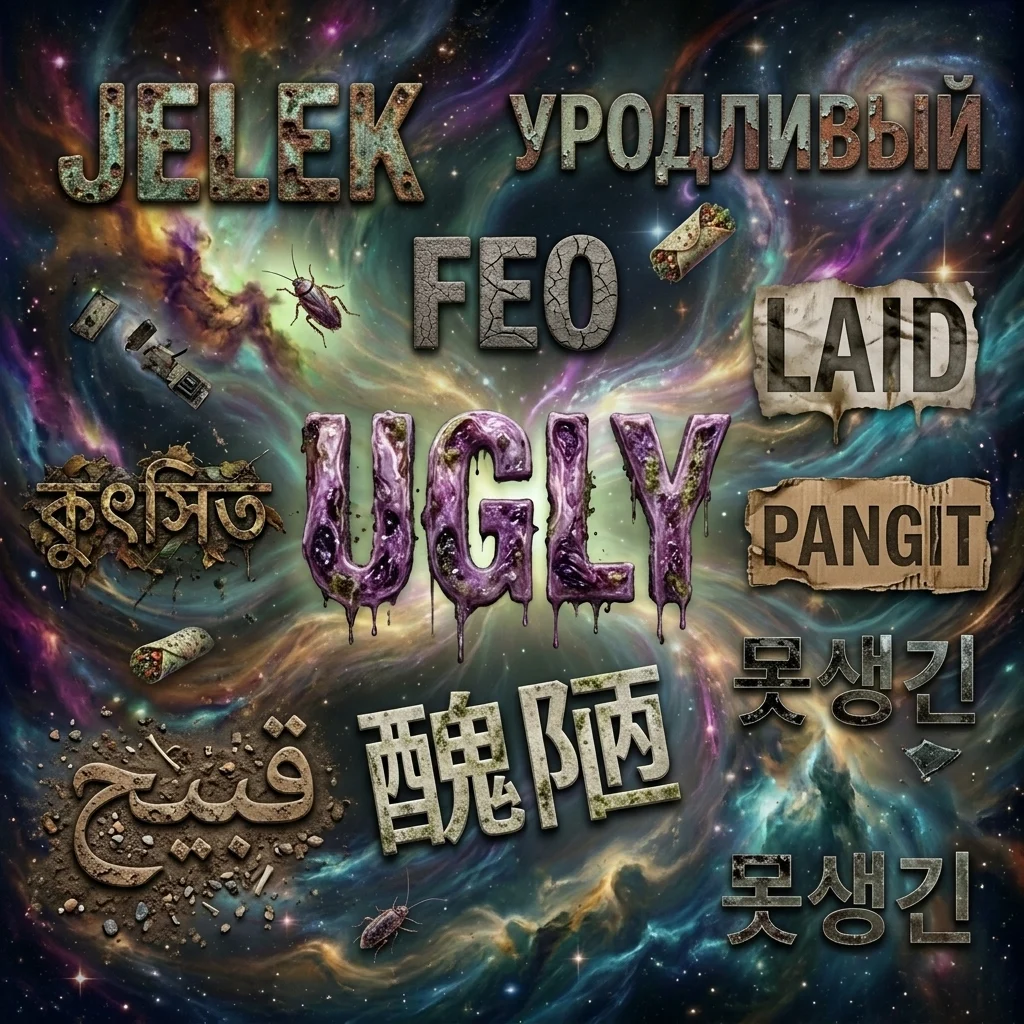
Wondering how to say “ugly” in different languages? Whether you are learning vocabulary, writing a multilingual story, translating a phrase, or simply exploring words around the world, knowing the local expression can make your language skills more natural.
The English word “ugly” describes something that is unattractive, unpleasant to look at, or lacking beauty.
However, the exact translation can change according to gender, number, grammar, formality, and context.
In this guide, you will discover ugly in different languages, including the native word, an easy English pronunciation, a short example sentence, and its English meaning.
This makes the list useful for language learners, travelers, writers, and anyone searching for ugly translations around the world.
Ugly in Different Languages: 70 Translations
The table below shows how to say “ugly” in 70 languages. Where a language changes adjectives according to gender or context, the form shown is a common masculine or general dictionary form.
| No. | Language | Native phrase | Easy English pronunciation | Example sentence | English meaning |
|---|---|---|---|---|---|
| 1 | English | Ugly | UHG-lee | The old building is ugly. | The old building is unattractive. |
| 2 | Spanish | Feo | FAY-oh | El edificio es feo. | The building is ugly. |
| 3 | French | Laid | Lay | Ce bâtiment est laid. | This building is ugly. |
| 4 | German | Hässlich | HESS-lich | Das Gebäude ist hässlich. | The building is ugly. |
| 5 | Italian | Brutto | BROOT-toh | Il palazzo è brutto. | The building is ugly. |
| 6 | Portuguese | Feio | FAY-oh | O prédio é feio. | The building is ugly. |
| 7 | Dutch | Lelijk | LAY-lik | Het gebouw is lelijk. | The building is ugly. |
| 8 | Swedish | Ful | FOOL | Huset är fult. | The house is ugly. |
| 9 | Norwegian | Stygg | STIG | Huset er stygt. | The house is ugly. |
| 10 | Danish | Grim | GREEM | Huset er grimt. | The house is ugly. |
| 11 | Finnish | Ruma | ROO-mah | Talo on ruma. | The house is ugly. |
| 12 | Icelandic | Ljótt | LYOH-t | Húsið er ljótt. | The house is ugly. |
| 13 | Estonian | Inetu | IN-eh-too | Maja on inetu. | The house is ugly. |
| 14 | Latvian | Neglīts | NEG-leets | Nams ir neglīts. | The building is ugly. |
| 15 | Lithuanian | Bjaurus | BYOW-roos | Namas yra bjaurus. | The house is ugly. |
| 16 | Polish | Brzydki | BZHID-kee | Dom jest brzydki. | The house is ugly. |
| 17 | Czech | Ošklivý | OSH-klee-vee | Dům je ošklivý. | The house is ugly. |
| 18 | Slovak | Škaredý | SHKAH-reh-dee | Dom je škaredý. | The house is ugly. |
| 19 | Slovenian | Grd | GURD | Hiša je grda. | The house is ugly. |
| 20 | Croatian | Ružan | ROO-zhan | Kuća je ružna. | The house is ugly. |
| 21 | Serbian | Ружан | ROO-zhan | Кућа је ружна. | The house is ugly. |
| 22 | Bulgarian | Грозен | GROH-zen | Домът е грозен. | The house is ugly. |
| 23 | Macedonian | Грд | GURD | Куќата е грда. | The house is ugly. |
| 24 | Russian | Некрасивый | nye-krah-SEE-vy | Дом некрасивый. | The house is unattractive. |
| 25 | Ukrainian | Некрасивий | nye-krah-SY-vy | Будинок некрасивий. | The building is unattractive. |
| 26 | Belarusian | Непрыгожы | nye-pry-GHO-zhy | Дом непрыгожы. | The house is unattractive. |
| 27 | Greek | Άσχημος | AS-khee-mos | Ο τοίχος είναι άσχημος. | The wall is ugly. |
| 28 | Romanian | Urât | OO-ruht | Casa este urâtă. | The house is ugly. |
| 29 | Hungarian | Csúnya | CHOO-nya | A ház csúnya. | The house is ugly. |
| 30 | Albanian | I shëmtuar | ee SHUH-mtoo-ar | Ndërtesa është e shëmtuar. | The building is ugly. |
| 31 | Turkish | Çirkin | CHEER-keen | Ev çirkin. | The house is ugly. |
| 32 | Azerbaijani | Çirkin | CHEER-keen | Ev çirkindir. | The house is ugly. |
| 33 | Georgian | მახინჯი | MAH-khin-jee | სახლი მახინჯია. | The house is ugly. |
| 34 | Armenian | Տգեղ | TEGH | Տունը տգեղ է։ | The house is ugly. |
| 35 | Arabic | قبيح | QA-beeh | هذا البيت قبيح. | This house is ugly. |
| 36 | Hebrew | מכוער | MEH-koo-ar | הבית מכוער. | The house is ugly. |
| 37 | Persian | زشت | ZESHT | این خانه زشت است. | This house is ugly. |
| 38 | Hindi | बदसूरत | BUD-soo-rut | यह घर बदसूरत है। | This house is ugly. |
| 39 | Urdu | بدصورت | BAD-soo-rat | یہ گھر بدصورت ہے۔ | This house is ugly. |
| 40 | Bengali | কুৎসিত | KOOT-shit | বাড়িটি কুৎসিত। | The house is ugly. |
| 41 | Punjabi | ਬਦਸੂਰਤ | bud-SOOR-ut | ਇਹ ਘਰ ਬਦਸੂਰਤ ਹੈ। | This house is ugly. |
| 42 | Gujarati | કદરૂપું | kuh-dh-ROO-pun | આ ઘર કદરૂપું છે. | This house is ugly. |
| 43 | Marathi | कुरूप | koo-ROOP | हे घर कुरूप आहे. | This house is ugly. |
| 44 | Nepali | कुरूप | koo-ROOP | यो घर कुरूप छ। | This house is ugly. |
| 45 | Sinhala | කැත | KAE-tha | මේ ගෙදර කැතයි. | This house is ugly. |
| 46 | Tamil | அசிங்கமான | uh-SING-guh-maa-na | இந்த வீடு அசிங்கமானது. | This house is ugly. |
| 47 | Telugu | వికారమైన | vee-KAA-rah-may-na | ఈ ఇల్లు వికారంగా ఉంది. | This house is ugly. |
| 48 | Kannada | ಕುರೂಪ | koo-ROOP | ಈ ಮನೆ ಕುರೂಪವಾಗಿದೆ. | This house is ugly. |
| 49 | Malayalam | വിരൂപമായ | vee-ROO-pa-ma-ya | ഈ വീട് വിരൂപമാണ്. | This house is ugly. |
| 50 | Chinese (Mandarin) | 丑 | CHOH | 这座房子很丑。 | This house is ugly. |
| 51 | Japanese | 醜い | MI-GU-TAI | この建物は醜い。 | This building is ugly. |
| 52 | Korean | 못생긴 | MOT-seng-gin | 그 건물은 못생겼어요. | That building is ugly. |
| 53 | Vietnamese | Xấu | SOW | Ngôi nhà này xấu. | This house is ugly. |
| 54 | Thai | น่าเกลียด | NAA-gliat | บ้านนี้น่าเกลียด | This house is ugly. |
| 55 | Indonesian | Jelek | JEH-lek | Rumah itu jelek. | That house is ugly. |
| 56 | Malay | Hodoh | HO-doh | Rumah itu hodoh. | That house is ugly. |
| 57 | Filipino | Pangit | PAH-ngit | Pangit ang bahay. | The house is ugly. |
| 58 | Javanese | Ala | AH-lah | Omah kuwi ala. | That house is ugly. |
| 59 | Burmese | အကျည်းတန် | ah-JEE-tan | ဒီအိမ်က အကျည်းတန်တယ်။ | This house is ugly. |
| 60 | Khmer | អាក្រក់ | AH-krahk | ផ្ទះនេះអាក្រក់។ | This house is ugly. |
| 61 | Mongolian | Муухай | MOO-khai | Энэ байшин муухай. | This house is ugly. |
| 62 | Kazakh | Ұсқынсыз | OOS-kin-syz | Бұл үй ұсқынсыз. | This house is ugly. |
| 63 | Uzbek | Xunuk | KHOH-nook | Bu uy xunuk. | This house is ugly. |
| 64 | Kyrgyz | Чиркин | CHEER-kin | Бул үй чиркин. | This house is ugly. |
| 65 | Swahili | Mbaya | M-BAH-yah | Nyumba hii ni mbaya. | This house is ugly. |
| 66 | Somali | Fool xun | FOOL khoon | Gurigan waa fool xun. | This house is ugly. |
| 67 | Amharic | አስቀያሚ | as-keh-YAH-mee | ይህ ቤት አስቀያሚ ነው። | This house is ugly. |
| 68 | Afrikaans | Lelik | LAY-lik | Die huis is lelik. | The house is ugly. |
| 69 | Haitian Creole | Lèd | LED | Kay la lèd. | The house is ugly. |
| 70 | Esperanto | Malbela | mal-BEH-la | La domo estas malbela. | The house is ugly. |
How to Say Ugly in Different Languages
The most common way to translate “ugly” depends on what you are describing.
For example, Spanish uses feo, French uses laid, German uses hässlich, and Italian uses brutto. In several Asian languages, the word is represented differently because the writing system and grammatical structure are different.
When learning how to say ugly in different languages, it is useful to remember the word together with a noun. This helps you understand adjective agreement and natural sentence structure.
For example:
- Spanish: feo — ugly
- French: laid — ugly
- German: hässlich — ugly
- Turkish: çirkin — ugly
- Arabic: قبيح — ugly
- Hindi: बदसूरत — ugly
- Japanese: 醜い — ugly
- Korean: 못생긴 — ugly
Ugly in All Languages: Why Translations Differ
A direct dictionary translation is not always enough. Many languages change adjectives depending on gender, number, or the noun being described.
French, Spanish, Italian, Portuguese, Romanian, and several Slavic languages are good examples. The form used for a masculine noun may differ from the form used for a feminine noun.
For instance, Spanish commonly uses feo for masculine nouns and fea for feminine nouns. Romanian similarly changes the adjective depending on grammatical gender.
In English, however, “ugly” generally remains unchanged.
What Does “Ugly” Mean?
The word ugly usually means unattractive or unpleasant in appearance. It can describe a person, object, building, design, animal, picture, or other visible thing.
However, the word can also describe behavior or situations. Expressions such as “an ugly argument” or “an ugly situation” refer to something unpleasant, hostile, or disturbing rather than physical appearance.
Because “ugly” can sound harsh when describing a person, choosing a softer expression such as “unattractive,” “unappealing,” or “not very attractive” may be more appropriate in polite conversation.
Common Uses of Ugly in Everyday English
Here are some common contexts in which English speakers use the word:
Describing appearance:
“The painting is ugly.”
Describing an object:
“That chair is ugly.”
Describing a situation:
“The disagreement became ugly.”
Describing behavior:
“His comments became ugly.”
Describing design:
“I think the new design looks ugly.”
The meaning therefore depends strongly on context.
Ugly Around the World: Cultural and Language Differences
The idea of beauty is not identical across cultures. A word translated as “ugly” may carry different levels of harshness depending on the language and social setting.
Some expressions are commonly used for objects but may sound rude when applied to people. Others can be more direct or emotionally strong.
This is why language learners should not rely only on a dictionary translation. Learning a word through complete sentences gives you a better idea of when and how it is naturally used.
How to Learn Ugly Translations More Easily
If you are studying ugly in all languages, try grouping languages instead of memorizing 70 words at once.
Start with familiar European forms such as feo, laid, brutto, and hässlich. Then move to languages that use different writing systems, such as Arabic, Hindi, Japanese, Korean, and Chinese.
Writing each word by hand, saying it aloud, and using it in a simple sentence can make vocabulary easier to remember.
It is also helpful to learn both the direct translation and a more polite alternative. This is particularly important when describing people.
Frequently Asked Questions
1. How do you say “ugly” in different languages?
“Ugly” has different translations around the world. Some common examples are feo in Spanish, laid in French, hässlich in German, brutto in Italian, 丑 in Mandarin, 醜い in Japanese, and 못생긴 in Korean.
2. What is “ugly” in Spanish?
The common Spanish translation is feo. The feminine form is fea. For example, “La casa es fea” means “The house is ugly.”
3. What is the Japanese word for ugly?
A common Japanese word is 醜い, which means ugly or unattractive. The appropriate expression can depend on the context and what is being described.
4. What is “ugly” in Arabic?
A common Arabic translation is قبيح. Arabic adjectives can change according to gender and grammatical context, so the exact form may vary in a complete sentence.
5. Is “ugly” rude when describing a person?
It can be. In English, calling someone “ugly” is generally a direct and potentially offensive comment about their appearance. A softer expression such as “unattractive” or “not very attractive” may be more appropriate in polite conversation.
Conclusion
Learning ugly in different languages provides more than a simple vocabulary list. It shows how languages handle adjectives, grammar, pronunciation, cultural context, and different ideas about appearance.
From European words such as feo, laid, and brutto to Asian expressions such as 丑, 醜い, and 못생긴, these ugly translations demonstrate the variety of languages spoken around the world.
Use the 70-language table as a quick reference, but remember that the most natural translation can depend on the sentence, grammatical context, and culture.

I am Jimmy Michael, a language enthusiast and writer passionate about exploring different languages, words, and cultures. I create simple, useful content that helps readers understand languages better and discover new ways to communicate globally.