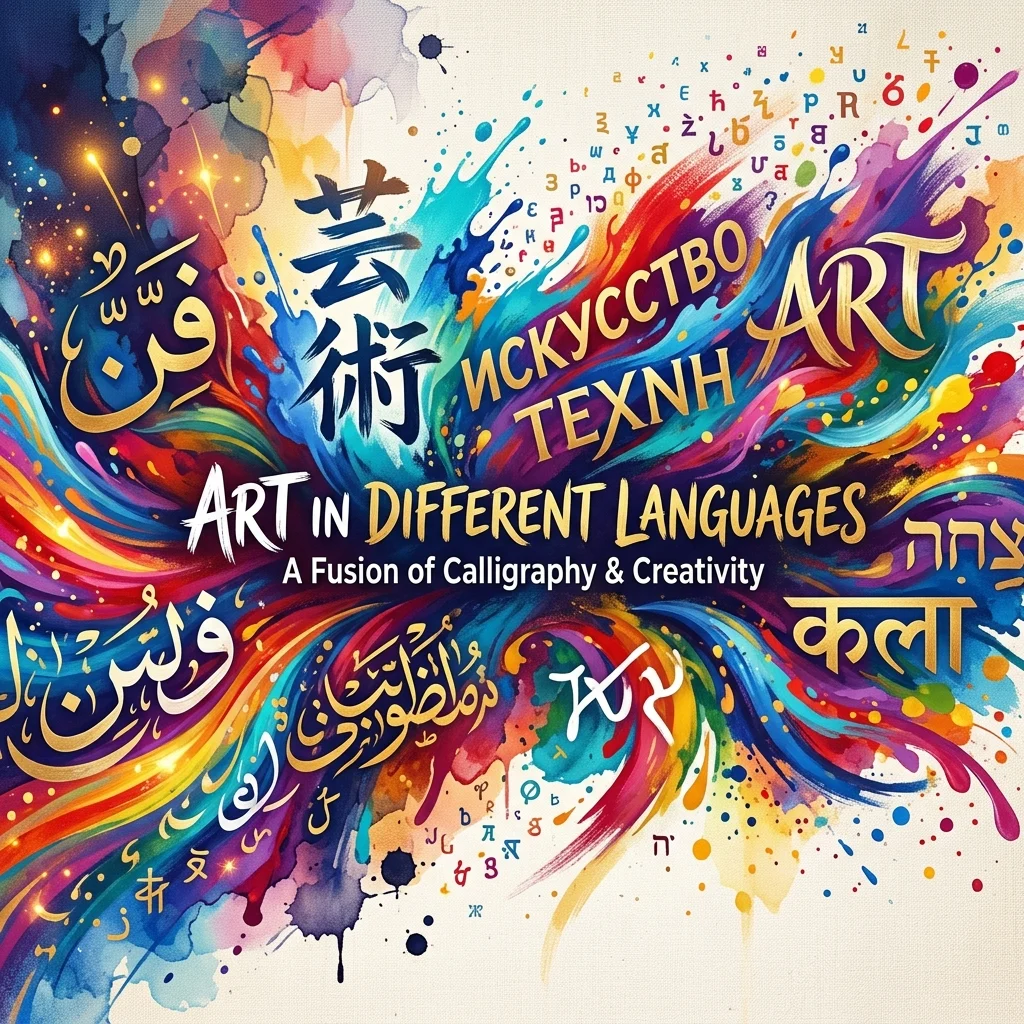
Art is a universal form of human expression, but the word “art” sounds different across cultures and languages.
Learning how to say art in different languages can be useful for travelers, students, writers, artists, designers, researchers, and anyone interested in global culture.
This guide provides art in all languages through 70 widely spoken and culturally significant languages.
Each entry includes the native word or phrase, an easy English pronunciation, a natural example sentence, and its English meaning.
Whether you are searching for how to say art in different languages, looking for art translations, or exploring the idea of art around the world, this list gives you a practical starting point.
Art in Different Languages: 70 Translations
Language Native phrase Easy English pronunciation Example sentence English meaning
1 English art ahrt Art can bring people together. Art can unite people.
2 Spanish arte AR-teh El arte inspira a muchas personas. Art inspires many people.
3 French art ahr L’art est partout autour de nous. Art is everywhere around us.
4 German Kunst koonst Kunst erzählt Geschichten. Art tells stories.
5 Italian arte AR-teh L’arte cambia il modo di vedere il mondo. Art changes the way we see the world.
6 Portuguese arte AR-chee A arte faz parte da nossa cultura. Art is part of our culture.
7 Dutch kunst koonst Kunst kan emoties uitdrukken. Art can express emotions.
8 Afrikaans kuns koons Kuns is belangrik vir kultuur. Art is important for culture.
9 Swedish konst konst Konst kan väcka känslor. Art can awaken emotions.
10 Danish kunst koonst Kunst kan förändra samhället. Art can change society.
11 Norwegian kunst koonst Kunst gir oss nye perspektiver. Art gives us new perspectives.
12 Finnish taide TAI-deh Taide tuo iloa elämään. Art brings joy to life.
13 Icelandic list list List getur sagt mikið. Art can say a lot.
14 Irish ealaín uh-LAWN Tá an ealaín tábhachtach don chultúr. Art is important to culture.
15 Scottish Gaelic ealain EE-lin Tha ealain cudromach don choimhearsnachd. Art is important to the community.
16 Welsh celf kelv Mae celf yn rhan den diwylliant. Art is part of the culture.
17 Polish sztuka SHTOO-ka Sztuka wyraża ludzkie emocje. Art expresses human emotions.
18 Czech umění OO-meh-nyee Umění nás inspiruje. Art inspires us.
19 Slovak umenie OO-meh-nyeh Umenie je dôležitou súčasťou kultúry. Art is an important part of culture.
20 Slovenian umetnost oo-MET-nost Umetnost povezuje ljudi. Art connects people.
21 Croatian umjetnost oo-MYET-nost Umjetnost govori bez riječi. Art speaks without words.
22 Serbian уметност oo-MET-nost Уметност повезује људе. Art connects people.
23 Bulgarian изкуство iz-KOOS-tvo Изкуството вдъхновява хората. Art inspires people.
24 Macedonian уметност oo-MET-nost Уметноста е важна за културата. Art is important to culture.
25 Russian искусство is-KOOS-tvo Искусство помогает выражать чувства. Art helps express feelings.
26 Ukrainian мистецтво mis-TET-stvo Мистецтво може змінити світ. Art can change the world.
27 Belarusian мастацтва ma-TSAHT-va Мастацтва натхняе людзей. Art inspires people.
28 Lithuanian menas MEH-nas Menas gali įkvėpti žmones. Art can inspire people.
29 Latvian māksla MAHK-sla Māksla palīdz išreikšti jausmus. Art helps express feelings.
30 Estonian kunst koonst Kunst muudab elu rikkamaks. Art makes life richer.
31 Hungarian művészet MOO-vay-set A művészet fontos része az életnek. Art is an important part of life.
32 Romanian artă AR-tuh Arta ne ajută să exprimăm emoții. Art helps us express emotions.
33 Albanian art art Arti na lidh me kulturën. Art connects us with culture.
34 Greek τέχνη TECH-nee Η τέχνη εκφράζει συναισθήματα. Art expresses emotions.
35 Turkish sanat sah-NAHT Sanat insanları birleştirir. Art brings people together.
36 Arabic فن fann الفن يعبر عن المشاعر. Art expresses emotions.
37 Hebrew אמנות ah-ma-NOOT אמנות יכולה לשנות את העולם. Art can change the world.
38 Persian هنر hon-AR هنر احساسات را بیان میکند. Art expresses feelings.
39 Urdu فن funn فن جذبات کے اظہار کا ذریعہ ہے۔ Art is a way to express emotions.
40 Hindi कला ka-LAA कला जीवन کو خوبصورت بناتی ہے۔ Art makes life beautiful.
41 Bengali শিল্প shil-po শিল্প মানুষের অনুভূতি প্রকাশ করে। Art expresses human feelings.
42 Punjabi ਕਲਾ ka-LAA ਕਲਾ ਭਾਵਨਾਵਾਂ ਨੂੰ ਪ੍ਰਗਟ ਕਰਦੀ ਹੈ। Art expresses emotions.
43 Gujarati કલા ka-LAA કલા જીવનને સુંદર બનાવે છે. Art makes life beautiful.
44 Marathi कला ka-LAA कला भावना व्यक्त करण्याचे माध्यम आहे. Art is a medium for expressing feelings.
45 Nepali कला ka-LAA कलाले भावनाहरू व्यक्त गर्छ। Art expresses emotions.
46 Sinhala කලාව ka-LAA-wa කලාව මිනිසුන් සම්බන්ධ කරයි. Art connects people.
47 Tamil கலை ka-LAI கலை உணர்வுகளை வெளிப்படுத்துகிறது. Art expresses emotions.
48 Telugu కళ ka-LA కళ భావాలను వ్యక్తపరుస్తుంది. Art expresses feelings.
49 Kannada ಕಲೆ ka-LAY ಕಲೆ ಭಾವನೆಗಳನ್ನು ವ್ಯಕ್ತಪಡಿಸುತ್ತದೆ. Art expresses emotions.
50 Malayalam കല ka-LA കല മനുഷ്യരുടെ വികാരങ്ങൾ പ്രകടിപ്പിക്കുന്നു. Art expresses human emotions.
51 Odia କଳା ka-LAA କଳା ଭାବନାକୁ ପ୍ରକାଶ କରେ। Art expresses feelings.
52 Assamese কলা ko-LAA কলাই মানুহৰ অনুভূতি প্ৰকাশ কৰে। Art expresses human feelings.
53 Chinese (Mandarin) 艺术 yì shù 艺术可以表达感情。 Art can express feelings.
54 Japanese 芸術 gei-JUT-soo 芸術は人の心を動かします。 Art moves people’s hearts.
55 Korean 예술 ye-SOOL 예술은 사람들에게 영감을 줍니다. Art inspires people.
56 Vietnamese nghệ thuật NGHEH thuat Nghệ thuật thể hiện cảm xúc. Art expresses emotions.
57 Thai ศิลปะ sin-LA-pa ศิลปะสร้างแรงบันดาลใจให้ผู้คน Art inspires people.
58 Indonesian seni SEH-nee Seni mencerminkan budaya. Art reflects culture.
59 Malay seni SEH-nee Seni mencerminkan kehidupan. Art reflects life.
60 Filipino sining SEE-ning Ang sining ay bahagi ng kultura. Art is part of culture.
61 Javanese seni SEH-nee Seni bisa nggambarake budaya. Art can represent culture.
62 Burmese အနုပညာ ah-noo-pyin-YA အနုပညာသည် လူတို့ကို လှုံ့ဆော်ပေးသည်။ Art inspires people.
63 Khmer សិល្បៈ sel-BAH សិល្បៈបង្ហាញអារម្មណ៍របស់មនុស្ស។ Art shows human emotions.
64 Lao ສິລະປະ si-LA-pa ສິລະປະສະທ້ອນວັດທະນະທໍາ. Art reflects culture.
65 Mongolian урлаг oor-LAHG Урлаг хүмүүсийг урамшуулдаг. Art inspires people.
66 Kazakh өнер oh-NER Өнер мәдениетті көрсетеді. Art reflects culture.
67 Georgian ხელოვნება khe-lo-VNE-ba ხელოვნება ადამიანებს აერთიანებს. Art brings people together.
68 Armenian արվեստ ar-VEST Արվեստը արտահայտում է զգացմունքները։ Art expresses emotions.
69 Swahili sanaa sah-NAH Sanaa inaonyesha utamaduni. Art reflects culture.
70 Zulu ubuciko oo-boo-SEE-koh Ubuciko buveza imizwa yabantu. Art expresses people’s feelings.
Pronunciations are simplified for English speakers and may vary by region or accent. Some languages also use different terms depending on whether “art” means fine art, artistic skill, craftsmanship, or a particular art form.
What Does “Art” Mean in Different Languages?
The English word art covers a broad range of creative activities, including painting, drawing, sculpture, photography, music, performance, design, and other forms of expression.
However, languages do not always divide these ideas in exactly the same way. For example, some words traditionally emphasize artistic skill or craftsmanship, while others are used more broadly for creative or cultural expression.
That is why an art translation should be considered in context rather than treated as a simple word-for-word substitution.
How to Say “Art” in Different Languages
If you only need the basic translations, several common examples are:
Spanish: arte
French: art
German: Kunst
Italian: arte
Portuguese: arte
Arabic: فن
Hindi: कला
Urdu: فن
Chinese: 艺术
Japanese: 芸術
Korean: 예술
Russian: искусство
Turkish: sanat
Swahili: sanaa
Indonesian: seni
These examples show how the same concept can have very different sounds, spellings, and cultural associations.
Art Around the World and Cultural Meaning
Art is closely connected with history, identity, religion, community, and everyday life. A painting, sculpture, textile, dance, or piece of decorative work can communicate ideas that words alone cannot easily express.
Across cultures, art may be used to preserve traditions, celebrate important events, tell stories, document history, challenge social ideas, or simply create beauty.
This makes learning art in different languages more than a vocabulary exercise. It can also be a useful way to explore how different societies understand creativity and expression.
Why Learn Art Translations?
Knowing the word for art in another language can be helpful in several practical situations.
For travelers, it can make conversations about museums, galleries, exhibitions, and local culture easier. For students and researchers, multilingual vocabulary can help when studying international art history. Artists and designers may also use translated words for project names, collections, portfolios, or creative concepts.
It is especially important to check the intended meaning before using a translated word professionally. A general word for art may not always be the best choice when you specifically mean painting, visual art, craftsmanship, fine art, or artistic ability.
Using “Art” in a Different Language Correctly
A direct translation is usually appropriate when you are simply referring to art as a general concept. But context matters.
For example, a museum may describe an exhibition as contemporary art, while a conversation about someone’s artistic ability may require a word or expression with a slightly different meaning.
If you are creating a tattoo, business name, artwork title, academic paper, or public-facing design, verify the spelling, grammar, and intended cultural meaning before publishing it.
Art in All Languages: A Quick Guide
There is no single universal translation that works identically across every language. Some languages have one common word for the broad concept of art, while others may use different terms for specific creative disciplines.
The 70-language table above is therefore best used as a starting point for understanding art in all languages rather than as a substitute for professional translation in a specialized context.
For everyday learning, the most useful approach is to remember the native spelling first and then practice the pronunciation in a short sentence.
Frequently Asked Questions About Art in Different Languages
- What is “art” in the most common languages?
“Art” is arte in Spanish and Italian, art in French, Kunst in German and Dutch, sanat in Turkish, فن in Arabic and Urdu, कला in Hindi, 艺术 in Mandarin Chinese, 芸術 in Japanese, and 예술 in Korean.
- How do you say “art” in different languages?
The word changes depending on the language. For example, Spanish uses arte, Russian uses искусство, Portuguese uses arte, Indonesian uses seni, and Swahili uses sanaa.
- What is the word for art in 70 languages?
This article provides 70 translations of “art,” including native spellings, easy English pronunciations, example sentences, and English meanings.
- Is “art” translated the same way in every culture?
No. Languages can divide the concept of art differently. A word may emphasize creative expression, artistic skill, craftsmanship, or a particular cultural practice, so context is important.
- Which languages use a word similar to English “art”?
French uses art, while Romanian uses artă and Albanian uses art. Other languages use very different words, such as German Kunst, Russian искусство, and Japanese 芸術.
Conclusion
Learning art in different languages offers a simple way to discover the diversity of human expression. From arte in Spanish and Italian to Kunst in German, արվեստ in Armenian, sanaa in Swahili, and 艺术 in Chinese, each language provides its own window into culture and communication.
Whether you are studying languages, exploring international culture, naming a creative project, or simply curious about art around the world, these 70 translations provide a useful foundation.

I am Jimmy Michael, a language enthusiast and writer passionate about exploring different languages, words, and cultures. I create simple, useful content that helps readers understand languages better and discover new ways to communicate globally.