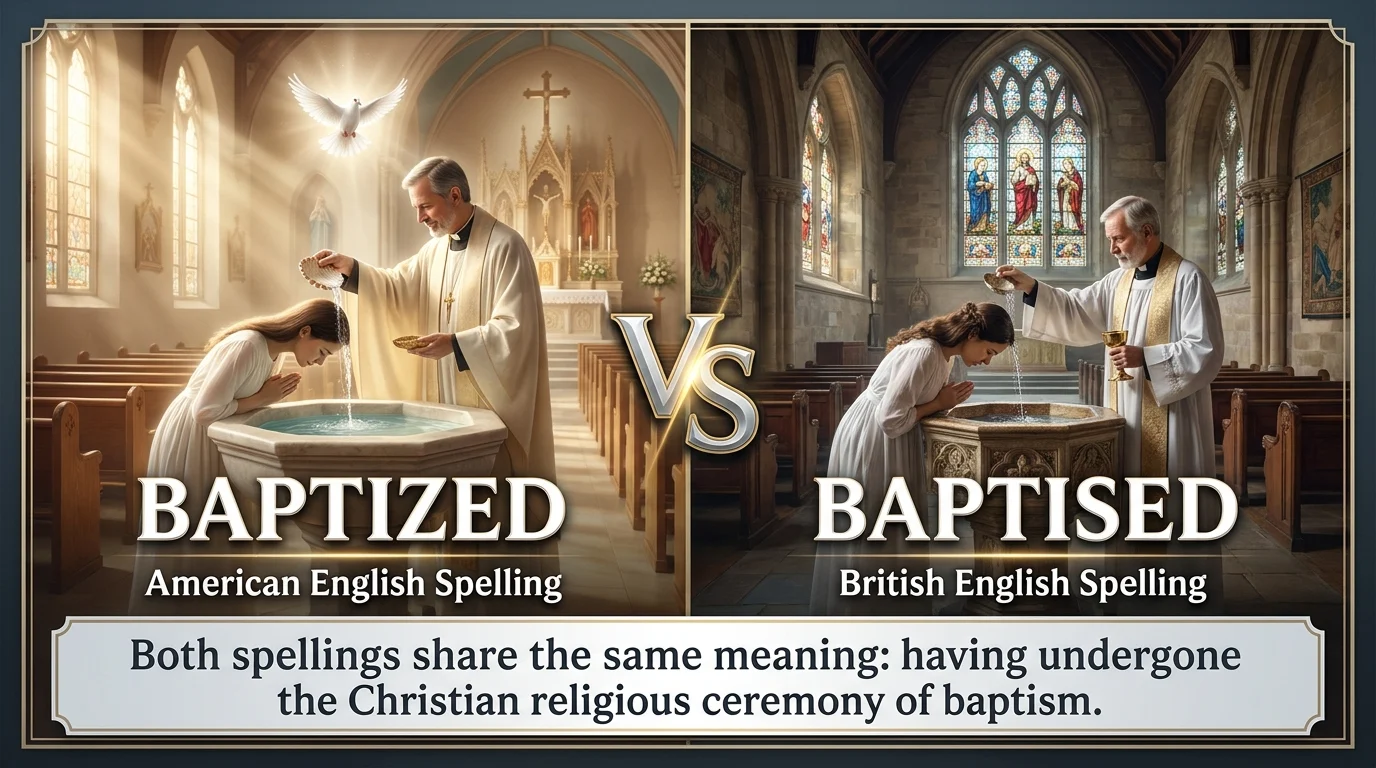
Have you ever wondered whether to write baptized or baptised? Both spellings are correct, but the choice depends mainly on which variety of English you are using. Although the two words look slightly different, they have exactly the same meaning, pronunciation, and grammatical function. They refer to the act of performing a baptism, a religious ceremony associated with water and spiritual significance in Christianity and some other religious traditions.
The main difference between baptized and baptised is regional spelling. Baptized is the preferred spelling in American English, while baptised is commonly used in British English and other varieties that follow British spelling conventions, including Australian and Canadian English. Understanding this small spelling difference can help you write more naturally, avoid common spelling mistakes, and maintain consistency in academic, professional, and everyday communication.
Quick Answer: Baptized vs Baptised
Both baptized and baptised are correct spellings of the same word. The difference is regional, not grammatical or semantic. American English generally uses baptized, while British English generally prefers baptised. Both forms describe someone who has received baptism or the religious act of performing a baptism.
Why Do People Confuse Baptized and Baptised?
People often confuse these spellings because they differ by only one letter: z versus s.
This difference appears in several English words, such as:
- Realized vs Realised
- Organized vs Organised
- Recognized vs Recognised
- Apologized vs Apologised
- Specialized vs Specialised
The confusion happens because American and British English follow different spelling conventions.
In American English, words ending in this pattern generally use -ize, while British English commonly uses -ise.
However, the meaning and pronunciation remain the same. Neither spelling is a grammatical mistake when used according to the appropriate regional convention.
First Word: Baptized
Baptized is the standard American English spelling. It is the past tense and past participle of the verb baptize.
It refers to performing a baptism or receiving this religious ceremony, usually involving water.
Meaning of Baptized
The word baptized is commonly associated with Christianity, where baptism represents spiritual cleansing, faith, commitment, or entry into a religious community.
It can be used in different grammatical situations:
- Past tense: They baptized their baby last Sunday.
- Past participle: She has been baptized.
- Adjective: The baptized child joined the church community.
Examples of Baptized
- The family baptized their newborn baby last weekend.
- He was baptized in a local church.
- My grandparents baptized all their children.
- She has been baptized according to Christian tradition.
- The priest baptized the child during the ceremony.
Second Word: Baptised
Baptised is the preferred British English spelling. It is the same verb form as baptized, but it follows the British spelling convention of using -ise instead of -ize.
It has exactly the same meaning and grammatical function as baptized.
Meaning of Baptised
Baptised describes someone who has received baptism or the act of performing the religious ceremony.
It is frequently used in British publications, religious writing, educational materials, and everyday communication.
Examples of Baptised
- The family baptised their baby at the village church.
- He was baptised when he was a young child.
- My sister has been baptised in a local church.
- The priest baptised several children on Sunday.
- They decided to have their daughter baptised this year.
Baptized vs Baptised: Comparison Table
| Feature | Baptized | Baptised |
| Spelling style | American English | British English |
| Meaning | Religious baptism | Religious baptism |
| Pronunciation | Same | Same |
| Grammar | Past tense / past participle | Past tense / past participle |
| Root verb | Baptize | Baptise |
| Usage | Common in the US | Common in the UK |
| Correctness | Correct | Correct |
The key difference is spelling preference, not meaning.
When to Use Each Spelling
Knowing when to use each version makes your writing clearer and more consistent.
Use Baptized in American English
Choose baptized when writing for an American audience or following American English spelling conventions.
Examples:
- The baby was baptized in a Catholic church.
- My parents baptized me when I was young.
- The church baptized three new members.
Use Baptised in British English
Choose baptised when writing for a British audience or following British English spelling conventions.
Examples:
- The child was baptised last Sunday.
- She was baptised at her local church.
- The family arranged to have their son baptised.
Important: Both spellings are acceptable. The best choice depends on your audience, publication, or preferred English style guide.
12 Examples of Baptized vs Baptised in Sentences
Here are practical examples showing how both spellings work in everyday English.
| American English | British English |
| The baby was baptized yesterday. | The baby was baptised yesterday. |
| She baptized her child. | She baptised her child. |
| He has been baptized. | He has been baptised. |
| They baptized their son. | They baptised their son. |
| My brother was baptized in church. | My brother was baptised in church. |
| The priest baptized the children. | The priest baptised the children. |
| I was baptized as a baby. | I was baptised as a baby. |
| The church baptized new members. | The church baptised new members. |
| Their daughter was baptized last year. | Their daughter was baptised last year. |
| He wants to be baptized. | He wants to be baptised. |
| The newly baptized members attended the service. | The newly baptised members attended the service. |
| She was baptized according to church tradition. | She was baptised according to church tradition. |
These examples demonstrate that changing the spelling does not change the meaning of the sentence.
Common Mistakes When Using Baptized and Baptised
Although both spellings are correct, writers sometimes make mistakes when choosing between them.
1. Mixing American and British Spelling
Using baptized in one sentence and baptised in another can make your writing inconsistent.
Better approach: Choose one spelling convention and follow it throughout your document.
2. Thinking One Spelling Is Incorrect
Some learners believe baptised is a spelling mistake because they are familiar with American English.
This is incorrect. Both forms are accepted regional spellings.
3. Confusing Baptized With Baptism
These words are related but have different grammatical functions.
- Baptized: A verb form or adjective.
- Baptism: A noun describing the religious ceremony.
Example:
- Correct: The child was baptized yesterday.
- Correct: The child’s baptism was yesterday.
4. Using the Wrong Root Spelling
Remember that the spelling of the root verb usually follows the same regional convention.
- American English: Baptize → Baptized
- British English: Baptise → Baptised
Memory Trick: How to Remember the Difference
Use this simple trick:
Z = American English
Remember that baptized contains the letter Z, just like many American spellings such as organized and realized.
S = British English
Remember that baptised contains the letter S, following the common British preference for words ending in -ise.
Quick reminder:
- USA → Baptized
- UK → Baptised
This simple association can help you remember which spelling to choose.
American vs British English: Baptized or Baptised?
American and British English often use different spelling conventions, especially in words ending in -ize and -ise.
In American English, baptized is the standard spelling. American dictionaries and publications generally use this form.
In British English, baptised is the commonly preferred spelling. However, British English also accepts some -ize spellings, particularly in styles that follow Oxford spelling conventions.
The same regional distinction appears in other words:
| American English | British English |
| Baptized | Baptised |
| Realized | Realised |
| Organized | Organised |
| Recognized | Recognised |
| Apologized | Apologised |
| Specialized | Specialised |
One important detail: British spelling is not always strictly based on replacing Z with S. Some British style guides, including Oxford style, prefer -ize in certain words.
Similar Words to Baptized and Baptised
Understanding related words can help expand your vocabulary and improve your spelling.
1. Baptism
A religious ceremony involving baptism.
Example: The family attended the baby’s baptism.
2. Baptize
The American English base form of the verb.
Example: The priest will baptize the child tomorrow.
3. Baptise
The British English base form of the same verb.
Example: The church will baptise the baby next month.
4. Christened
A word sometimes used for a Christian baptism ceremony, particularly in traditions that use christening as a term for infant baptism.
Example: Their daughter was christened at the local church.
5. Reborn
Meaning given a new beginning or a fresh start. In religious contexts, it can describe spiritual renewal.
Example: He felt spiritually reborn after the experience.
Final Verdict: Baptized vs Baptised
So, which spelling should you use?
Both baptized and baptised are correct. The difference comes down to regional English spelling preferences.
- Use baptized when writing in American English.
- Use baptised when writing in British English.
Neither spelling changes the meaning, pronunciation, or grammatical function of the word.
The most important thing is to understand your audience and remain consistent with your chosen spelling style.
Frequently Asked Questions
1. Is baptized or baptised the correct spelling?
Both spellings are correct. Baptized is the preferred American English spelling, while baptised is commonly preferred in British English. They have the same meaning and pronunciation.
2. Is baptised British or American English?
Baptised is primarily associated with British English. It is also commonly used in other English varieties that follow British spelling conventions, including Australian English.
3. Is baptized American English?
Yes. Baptized is the standard American English spelling. It is commonly used in American religious publications, books, educational materials, and everyday writing.
4. Do baptized and baptised mean the same thing?
Yes. Both words refer to the same religious act or describe someone who has received baptism. There is no difference in meaning, pronunciation, or grammatical function.
5. How do you pronounce baptized and baptised?
Both spellings have the same pronunciation: BAP-tized. The difference is only in written spelling, not spoken English.
6. Is baptised grammatically correct?
Yes. Baptised is grammatically correct and follows British English spelling conventions. It is not an incorrect version of baptized.
7. What is the difference between baptized and baptism?
Baptized is a verb form or adjective, while baptism is a noun referring to the religious ceremony.
Example: The child was baptized during the baptism ceremony.
Remember This
- Baptized = American English spelling.
- Baptised = British English spelling.
- Both words have the same meaning.
- Both have the same pronunciation.
- Neither spelling is universally wrong.
- Always follow one spelling style consistently.
Conclusion
The difference between baptized and baptised is simple: both words are correct, but they belong to different regional spelling preferences. American English generally uses baptized, whereas British English commonly uses baptised. Both forms describe the same religious ceremony or the act of receiving baptism.
When choosing between these spellings, consider your readers and the English style you are following. Remembering the Z for American English and the S for British English will make it easier to use the correct form confidently in your everyday writing.

I am Jimmy Michael, a language enthusiast and writer passionate about exploring different languages, words, and cultures. I create simple, useful content that helps readers understand languages better and discover new ways to communicate globally.