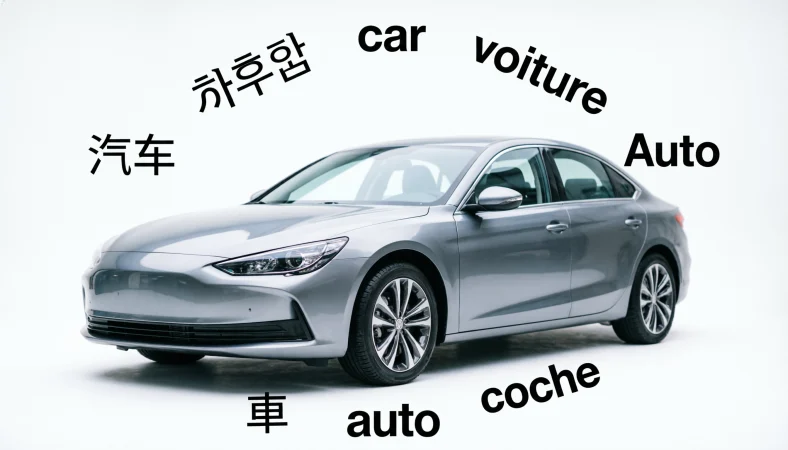
Have you ever wondered how to say car in different languages? The word may change from country to country, but the meaning remains familiar: a road vehicle used to carry people.
Learning car translations is useful for travelers, language learners, students, writers, and anyone interested in how everyday words vary around the world. Some languages use words that sound surprisingly similar to “car,” while others have completely different terms.
Below, you will find 70 ways to say “car” in different languages, including the native word, an easy English pronunciation, and a short real-life example with its English meaning.
Car in Different Languages: 70 Translations
The translations below use common contemporary words for an automobile or passenger car. Where a language has several common terms, a widely understood everyday form is shown. WWiktionary
| # | Language | Native phrase | Easy English pronunciation | Example sentence | English meaning |
|---|---|---|---|---|---|
| 1 | Afrikaans | kar | kahr | Ek het ‘n nuwe kar. | I have a new car. |
| 2 | Albanian | makinë | mah-KEE-neh | Makina ime është e re. | My car is new. |
| 3 | Armenian | մեքենա | meh-kheh-NA | Ես մեքենա ունեմ։ | I have a car. |
| 4 | Assamese | গাড়ী | GAH-ree | মোৰ গাড়ীখন নতুন। | My car is new. |
| 5 | Azerbaijani | maşın | mah-SHUN | Mənim maşınım yenidir. | My car is new. |
| 6 | Basque | auto | OW-toh | Nire autoa berria da. | My car is new. |
| 7 | Bengali | গাড়ি | GAH-ri | আমার গাড়ি নতুন। | My car is new. |
| 8 | Belarusian | машына | mah-SHEE-nah | Мая машына новая. | My car is new. |
| 9 | Cantonese | 車 | cheh | 我有一架車。 | I have a car. |
| 10 | Catalan | cotxe | KOT-cheh | El meu cotxe és nou. | My car is new. |
| 11 | Czech | auto | OW-toh | Moje auto je nové. | My car is new. |
| 12 | Danish | bil | beel | Min bil er ny. | My car is new. |
| 13 | Dutch | auto | OW-toh | Mijn auto is nieuw. | My car is new. |
| 14 | Estonian | auto | OW-toh | Minu auto on uus. | My car is new. |
| 15 | Faroese | bilur | BEE-lur | Bilurin er nýggjur. | The car is new. |
| 16 | Finnish | auto | OW-toh | Minun autoni on uusi. | My car is new. |
| 17 | French | voiture | vwah-TUR | Ma voiture est neuve. | My car is new. |
| 18 | Galician | coche | KOH-cheh | O meu coche é novo. | My car is new. |
| 19 | Georgian | მანქანა | man-KAH-nah | ჩემი მანქანა ახალია. | My car is new. |
| 20 | German | Auto | OW-toh | Mein Auto ist neu. | My car is new. |
| 21 | Greek | αυτοκίνητο | af-toh-KEE-nee-toh | Το αυτοκίνητό μου είναι καινούργιο. | My car is new. |
| 22 | Gujarati | કાર | kaar | મારી કાર નવી છે. | My car is new. |
| 23 | Hawaiian | kaʻa | KAH-ah | ʻO kaʻa hou koʻu. | My car is new. |
| 24 | Hebrew | מכונית | meh-kho-NEET | המכונית שלי חדשה. | My car is new. |
| 25 | Hindi | गाड़ी | GAA-ree | मेरी गाड़ी नई है। | My car is new. |
| 26 | Hungarian | autó | OW-toh | Az autóm új. | My car is new. |
| 27 | Icelandic | bíll | beetl | Bíllinn minn er nýr. | My car is new. |
| 28 | Indonesian | mobil | MOH-beel | Mobil saya baru. | My car is new. |
| 29 | Irish | carr | kar | Tá carr nua agam. | I have a new car. |
| 30 | Italian | macchina | MAK-kee-nah | La mia macchina è nuova. | My car is new. |
| 31 | Japanese | 車 | koo-roo-mah | 私の車は新しいです。 | My car is new. |
| 32 | Kannada | ಕಾರು | KAA-roo | ನನ್ನ ಕಾರು ಹೊಸದು. | My car is new. |
| 33 | Kazakh | машина | mah-SHEE-nah | Менің машинам жаңа. | My car is new. |
| 34 | Khmer | ឡាន | laan | ឡានរបស់ខ្ញុំថ្មី។ | My car is new. |
| 35 | Korean | 차 | chah | 제 차는 새 차예요. | My car is a new car. |
| 36 | Latin | carrus | KAR-roos | Carrus meus novus est. | My car is new. |
| 37 | Latvian | auto | OW-toh | Mana automašīna ir jauna. | My car is new. |
| 38 | Lithuanian | automobilis | ow-toh-moh-BEE-lis | Mano automobilis naujas. | My car is new. |
| 39 | Macedonian | кола | KOH-lah | Мојата кола е нова. | My car is new. |
| 40 | Malay | kereta | keh-REH-tah | Kereta saya baru. | My car is new. |
| 41 | Malayalam | കാർ | kaar | എന്റെ കാർ പുതിയതാണ്. | My car is new. |
| 42 | Maltese | karozza | kah-ROT-tsah | Il-karozza tiegħi hija ġdida. | My car is new. |
| 43 | Māori | motokā | moh-toh-KAA | He motokā hou taku. | I have a new car. |
| 44 | Marathi | गाडी | GAA-dee | माझी गाडी नवीन आहे. | My car is new. |
| 45 | Mongolian | машин | mah-SHEEN | Миний машин шинэ. | My car is new. |
| 46 | Nepali | कार | kaar | मेरो कार नयाँ छ। | My car is new. |
| 47 | Norwegian | bil | beel | Bilen min er ny. | My car is new. |
| 48 | Persian | ماشین | maa-SHEEN | ماشین من نو است. | My car is new. |
| 49 | Polish | samochód | sah-moh-KHOOT | Mój samochód jest nowy. | My car is new. |
| 50 | Portuguese | carro | KAH-hoo | O meu carro é novo. | My car is new. |
| 51 | Punjabi | ਗੱਡੀ | GUD-dee | ਮੇਰੀ ਗੱਡੀ ਨਵੀਂ ਹੈ। | My car is new. |
| 52 | Romanian | mașină | mah-SHEE-nuh | Mașina mea este nouă. | My car is new. |
| 53 | Russian | машина | mah-SHEE-nah | Моя машина новая. | My car is new. |
| 54 | Sanskrit | कारयान | kaa-rah-YAA-nah | मम कारयानं नूतनम् अस्ति। | My car is new. |
| 55 | Scottish Gaelic | càr | kaar | Tha càr ùr agam. | I have a new car. |
| 56 | Serbian | ауто | OW-toh | Мој ауто је нов. | My car is new. |
| 57 | Slovak | auto | OW-toh | Moje auto je nové. | My car is new. |
| 58 | Slovenian | avto | AHF-toh | Moj avto je nov. | My car is new. |
| 59 | Somali | baabuur | baa-BOOR | Baabuurkaygu waa cusub yahay. | My car is new. |
| 60 | Spanish | coche | KOH-cheh | Mi coche es nuevo. | My car is new. |
| 61 | Swahili | gari | GAH-ree | Gari langu ni jipya. | My car is new. |
| 62 | Swedish | bil | beel | Min bil är ny. | My car is new. |
| 63 | Tagalog | kotse | KOT-seh | Bago ang kotse ko. | My car is new. |
| 64 | Tamil | கார் | kaar | என் கார் புதியது. | My car is new. |
| 65 | Thai | รถยนต์ | roht-yon | รถของฉันใหม่ | My car is new. |
| 66 | Turkish | araba | ah-RAH-bah | Arabam yeni. | My car is new. |
| 67 | Ukrainian | машина | mah-SHEE-nah | Моя машина нова. | My car is new. |
| 68 | Urdu | گاڑی | GAA-ree | میری گاڑی نئی ہے۔ | My car is new. |
| 69 | Vietnamese | xe hơi | seh hoy | Xe hơi của tôi mới. | My car is new. |
| 70 | Zulu | imoto | ee-MOH-toh | Imoto yami yintsha. | My car is new. |
How to Say “Car” in Different Languages
There is no single universal translation for “car.” Languages may use a native word, a shortened form, or a loanword that entered the language through historical contact.
“Car” in Asian Languages
Asia contains hundreds of languages, so there is considerable variation in how people refer to automobiles.
“Car” in European Languages
European languages offer some of the most recognizable variations.
“Car” in African Languages
These examples demonstrate why learning everyday vocabulary can provide an interesting introduction to different languages and cultures.
Interesting Facts About Car Translations
One interesting pattern is the number of languages that have adopted or adapted words related to international automobile vocabulary. For example, forms related to auto, automobile, motor, and car appear in many languages.
Car Translations Around the World
Knowing how to say car around the world can be particularly useful when traveling. A simple vocabulary word can help with conversations about transportation, directions, rentals, parking, and road trips.
However, pronunciation is only an approximation when written with English sounds. Accents, regional varieties, stress, and local pronunciation can change how a word sounds in actual conversation.
For language learners, it is best to treat the pronunciation column as a starting point rather than a replacement for listening to native speakers.
Why Learn “Car” in Different Languages?
Learning a basic word such as “car” has several practical benefits:
- It expands everyday vocabulary quickly.
- It helps travelers recognize transportation-related conversations.
- It provides useful vocabulary for beginners.
- It can make multilingual communication easier.
- It introduces learners to different writing systems.
- It reveals similarities between related languages.
Simple nouns are often a good place to begin when building practical vocabulary in a new language.
Frequently Asked Questions
1. How do you say “car” in different languages?
2. What is the most common word for car in different languages?
There is no single word that is most common across all languages. Many languages have their own established terms, while others use loanwords or shortened forms related to words such as “auto,” “automobile,” or “motor car.”
3. How do you say car in European languages?
4. How do you say car in Asian languages?
5. Why are there different translations for “car”?
Languages develop independently and borrow vocabulary from one another. Regional history, cultural contact, pronunciation changes, and the development of automobile technology have all contributed to the different words used for cars around the world.
Conclusion
The word “car” may be simple, but its translations reveal remarkable linguistic diversity. From voiture in French and Auto in German to 車 in Japanese, araba in Turkish, and گاڑی in Urdu, each language has its own way of describing the familiar vehicle.
Learning these 70 translations is a useful way to expand everyday vocabulary while discovering how languages differ around the world.

I am Johnny Thomas, a passionate language enthusiast and writer. I enjoy exploring different languages, cultures, words, and expressions. I create helpful, easy-to-understand content to help readers discover languages and communicate confidently.