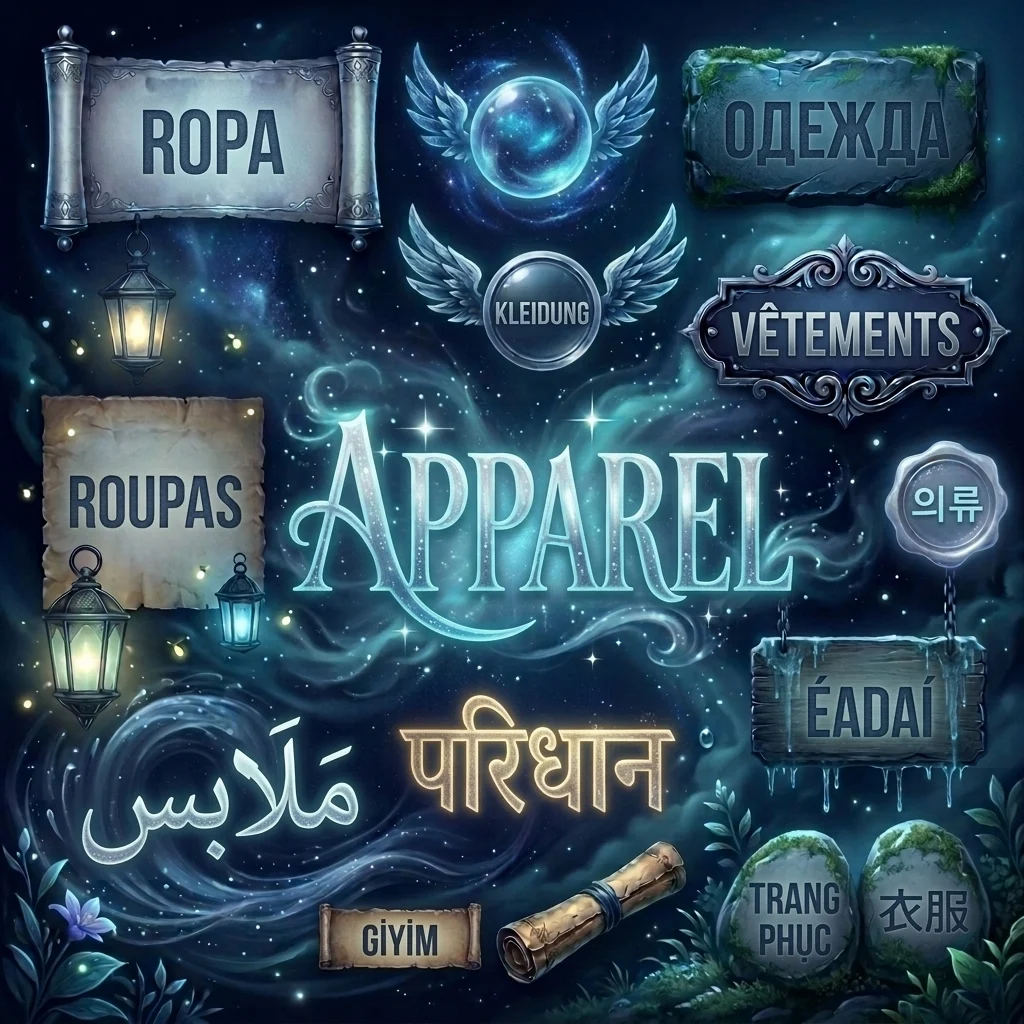
Have you ever wondered how people around the world say apparel in their native languages?
Clothing is part of everyday life, and learning the words used for apparel in different cultures can help you communicate more naturally,
explore fashion traditions, and understand international clothing terminology.
The English word apparel refers to clothing, garments, or attire.
Depending on the language, the most natural translation may be a general word for clothes or a more formal term used in the fashion and retail industries.
In this guide, you will discover apparel in 70 different languages, along with native translations, easy English pronunciations,
practical example sentences, and their English meanings. Whether you are a language learner, traveler, fashion enthusiast, or clothing business owner, this list will help you expand your vocabulary.
Apparel in Different Languages: 70 Translations
The table below includes 70 languages from Europe, Asia, Africa, and the Americas. Each language features a common translation for apparel or clothing and a short example sentence showing how it can be used.
| No. | Language | Native Phrase | Easy English Pronunciation | Example Sentence | English Meaning |
|---|---|---|---|---|---|
| 1 | Spanish | Ropa | ROH-pah | Compré ropa nueva. | I bought new clothes. |
| 2 | French | Vêtements | vet-MAHN | Ces vêtements sont confortables. | These clothes are comfortable. |
| 3 | German | Kleidung | KLY-doong | Die Kleidung ist modern. | The clothing is modern. |
| 4 | Italian | Abbigliamento | ab-beel-yah-MEN-toh | L’abbigliamento è elegante. | The apparel is elegant. |
| 5 | Portuguese | Roupas | HOH-pahs | Comprei roupas novas. | I bought new clothes. |
| 6 | Dutch | Kleding | KLAY-ding | Deze kleding is mooi. | These clothes are beautiful. |
| 7 | Swedish | Kläder | KLAY-der | Jag köpte nya kläder. | I bought new clothes. |
| 8 | Norwegian | Klær | KLAIR | Jeg trenger nye klær. | I need new clothes. |
| 9 | Danish | Tøj | toy | Mit tøj er rent. | My clothes are clean. |
| 10 | Finnish | Vaatteet | VAHT-teet | Nämä vaatteet ovat mukavia. | These clothes are comfortable. |
| 11 | Icelandic | Föt | fuht | Ég keypti ný föt. | I bought new clothes. |
| 12 | Irish | Éadaí | AY-dee | Tá éadaí nua agam. | I have new clothes. |
| 13 | Welsh | Dillad | DHIL-ad | Mae’r dillad yn lân. | The clothes are clean. |
| 14 | Polish | Odzież | OH-jyesh | Ta odzież jest modna. | This apparel is fashionable. |
| 15 | Czech | Oblečení | OB-leh-cheh-nee | Toto oblečení je pohodlné. | These clothes are comfortable. |
| 16 | Slovak | Oblečenie | OB-leh-cheh-nyeh | Potrebujem nové oblečenie. | I need new clothes. |
| 17 | Slovenian | Oblačila | ob-LAH-chee-lah | Oblačila so čista. | The clothes are clean. |
| 18 | Croatian | Odjeća | OHD-yeh-cha | Kupila sam novu odjeću. | I bought new clothes. |
| 19 | Serbian | Одећа | oh-DEH-cha | Одећа је лепа. | The clothes are beautiful. |
| 20 | Bosnian | Odjeća | OHD-yeh-cha | Trebam novu odjeću. | I need new clothes. |
| 21 | Bulgarian | Облекло | ob-LEK-loh | Облеклото е удобно. | The clothing is comfortable. |
| 22 | Macedonian | Облека | ob-LEH-kah | Облеката е нова. | The clothing is new. |
| 23 | Russian | Одежда | ah-DYEZH-dah | Эта одежда удобная. | These clothes are comfortable. |
| 24 | Ukrainian | Одяг | OH-dyah | Цей одяг стильний. | These clothes are stylish. |
| 25 | Belarusian | Адзенне | ad-ZYEN-nye | Гэта адзенне прыгожае. | These clothes are beautiful. |
| 26 | Greek | Ρούχα | ROO-khah | Τα ρούχα είναι καθαρά. | The clothes are clean. |
| 27 | Romanian | Îmbrăcăminte | uhm-bruh-kuh-MEEN-teh | Îmbrăcămintea este elegantă. | The clothing is elegant. |
| 28 | Hungarian | Ruházat | ROO-hah-zaht | A ruházat modern. | The clothing is modern. |
| 29 | Albanian | Veshje | VESH-yeh | Këto veshje janë të bukura. | These clothes are beautiful. |
| 30 | Lithuanian | Drabužiai | drah-boo-ZHYAI | Drabužiai yra švarūs. | The clothes are clean. |
| 31 | Latvian | Apģērbs | AHP-gairbs | Apģērbs ir ērts. | The clothing is comfortable. |
| 32 | Estonian | Rõivad | RUH-ee-vad | Need rõivad on uued. | These clothes are new. |
| 33 | Turkish | Giyim | gee-YEEM | Bu giyim tarzı çok şık. | This clothing style is very stylish. |
| 34 | Arabic | ملابس | ma-LAA-bis | هذه الملابس جميلة. | These clothes are beautiful. |
| 35 | Hebrew | בגדים | b’ga-DEEM | הבגדים האלה נוחים. | These clothes are comfortable. |
| 36 | Persian | پوشاک | poo-SHAAK | این پوشاک زیباست. | This apparel is beautiful. |
| 37 | Urdu | لباس | li-BAAS | یہ لباس خوبصورت ہے۔ | This outfit is beautiful. |
| 38 | Hindi | कपड़े | KAP-ray | ये कपड़े बहुत अच्छे हैं। | These clothes are very nice. |
| 39 | Bengali | পোশাক | poh-SHAK | এই পোশাকটি সুন্দর। | This outfit is beautiful. |
| 40 | Punjabi | ਕੱਪੜੇ | KAP-ray | ਇਹ ਕੱਪੜੇ ਬਹੁਤ ਸੋਹਣੇ ਹਨ। | These clothes are very beautiful. |
| 41 | Gujarati | કપડાં | KAP-daan | આ કપડાં સુંદર છે. | These clothes are beautiful. |
| 42 | Marathi | कपडे | kuh-puh-DAY | हे कपडे छान आहेत. | These clothes are nice. |
| 43 | Nepali | लुगा | LOO-gah | यी लुगा राम्रा छन्। | These clothes are nice. |
| 44 | Sinhala | ඇඳුම් | an-doom | මේ ඇඳුම් ලස්සනයි. | These clothes are beautiful. |
| 45 | Tamil | ஆடைகள் | AA-dai-gal | இந்த ஆடைகள் அழகாக உள்ளன. | These clothes are beautiful. |
| 46 | Telugu | దుస్తులు | DOOS-too-loo | ఈ దుస్తులు అందంగా ఉన్నాయి. | These clothes are beautiful. |
| 47 | Kannada | ಬಟ್ಟೆಗಳು | BUT-teh-gah-loo | ಈ ಬಟ್ಟೆಗಳು ಚೆನ್ನಾಗಿವೆ. | These clothes are nice. |
| 48 | Malayalam | വസ്ത്രങ്ങൾ | VAS-trang-ngal | ഈ വസ്ത്രങ്ങൾ മനോഹരമാണ്. | These clothes are beautiful. |
| 49 | Thai | เสื้อผ้า | seuua-phaa | เสื้อผ้าเหล่านี้สวยมาก | These clothes are very beautiful. |
| 50 | Vietnamese | Quần áo | kwun ow | Quần áo này rất đẹp. | These clothes are very beautiful. |
| 51 | Indonesian | Pakaian | pah-KAI-an | Pakaian ini nyaman. | These clothes are comfortable. |
| 52 | Malay | Pakaian | pah-KAI-an | Pakaian ini cantik. | These clothes are beautiful. |
| 53 | Filipino (Tagalog) | Damit | dah-MEET | Maganda ang damit na ito. | This clothing is beautiful. |
| 54 | Mandarin Chinese | 服装 | fú zhuāng | 这家店的服装很时尚。 | This store’s apparel is fashionable. |
| 55 | Japanese | 衣類 | ee-roo-ee | この衣類は丈夫です。 | These garments are durable. |
| 56 | Korean | 의류 | ui-ryu | 이 의류는 편안합니다. | These garments are comfortable. |
| 57 | Mongolian | Хувцас | khoov-tsas | Энэ хувцас гоё. | These clothes are nice. |
| 58 | Kazakh | Киім | kee-YEEM | Бұл киім әдемі. | These clothes are beautiful. |
| 59 | Uzbek | Kiyim | kee-YEEM | Bu kiyim chiroyli. | These clothes are beautiful. |
| 60 | Azerbaijani | Geyim | geh-YEEM | Bu geyim çox gözəldir. | These clothes are very beautiful. |
| 61 | Georgian | ტანსაცმელი | tan-sats-MEH-lee | ეს ტანსაცმელი ლამაზია. | These clothes are beautiful. |
| 62 | Armenian | Հագուստ | hah-KOOST | Այս հագուստը գեղեցիկ է։ | These clothes are beautiful. |
| 63 | Swahili | Mavazi | mah-VAH-zee | Mavazi haya ni mazuri. | These clothes are beautiful. |
| 64 | Zulu | Izingubo | ee-zeen-GOO-boh | Lezi zingubo zinhle. | These clothes are beautiful. |
| 65 | Xhosa | Impahla | eem-PAH-hlah | Ezi mpahla zintle. | These clothes are beautiful. |
| 66 | Yoruba | Aṣọ | ah-SHAW | Aṣọ yìí lẹ́wà. | This clothing is beautiful. |
| 67 | Igbo | Uwe | OO-weh | Uwe a mara mma. | This clothing is beautiful. |
| 68 | Hausa | Tufafi | too-FAH-fee | Tufafin nan suna da kyau. | These clothes are beautiful. |
| 69 | Amharic | ልብስ | lihbs | ይህ ልብስ ቆንጆ ነው። | This clothing is beautiful. |
| 70 | Haitian Creole | Rad | rahd | Rad sa a bèl. | These clothes are beautiful. |
Note: These are common equivalents for apparel, clothing, or garments. Some words are more suitable for everyday conversation, while others are more common in formal, fashion, or retail contexts. Pronunciation guides are approximate.
What Does Apparel Mean?
Apparel is a general term for clothing worn on the body. It includes garments designed for daily activities, professional settings, sports, special occasions, and cultural celebrations.
Common types of apparel include:
- Shirts, T-shirts, and blouses
- Jeans, trousers, skirts, and shorts
- Dresses, suits, and formal outfits
- Jackets, coats, and sweaters
- Sportswear and uniforms
- Traditional and cultural garments
The word apparel is especially common in the fashion and retail industries. You may encounter expressions such as apparel brand, apparel store, apparel design, and apparel manufacturing.
How to Say Apparel in Different Languages
When choosing an apparel translation, consider whether you mean clothing in general, a specific outfit, or garments sold by a business.
Here are several useful translations:
- Spanish: Ropa — a common everyday word for clothes.
- French: Vêtements — clothing or garments.
- German: Kleidung — clothing in general.
- Italian: Abbigliamento — apparel or clothing, often used in fashion and retail.
- Arabic: ملابس — a widely used word for clothes.
- Hindi: कपड़े — the everyday term for clothes.
- Urdu: لباس — clothing, dress, or attire, depending on context.
- Mandarin Chinese: 服装 — apparel, garments, or fashion-related clothing.
- Japanese: 衣類 — clothing or garments, often used in formal or product-related contexts.
- Korean: 의류 — apparel or clothing, especially in commercial settings.
For product descriptions and international business, choose the word that sounds natural to local readers rather than translating the English term mechanically.
Apparel in All Languages: Related Clothing Vocabulary
Understanding related fashion words will help you use apparel translations more accurately.
| English Word | Definition | Example |
|---|---|---|
| Clothing | Garments worn on the body | The shop sells clothing. |
| Garment | An individual item of clothing | This garment is made from cotton. |
| Attire | Clothing appropriate for an occasion | Formal attire is required. |
| Outfit | A combination of clothes worn together | She chose a casual outfit. |
| Fashion | Styles of clothing and appearance | Fashion changes over time. |
| Sportswear | Clothing designed for sports or exercise | He bought new sportswear. |
| Formal wear | Clothing for formal events | She wore formal wear to the ceremony. |
| Traditional clothing | Garments associated with a culture | The event showcased traditional clothing. |
| Accessories | Items that complement an outfit | The belt matches his accessories. |
| Ready-to-wear | Clothing made in standard sizes for sale | The brand launched a ready-to-wear collection. |
These distinctions are useful when learning languages, writing fashion content, or translating apparel product listings.
Apparel Around the World: Cultural and Fashion Differences
Clothing reflects more than personal style. It can also express cultural identity, regional traditions, occupation, climate, and social customs.
Everyday clothing
Everyday apparel includes comfortable clothes worn for work, school, shopping, and leisure. Many languages have a familiar everyday word for this broad category.
Traditional apparel
Traditional garments often have important cultural meanings. Examples include the sari, kimono, hanbok, kilt, and various regional embroidered outfits.
When translating the name of a specific traditional garment, preserving its established name is often more accurate than replacing it with a general word for clothing.
Fashion and commercial apparel
In the clothing industry, apparel can refer to products designed, manufactured, marketed, and sold by brands. Common expressions include apparel retail, apparel design, apparel production, and apparel collections.
Businesses working across languages should consider local terminology, product categories, and customer expectations when translating fashion-related content.
Tips for Learning Apparel Translations
Use these practical strategies to remember and apply apparel vocabulary:
- Learn words in context. Example sentences make translations easier to remember.
- Practice native spelling. Familiarity with the original writing system helps improve recognition.
- Compare formal and informal terms. The best word for a conversation may differ from the best term for a product catalog.
- Pay attention to regional usage. Some expressions vary across countries and communities.
- Learn specific garment names. Words for shirts, jackets, dresses, and uniforms make your vocabulary more precise.
These techniques are helpful for students, travelers, fashion professionals, and anyone interested in communicating across cultures.
Frequently Asked Questions
1. What is apparel in simple words?
Apparel means clothes or garments worn on the body. It includes everyday clothing, formal outfits, uniforms, sportswear, and traditional garments.
2. How do you say apparel in Spanish?
The common Spanish word for apparel is ropa, meaning clothes. The word prendas is also used for individual garments or clothing items.
3. What is the French word for apparel?
The French word commonly used for apparel is vêtements. It refers to clothing or garments and is used in everyday and retail contexts.
4. What is the difference between apparel and clothing?
Both words refer to garments worn on the body. Clothing is more common in everyday English, while apparel often appears in fashion, retail, and manufacturing contexts.
5. Why do apparel translations vary between languages?
Translations vary because languages have different vocabulary, grammatical structures, cultural traditions, and everyday expressions. Some use a general word for clothes, while others distinguish between garments, outfits, and formal attire.
Conclusion
Learning apparel in different languages helps you expand your vocabulary, explore cultural clothing traditions, and communicate more effectively in personal and professional settings. From Spanish ropa to French vêtements, Urdu لباس, and Mandarin Chinese 服装, each language offers its own way to describe clothing.
Use these 70 translations and example sentences as a starting point for language learning, travel, fashion writing, or international business. Always consider the context to choose the most natural translation.

I am Johnny Thomas, a passionate language enthusiast and writer. I enjoy exploring different languages, cultures, words, and expressions. I create helpful, easy-to-understand content to help readers discover languages and communicate confidently.