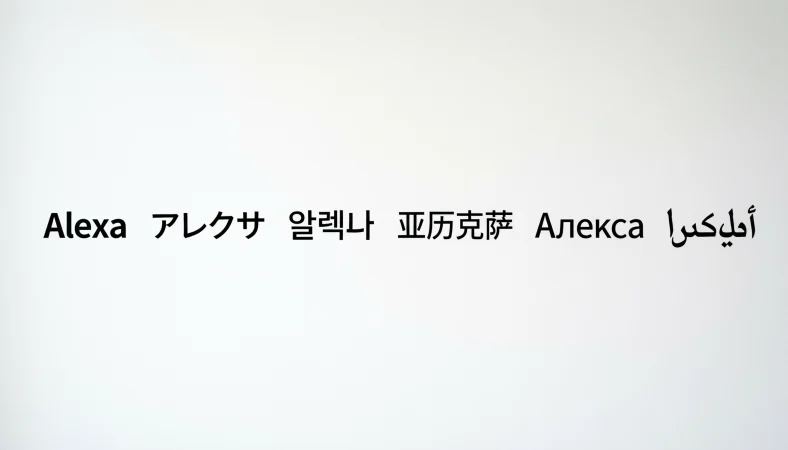
The name Alexa is recognized in many countries, thanks to its modern sound, international popularity, and association with Amazon’s virtual assistant.
However, people searching for Alexa in different languages may want to know more than just how the name is pronounced.
They may be curious about its meaning, translations, cultural variations, spelling, or equivalent names in other languages.
This guide explores how Alexa is understood across cultures, how people pronounce it, and whether it has a direct translation in other languages.
Quick Answer: Alexa in Different Languages
Alexa is generally written as Alexa in English and many other languages that use the Latin alphabet. Its pronunciation may vary depending on local speech patterns.
The name is associated with Alexandra and the Greek roots meaning “defender of alternative.” It usually remains a personal name rather than being translated literally. In languages using other writing systems, Alexa may be represented through transliteration.
1. What Does the Name Alexa Mean?
Alexa is commonly regarded as a short form of Alexandra, the feminine form of Alexander. Alexander comes from the Greek name Alexandros, which is traditionally explained through elements associated with defending and humanity.
Therefore, Alexa is often interpreted as meaning:
- Defender of alternative
- Protector of people
- Defender of humanity
- Helper or guardian of others, as a broader symbolic interpretation
The exact interpretation can vary according to the naming source, but the connection with protection and defense is widely recognized.
2. Alexa in Different Languages: Meaning and Spelling
In many languages, Alexa retains the same spelling. However, pronunciation, stress, and the way speakers adapt foreign names can differ.
| Language | Common written form | General pronunciation notes |
|---|---|---|
| English | Alexa | Usually uh-LEK-suh |
| Spanish | Alexa | Often ah-LEK-sah |
| French | Alexa | French-influenced vowel sounds |
| German | Alexa | Commonly pronounced with a clear “LEK” sound |
| Italian | Alexa | Often pronounced ah-LEK-sah |
| Portuguese | Alexa | Pronunciation varies by region |
| Dutch | Alexa | Usually adapted to Dutch speech patterns |
| Swedish | Alexa | Generally retains the original spelling |
| Turkish | Alexa | May be pronounced with Turkish-influenced vowels |
| Indonesian | Alexa | Usually pronounced with relatively clear vowel sounds |
| Urdu | الیکسا | A phonetic rendering of the name |
| Arabic | أليكسا | A phonetic rendering of the name |
| Russian | Алекса | A Cyrillic rendering |
| Greek | Αλέξα | A Greek-script rendering |
| Japanese | アレクサ | A Japanese phonetic rendering |
| Korean | 알렉사 | A Korean phonetic rendering |
| Chinese | 阿莱克萨 | One possible phonetic transliteration |
These examples show that the name often remains recognizable across languages. The forms written in other scripts represent its sound rather than translate its meaning.
3. Alexa in English
In English-speaking countries, Alexa is a familiar feminine name. It is often pronounced uh-LEK-suh, although accents can influence the first vowel and the final syllable.
The name became especially recognizable through Amazon’s Alexa voice assistant, introduced in the 2010s. As a result, people may associate Alexa with technology as well as with its traditional use as a personal name.
Despite this association, Alexa is not exclusively a technology-related word. It continues to function as a given name, and its connection to Alexandra gives it a longer naming history than the virtual assistant itself.
4. Alexa in Spanish
In Spanish-speaking communities, Alexa is generally written the same way as in English. Spanish speakers may pronounce the vowels more consistently than many English speakers, producing a sound closer to ah-LEK-sah.
The name fits naturally into modern Spanish-language naming practices, where international names and familiar European names are both used.
For example, a Spanish speaker might write, “Alexa es un nombre femenino,” meaning “Alexa is a feminine name.”
5. Alexa in French
In French, Alexa is recognizable as a given name, although Alexandra and Alexia are also familiar names in French-speaking contexts.
French pronunciation may differ from English pronunciation because French speakers use their own vowel patterns and speech rhythm. The precise sound can depend on the speaker and region.
Alexa does not ordinarily translate into a French word with a separate dictionary meaning. Its historical connection to Alexandra remains the more useful way to explain its meaning.
6. Alexa in German and Other European Languages
Alexa is used or recognized in several European languages, including German, Italian, Dutch, and Swedish. In these languages, the spelling is often retained, while the pronunciation reflects local habits.
In German, the name may be pronounced with clearly articulated syllables. Italian speakers often pronounce written vowels more consistently, so Alexa may sound closer to ah-LEK-sah. Dutch and Swedish speakers may also adapt the vowels and rhythm to their own accents.
| Language | Related name | General connection |
|---|---|---|
| German | Alexandra | A longer related form |
| Italian | Alessandra | Italian form related to Alexandra |
| French | Alexandra | A familiar feminine form |
| Spanish | Alejandra | Spanish form related to Alexandra |
| Portuguese | Alexandra | A common related form |
| Greek | Alexandra | A form connected to the Greek naming tradition |
These related names share a historical connection, but they are not all direct translations of Alexa. Some have distinct spellings and established pronunciation rules in their respective languages.
7. Alexa in Arabic and Urdu
People searching for Alexa in Arabic or Urdu may want to know how to write the name in their preferred script.
These spellings aim to reproduce the sound of the name. They do not create a new Arabic or Urdu meaning, and pronunciation can vary between speakers.
For parents or writers using the name in a multilingual setting, it is useful to distinguish between the name’s original linguistic background and its written representation in another language.
8. Alexa in Russian, Greek, Japanese, Korean, and Chinese
Languages that use writing systems other than the Latin alphabet often represent Alexa according to its pronunciation.
| Language | Example written form | Writing system |
|---|---|---|
| Russian | Алекса | Cyrillic |
| Greek | Αλέξα | Greek alphabet |
| Japanese | アレクサ | Katakana |
| Korean | 알렉사 | Hangul |
| Chinese | 阿莱克萨 | Chinese characters used phonetically |
Similarly, Japanese katakana is commonly used to write foreign names. Korean Hangul can represent the name’s sounds using Korean spelling conventions.
9. Is Alexa Translated or Transliterated?
This distinction is important when researching names across languages.
Translation replaces a word or expression with an equivalent in another language. Transliteration represents the sounds of a name using another writing system.
Personal names are often transliterated instead of translated. For example, the Russian form Алекса represents the sound of Alexa using Cyrillic letters. The Urdu form الیکسا similarly represents the name in Urdu script.
The name’s meaning is a separate question. Its connection to Alexandra provides the historical interpretation “defender of alternative,” but that phrase is not a literal translation of the letters in Alexa.
When researching names, check whether a source is discussing pronunciation, spelling, historical origin, or symbolic meaning. These are related subjects, but they are not identical.
10. Alexa vs. Alexia vs. Alexandra
Alexa is sometimes confused with Alexia or Alexandra because all three names have similar spellings.
| Name | General background | Key distinction |
|---|---|---|
| Alexa | Commonly a shortened form of Alexandra | Short, modern, and internationally recognizable |
| Alexia | A distinct feminine name related to the Alexander name family | Has its own established spelling and pronunciation |
| Alexandra | Feminine form of Alexander | A longer traditional form |
| Alejandra | Spanish form of Alexandra | Reflects Spanish spelling and pronunciation |
| Alessandra | Italian form of Alexandra | Reflects Italian naming traditions |
Although these names are related, their meanings and histories should be explained through their individual linguistic backgrounds. It is best not to assume that every name beginning with “Alex-” has precisely the same origin or usage.
11. Cultural Significance and Modern Popularity
Alexa has a contemporary, international feel. Its relatively short spelling makes it easy to recognize, while its relationship to Alexandra connects it to a longstanding naming tradition.
The name can appeal to families looking for something familiar without choosing the longer Alexandra. It also works in many multilingual environments because its spelling is retained in numerous languages.
12. Common Misconceptions About Alexa
Misconception 1: Alexa has a completely different meaning in every language.
Not usually. In many languages, Alexa remains the same personal name, while pronunciation and spelling conventions may change.
Misconception 2: The name literally means “smart assistant.”
No. Its modern association with Amazon’s voice assistant does not determine its historical meaning as a personal name.
Misconception 3: Alexa is a direct translation of Alexandra in every language.
Alexa is commonly treated as a shortened form of Alexandra, but related names have different histories and usage patterns. It is not necessarily a direct translation.
Misconception 4: Every foreign spelling has the same literal meaning.
Transliterations mainly represent sound. The characters used in another writing system do not automatically carry the name’s original meaning.
Misconception 5: Alexa has one universal pronunciation.
Pronunciation changes according to language, accent, and individual preference.
13. Why People Search for Alexa in Different Languages
There are several reasons why this topic attracts interest.
- Choosing a baby name: Parents may want a name that works in more than one language.
- Learning pronunciation: Language learners may want to say someone’s name respectfully and correctly.
- Understanding name meanings: Readers may want to know the historical meaning behind a familiar name.
- Writing multilingual content: Writers may need the appropriate spelling for a particular audience.
- Exploring cultural differences: People may be curious about how names move between languages and writing systems.
- Understanding technology references: Some users may be searching for the voice assistant rather than the personal name.
Identifying the reason for the search helps distinguish between the name’s etymology, its international forms, and the technology product associated with it.
Final Thought
Alexa is a recognizable feminine name with a historical connection to Alexandra and the Greek name Alexander. Its commonly cited meaning, “defender of alternative,” gives it a positive association with protection and courage.
Across languages, the name usually retains its identity, although pronunciation and writing systems may change. Examples include الیکسا in Urdu, Алекса in Russian, アレクサ in Japanese, and 알렉사 in Korean.
When exploring Alexa in different languages, remember that a written variation is not necessarily a translation. Transliteration represents a name’s sound, while etymology explains its historical roots.
if you are choosing a baby name, studying languages, or researching international naming traditions, understanding this difference will help you interpret the name more accurately.
FAQs About Alexa in Different Languages
1. What does Alexa mean in different languages?
Alexa is commonly associated with Alexandra and is traditionally interpreted as “defender of alternative.” The name usually retains this historical association across languages.
2. How do you write Alexa in Urdu?
Alexa can be written as الیکسا in Urdu. This is a phonetic rendering of the name rather than a literal translation of its meaning.
3. What is Alexa in Arabic?
A common Arabic-script rendering is أليكسا. It represents the sound of the name and does not necessarily have a separate Arabic meaning.
4. How do you say Alexa in Spanish?
The name is generally written Alexa in Spanish. Its pronunciation is often closer to ah-LEK-sah than the typical English pronunciation.
5. Is Alexa a Greek name?
Alexa is commonly treated as a shortened form of Alexandra, which is connected to the Greek name Alexandros. Its traditional meaning is associated with defending humanity.
6. Is Alexa the same as Alexia?
No. Alexa and Alexia are distinct names, although both are associated with the Alexander name family. They have different spellings and may have different pronunciations.
7. Does Alexa mean “defender of alternative ”?
That is the commonly cited meaning associated with Alexa through Alexandra and Alexander. It is an etymological interpretation, not a literal translation of the name in every language.

I am Johnny Thomas, a passionate language enthusiast and writer. I enjoy exploring different languages, cultures, words, and expressions. I create helpful, easy-to-understand content to help readers discover languages and communicate confidently.