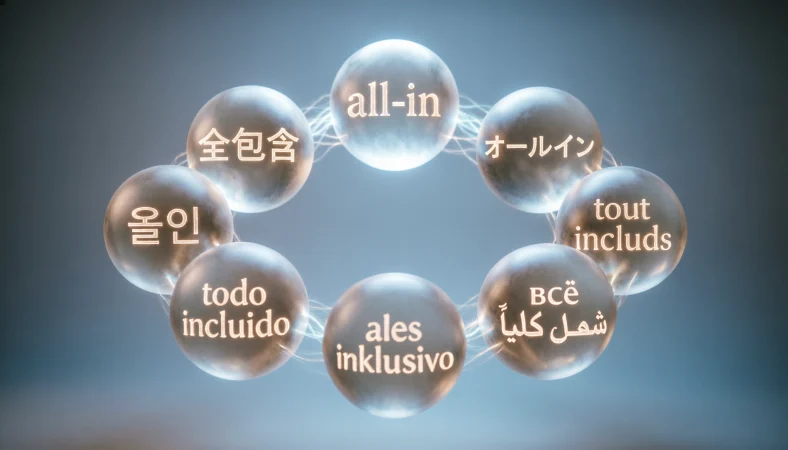
The word “all” is one of the most commonly used words in English. It helps us talk about everything, everyone, or the complete amount of something.
if you’re learning a new language, writing a message, studying vocabulary, or exploring words from different cultures, knowing how to say “all” in different languages can make communication easier.
The translation of “all” depends on the sentence. In Spanish, it can be todo, toda, todos, or todas. In French, it may be tout, toute, tous, or toutes.
Other languages use different words depending on whether you’re talking about people, objects, quantities, or an entire group.
All in Different Languages at a Glance
Here are 15 common translations of “all.” The exact word may change according to grammar and context.
| Language | Translation of “all” | Notes |
|---|---|---|
| English | All | Everything or everyone |
| Spanish | Todo / Toda / Todos / Todas | Changes with gender and number |
| French | Tout / Toute / Tous / Toutes | Changes with gender and number |
| German | Alle / Alles | Depends on usage |
| Italian | Tutto / Tutta / Tutti / Tutte | Changes with gender and number |
| Portuguese | Todo / Toda / Todos / Todas | Changes with gender and number |
| Dutch | Alle / Alles | Depends on context |
| Russian | Весь / Вся / Все | Changes with gender and number |
| Arabic | كلّ (kull) | Common word for all or every |
| Hindi | सब (sab) | All or everyone |
| Urdu | سب (sab) | All or everyone |
| Chinese (Mandarin) | 所有 (suǒyǒu) | All; often used before a noun |
| Japanese | すべて (subete) | All or everything |
| Korean | 모두 (modu) | Everyone or all |
| Swahili | Wote | All, especially people; forms vary |
How Do You Say All in European Languages?
European languages use different words to express completeness. Some change the word to match grammatical gender or number, while others use separate forms for “everything” and “everyone.”
- Spanish: Todo, toda, todos, todas
- French: Tout, toute, tous, toutes
- German: Alle, alles
- Italian: Tutto, tutta, tutti, tutte
- Portuguese: Todo, toda, todos, todas
- Dutch: Alle, alles
- Swedish: All, alla
- Norwegian: Alle, alt
- Danish: Alle, alt
- Finnish: Kaikki
- Polish: Wszystko, wszyscy
- Czech: Vše, všichni
- Greek: Όλα (óla)
- Romanian: Tot, toată, toți, toate
- Hungarian: Minden, összes
These are common equivalents, not interchangeable forms for every sentence. The surrounding grammar determines the correct choice.
All in Asian Languages
Asian languages express “all” through different grammatical structures. Some use a single word, while others select a word based on whether the sentence refers to people, things, or a complete quantity.
- Chinese (Mandarin): 所有 (suǒyǒu)
- Japanese: すべて (subete)
- Korean: 모두 (modu)
- Hindi: सब (sab)
- Bengali: সব (shob)
- Tamil: அனைத்தும் (anaiththum)
- Telugu: అన్నీ (annī)
- Thai: ทั้งหมด (tháng-mòt)
- Vietnamese: Tất cả
- Indonesian: Semua
- Malay: Semua
- Filipino: Lahat
- Nepali: सबै (sabai)
- Punjabi: ਸਾਰੇ (sāre)
- Urdu: سب (sab)
The best translation depends on the sentence. For example, “all the students” and “all of it” may require different constructions.
All in African Languages
Africa has thousands of languages, each with its own vocabulary and grammatical rules. The following examples illustrate common ways to express “all” in several widely spoken African languages.
- Swahili: Wote / Yote / Vyote, depending on the noun
- Afrikaans: Almal / Alles
- Amharic: ሁሉ (hulu)
- Somali: Dhammaan
- Yoruba: Gbogbo
- Igbo: Niile
- Hausa: Duka
- Zulu: Konke / Bonke, depending on context
- Xhosa: Konke / Bonke, depending on context
- Shona: Zvose
- Sesotho: Bohle / tsohle, depending on context
- Setswana: Botlhe
- Kinyarwanda: Bose / byose, depending on context
- Lingala: Nyoso
- Malagasy: Rehetra
These forms are useful starting points, but the correct word may change with noun class, sentence structure, and dialect.
All in Middle Eastern Languages
In Middle Eastern languages, the translation of “all” may depend on whether it means every item, the whole amount, or every person in a group.
- Arabic: كلّ (kull)
- Hebrew: כל (kol)
- Persian: همه (hameh)
- Turkish: Tüm / bütün
- Kurdish (Kurmanji): Hemû
- Pashto: ټول (ṭol)
- Armenian: Բոլոր (bolor)
- Georgian: ყველა (qvela)
- Azerbaijani: Bütün / hamısı
- Kazakh: Барлық (barlıq)
- Uzbek: Barcha
- Kyrgyz: Бардык (bardyk)
- Tajik: Ҳама (hama)
- Turkmen: Ähli
- Urdu: سب (sab)
For formal writing or language study, check how each word behaves in a full sentence rather than relying on a single-word translation.
All in Different Languages With Pronunciation
Pronunciation guides can help you recognize and say the word naturally. The spellings below are approximate English-friendly guides.
- Spanish — todo: TOH-doh
- French — tout: too
- German — alles: AH-less
- Italian — tutto: TOOT-toh
- Portuguese — tudo: TOO-doo
- Dutch — alles: AH-luhs
- Russian — всё (vsyo): approximately fsyo
- Arabic — kull: approximately kul
- Hindi — sab: suh-b
- Urdu — sab: suh-b
- Mandarin — 所有 (suǒyǒu): approximately swaw-yoh, with tones
- Japanese — すべて (subete): soo-beh-teh
- Korean — 모두 (modu): moh-doo
- Swahili — wote: woh-teh
- Turkish — bütün: bü-tün, with Turkish vowel sounds
Pronunciation varies by region. Audio from a native speaker is especially helpful for tonal languages and sounds that do not exist in English.
All Meaning Everything in Different Languages
When “all” means everything as a complete collection, many languages use a specific word or phrase. This meaning is slightly different from “all the people” or “all the books.”
- Spanish: Todo
- French: Tout
- German: Alles
- Italian: Tutto
- Portuguese: Tudo
- Dutch: Alles
- Swedish: Allt
- Norwegian: Alt
- Danish: Alt
- Finnish: Kaikki
- Russian: Всё (vsyo)
- Arabic: كل شيء (kull shay’)
- Hindi: सब कुछ (sab kuchh)
- Chinese: 一切 (yíqiè)
- Japanese: すべて (subete)
For example, “I know everything” is not always translated by placing the word for “all” directly into the sentence. Each language has its own natural expression.
All Meaning Everyone in Different Languages
When “all” refers to people, the most natural translation often differs from the word used for objects or abstract ideas.
- Spanish: Todos / Todas
- French: Tout le monde
- German: Alle
- Italian: Tutti / Tutte
- Portuguese: Todos / Todas
- Dutch: Iedereen / Allemaal
- Swedish: Alla
- Norwegian: Alle
- Danish: Alle
- Finnish: Kaikki
- Russian: Все (vse)
- Arabic: الجميع (al-jamīʿ)
- Hindi: सभी (sabhī)
- Japanese: みんな (minna)
- Korean: 모두 (modu)
Remember that some of these expressions literally mean “everyone” rather than “all.” They are included because they are often the most natural translation in sentences about people.
All Meaning Every in Different Languages
“All” and “every” are closely related, but they do not always translate into the same word. “Every student” refers to each individual student, while “all students” refers to the group as a whole.
- Spanish: Cada
- French: Chaque
- German: Jeder / Jede / Jedes
- Italian: Ogni
- Portuguese: Cada
- Dutch: Elke / Iedere
- Swedish: Varje
- Norwegian: Hver
- Danish: Hver
- Finnish: Jokainen
- Russian: Каждый (kazhdy)
- Arabic: كلّ (kull)
- Hindi: हर (har)
- Chinese: 每 (měi)
- Japanese: 毎 (mai), used in compounds
These words generally correspond to “every” or “each,” so use them when that meaning fits the sentence.
All in Different Languages for Everyday Sentences
Learning “all” in a sentence is often more useful than memorizing a list. These examples show common expressions in several languages.
- English: All of us are here.
- Spanish: Todos estamos aquí.
- French: Nous sommes tous ici.
- German: Wir sind alle hier.
- Italian: Siamo tutti qui.
- Portuguese: Estamos todos aqui.
- Dutch: We zijn er allemaal.
- Swedish: Vi är alla här.
- Russian: Мы все здесь.
- Arabic: نحن جميعًا هنا.
- Hindi: हम सब यहाँ हैं।
- Chinese: 我们都在这里。
- Japanese: 私たちはみんなここにいます。
- Korean: 우리 모두 여기 있어요.
- Swahili: Sisi sote tuko hapa.
The translations convey the same general meaning, although natural word order and levels of formality vary.
All in Different Languages for Social Media and Captions
If you’re using “all” in a caption, bio, slogan, or short message, choose the translation that matches the intended meaning. A direct dictionary equivalent may not always sound natural.
- Spanish: Todo es posible — Everything is possible.
- French: Tout est possible — Everything is possible.
- German: Alles ist möglich — Everything is possible.
- Italian: Tutto è possibile — Everything is possible.
- Portuguese: Tudo é possível — Everything is possible.
- Dutch: Alles is mogelijk — Everything is possible.
- Swedish: Allt är möjligt — Everything is possible.
- Russian: Всё возможно — Everything is possible.
- Arabic: كل شيء ممكن — Everything is possible.
- Hindi: सब कुछ संभव है — Everything is possible.
- Chinese: 一切皆有可能 — Everything is possible.
- Japanese: すべて可能です — Everything is possible.
- Korean: 모든 것이 가능해요 — Everything is possible.
- Swahili: Kila kitu kinawezekana — Everything is possible.
- Turkish: Her şey mümkün — Everything is possible.
These are short phrase examples, not merely one-word translations. They can be useful for captions, motivational messages, or language practice.
What Is the Difference Between All, Everything, and Everyone?
These English words are related, but each has a different use. Understanding the distinction helps you choose the correct translation in another language.
- All: Refers to a complete group or quantity.
- Everything: Refers to all things collectively.
- Everyone: Refers to every person.
- All students: The complete group of students.
- Everything is ready: All things are ready.
- Everyone is welcome: Every person is welcome.
- All the water: The complete amount of water.
- All of them: Every member of a particular group.
- All day: The entire day.
- Every day: Each day, repeatedly.
- All people: People as a complete group.
- Every person: Each person individually.
- All at once: Everything or everyone together at the same time.
- All alone: Completely alone.
- All in all: Considering everything overall.
A language may use different words or grammatical patterns for each expression, so context is essential.
Common Mistakes When Translating All
The word “all” seems simple, but direct translation can cause errors because languages organize nouns and quantities differently.
- Using one form everywhere: Spanish and Italian change forms according to gender and number.
- Confusing all with every: “All the books” and “every book” have different grammatical structures.
- Ignoring context: “All of us” refers to people, not objects.
- Forgetting noun classes: Some languages require agreement with a noun’s class.
- Translating word for word: Natural expressions may use a phrase rather than one word.
- Ignoring word order: The position of “all” changes across languages.
- Mixing formal and informal expressions: Some situations require more polite phrasing.
- Misusing plural forms: The correct word may depend on the number of people or things.
- Overlooking articles: Languages differ in how they use “the” with words meaning all.
- Confusing quantity and completeness: “All the food” is not the same as “every meal.”
- Assuming one regional form is universal: Usage can vary by dialect.
- Relying only on pronunciation spelling: Romanized guides are approximate.
All in Different Languages: Quick Comparison Table
Use this table to quickly identify a common translation according to the meaning you need.
| Meaning | Spanish | French | German | Japanese |
|---|---|---|---|---|
| All / everything | Todo | Tout | Alles | すべて |
| Everyone | Todos | Tout le monde | Alle | みんな |
| Every | Cada | Chaque | Jeder | 毎 (in compounds) |
| All of us | Todos nosotros | Nous tous | Wir alle | 私たちみんな |
| Everything is possible | Todo es posible | Tout est possible | Alles ist möglich | すべて可能です |
The table provides common equivalents rather than a universal grammar rule. The most accurate choice depends on the full sentence.
FAQs About All in Different Languages
What is the most common translation of all in Spanish?
The most common forms are todo, toda, todos, and todas. The correct choice depends on grammatical gender, number, and the sentence.
How do you say all in French?
French uses tout, toute, tous, and toutes in different grammatical contexts. The phrase tout le monde means “everyone.”
What is all in Japanese?
すべて (subete) commonly means “all” or “everything.” みんな (minna) is often used when talking about everyone.
How do you say all in Chinese?
所有 (suǒyǒu) commonly means “all” or “all of,” especially before a noun. Other expressions, such as 都 (dōu) and 一切 (yíqiè), are used depending on the sentence.
What is all in Arabic?
كلّ (kull) is a common Arabic word meaning “all” or “every.” The surrounding sentence determines the most natural translation.
Is all the same as everything?
No. “All” can describe a complete group or quantity, while “everything” refers to all things collectively. Their translations may differ across languages.
What is the difference between all and everyone?
“All” can refer to people, things, or quantities, while “everyone” refers specifically to people. For example, “all the books” and “everyone is here” have different meanings.
Why does the translation of all change in different languages?
Languages have different grammatical rules for gender, number, noun classes, and sentence structure. As a result, one English word may require several translations in another language.
Image Suggestions
- World translation infographic: Show “all” in 15 languages, using each language’s native script.
- Language comparison graphic: Compare the words for all, everything, and everyone.
- Multilingual vocabulary flashcards: Present each word with its language and a simple example sentence.
- Everyday conversation illustration: Show people greeting one another alongside translations of “all of us are here.”
Internal Linking Suggestions
You can connect this article with related language-learning pages, such as:
- Everything in Different Languages
- Hello in Different Languages
- Love in Different Languages
- Beautiful Words in Different Languages
- Thank You in Different Languages
- Words That Mean Unity in Different Languages
Final Thoughts
Learning all in different languages is a useful way to build vocabulary and understand how languages express complete groups, quantities, and ideas.
Words such as todo in Spanish, tout in French, alles in German, すべて in Japanese, and 所有 in Chinese show how the same basic idea can take different forms.
The key is to consider the context. if you mean all people, every item, or everything as a whole, the right translation depends on how the word is used in a sentence.
Which language would you like to learn next? Share your favorite translation or suggest another word to explore!

I am Danny James, an Administrator at LingoHives, passionate about languages, communication, and cultural diversity. I enjoy helping people discover languages, understand words, and connect with different cultures through simple, useful, and engaging content.