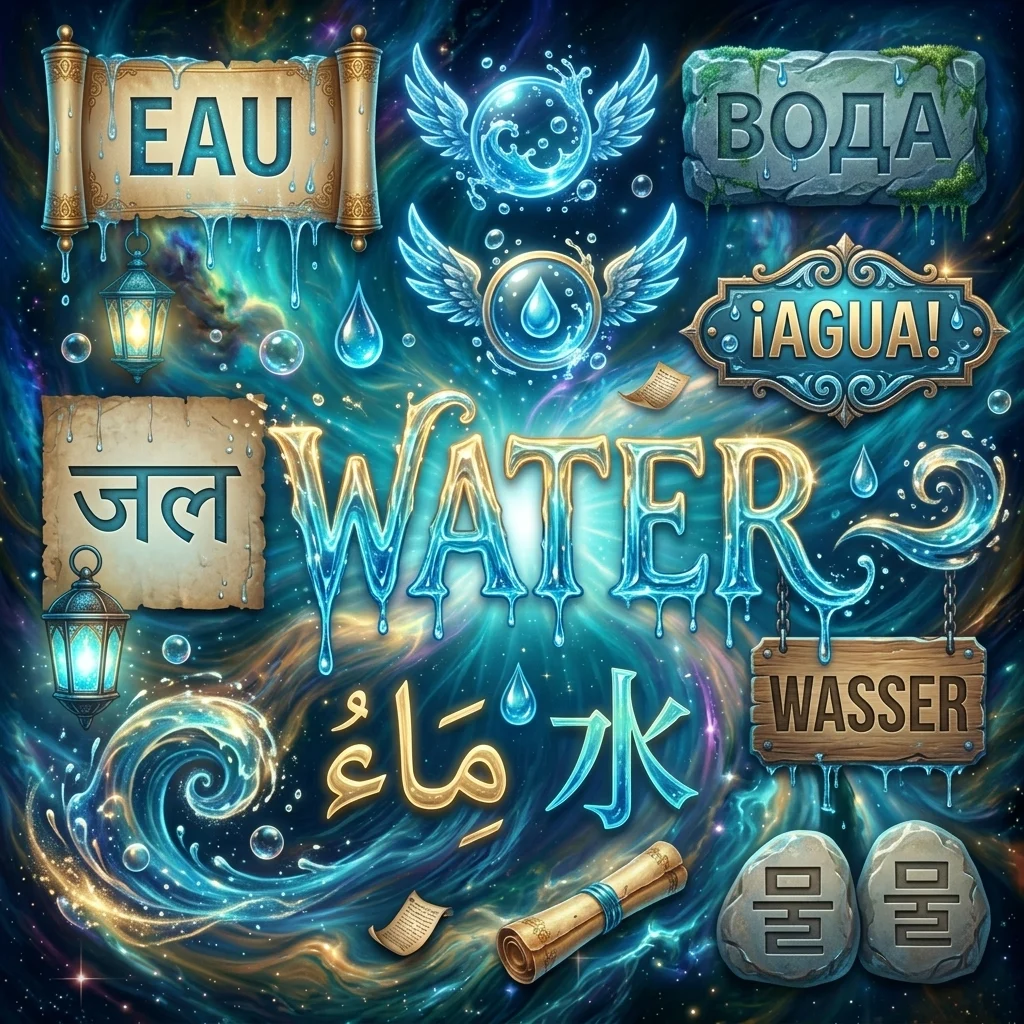
Water is one of the most important things in life, and every language has its own word for this essential natural resource.
If you are learning a new language, planning to travel abroad, studying world cultures, or simply curious about how people communicate, learning how to say “water” in different languages is a useful place to start.
From agua in Spanish to eau in French and pani in Urdu, water translations reveal the fascinating diversity of human languages.
Knowing these words can also help you order a drink, ask for water while traveling, or communicate basic needs when visiting another country.
In this guide, you will discover water in 70 different languages, complete with native words, easy English pronunciations, real-life example sentences, and English meanings.
Use this comprehensive list to expand your vocabulary and explore how people say water around the world.
Water in Different Languages: 70 Translations With Pronunciation
The table below includes 70 languages from different regions, including Europe, Asia, Africa, and the Middle East. Each example shows how to use the word for water in a practical everyday sentence.
Pronunciations are approximate guides for English speakers. Actual pronunciation can vary by dialect and region.
| No. | Language | Water in Native Language | Easy English Pronunciation | Example Sentence | English Meaning |
|---|---|---|---|---|---|
| 1 | English | Water | WAW-ter | I need water. | I need water. |
| 2 | Spanish | Agua | AH-gwah | Necesito agua. | I need water. |
| 3 | French | Eau | OH | Je voudrais de l’eau. | I would like some water. |
| 4 | German | Wasser | VAH-ser | Ich brauche Wasser. | I need water. |
| 5 | Italian | Acqua | AHK-kwah | Vorrei dell’acqua. | I would like some water. |
| 6 | Portuguese | Água | AH-gwah | Eu preciso de água. | I need water. |
| 7 | Dutch | Water | WAH-ter | Ik wil water. | I want water. |
| 8 | Swedish | Vatten | VAT-ten | Jag behöver vatten. | I need water. |
| 9 | Norwegian | Vann | vahn | Jeg trenger vann. | I need water. |
| 10 | Danish | Vand | van | Jeg vil have vand. | I want water. |
| 11 | Finnish | Vesi | VEH-see | Tarvitsen vettä. | I need water. |
| 12 | Icelandic | Vatn | vahtn | Ég þarf vatn. | I need water. |
| 13 | Irish | Uisce | ISH-kuh | Ba mhaith liom uisce. | I would like water. |
| 14 | Scottish Gaelic | Uisge | OOSH-kuh | Tha mi ag iarraidh uisge. | I want water. |
| 15 | Welsh | Dŵr | door | Dw i angen dŵr. | I need water. |
| 16 | Polish | Woda | VOH-dah | Potrzebuję wody. | I need water. |
| 17 | Czech | Voda | VOH-dah | Potřebuji vodu. | I need water. |
| 18 | Slovak | Voda | VOH-dah | Potrebujem vodu. | I need water. |
| 19 | Slovenian | Voda | VOH-dah | Potrebujem vodo. | I need water. |
| 20 | Croatian | Voda | VOH-dah | Trebam vodu. | I need water. |
| 21 | Serbian | Вода | VOH-dah | Треба ми вода. | I need water. |
| 22 | Bulgarian | Вода | VOH-dah | Имам нужда от вода. | I need water. |
| 23 | Macedonian | Вода | VOH-dah | Ми треба вода. | I need water. |
| 24 | Russian | Вода | vah-DAH | Мне нужна вода. | I need water. |
| 25 | Ukrainian | Вода | voh-DAH | Мені потрібна вода. | I need water. |
| 26 | Greek | Νερό | neh-ROH | Θέλω νερό. | I want water. |
| 27 | Romanian | Apă | AH-puh | Am nevoie de apă. | I need water. |
| 28 | Hungarian | Víz | veez | Vizet kérek. | Water, please. |
| 29 | Albanian | Ujë | OO-yuh | Kam nevojë për ujë. | I need water. |
| 30 | Turkish | Su | soo | Su istiyorum. | I want water. |
| 31 | Arabic | ماء | maa’ | أريد ماءً. | I want water. |
| 32 | Hebrew | מים | MAH-yim | אני צריך מים. | I need water. |
| 33 | Persian | آب | aab | من آب میخواهم. | I want water. |
| 34 | Urdu | پانی | PAA-nee | مجھے پانی چاہیے۔ | I need water. |
| 35 | Hindi | पानी | PAA-nee | मुझे पानी चाहिए। | I need water. |
| 36 | Bengali | পানি | PAA-nee | আমার পানি দরকার। | I need water. |
| 37 | Punjabi | ਪਾਣੀ | PAA-nee | ਮੈਨੂੰ ਪਾਣੀ ਚਾਹੀਦਾ ਹੈ। | I need water. |
| 38 | Gujarati | પાણી | PAA-nee | મારે પાણી જોઈએ છે. | I need water. |
| 39 | Marathi | पाणी | PAA-nee | मला पाणी हवे आहे. | I need water. |
| 40 | Nepali | पानी | PAA-nee | मलाई पानी चाहिन्छ। | I need water. |
| 41 | Sinhala | වතුර | VAH-thu-rah | මට වතුර අවශ්යයි. | I need water. |
| 42 | Tamil | தண்ணீர் | THAN-neer | எனக்குத் தண்ணீர் வேண்டும். | I need water. |
| 43 | Telugu | నీరు | NEE-roo | నాకు నీరు కావాలి. | I need water. |
| 44 | Kannada | ನೀರು | NEE-roo | ನನಗೆ ನೀರು ಬೇಕು. | I need water. |
| 45 | Malayalam | വെള്ളം | VEL-lum | എനിക്ക് വെള്ളം വേണം. | I need water. |
| 46 | Thai | น้ำ | naam | ฉันต้องการน้ำ | I need water. |
| 47 | Vietnamese | Nước | nuhk | Tôi cần nước. | I need water. |
| 48 | Indonesian | Air | AH-eer | Saya butuh air. | I need water. |
| 49 | Malay | Air | AH-eer | Saya perlukan air. | I need water. |
| 50 | Filipino (Tagalog) | Tubig | TOO-big | Kailangan ko ng tubig. | I need water. |
| 51 | Mandarin Chinese | 水 | shuǐ | 我需要水。 | I need water. |
| 52 | Cantonese | 水 | seoi | 我需要水。 | I need water. |
| 53 | Japanese | 水 | mizu | 水が欲しいです。 | I want water. |
| 54 | Korean | 물 | mul | 물이 필요해요. | I need water. |
| 55 | Mongolian | Ус | oos | Надад ус хэрэгтэй. | I need water. |
| 56 | Burmese | ရေ | yay | ရေလိုချင်ပါတယ်။ | I want water. |
| 57 | Khmer | ទឹក | tuk | ខ្ញុំត្រូវការទឹក។ | I need water. |
| 58 | Lao | ນ້ຳ | nam | ຂ້ອຍຕ້ອງການນ້ຳ. | I need water. |
| 59 | Swahili | Maji | MAH-jee | Ninahitaji maji. | I need water. |
| 60 | Amharic | ውሃ | wu-ha | ውሃ እፈልጋለሁ። | I need water. |
| 61 | Somali | Biyo | BEE-yoh | Waxaan u baahanahay biyo. | I need water. |
| 62 | Hausa | Ruwa | ROO-wah | Ina bukatar ruwa. | I need water. |
| 63 | Yoruba | Omi | OH-mee | Mo nílò omi. | I need water. |
| 64 | Igbo | Mmiri | m-MEE-ree | Achọrọ m mmiri. | I need water. |
| 65 | Zulu | Amanzi | ah-MAHN-zee | Ngidinga amanzi. | I need water. |
| 66 | Xhosa | Amanzi | ah-MAHN-zee | Ndifuna amanzi. | I want water. |
| 67 | Afrikaans | Water | VAH-ter | Ek benodig water. | I need water. |
| 68 | Malagasy | Rano | RAH-noo | Mila rano aho. | I need water. |
| 69 | Haitian Creole | Dlo | dlo | Mwen bezwen dlo. | I need water. |
| 70 | Esperanto | Akvo | AHK-voh | Mi bezonas akvon. | I need water. |
Quick answer: Some widely used words for water are agua in Spanish, eau in French, Wasser in German, pani in Hindi and Urdu, mizu in Japanese, shui in Mandarin Chinese, and maji in Swahili.
How to Say Water in Different Languages in Everyday Situations
Knowing the translation of water is helpful, but learning how to use it in a sentence makes it even more practical.
Here are several useful phrases you can learn alongside the word for water.
Asking for Water Politely
When visiting a restaurant, hotel, or someone’s home, a polite request is often more useful than knowing the noun alone.
- Spanish: ¿Me puede dar agua, por favor? — Can you give me water, please?
- French: De l’eau, s’il vous plaît. — Water, please.
- German: Wasser, bitte. — Water, please.
- Italian: Acqua, per favore. — Water, please.
- Urdu: مجھے پانی دیجیے، براہِ کرم۔ — Please give me water.
- Japanese: お水をください。 — Water, please.
- Mandarin Chinese: 请给我水。 — Please give me water.
These expressions are particularly helpful when traveling or communicating with people who speak another language.
Talking About Drinking Water
The word for water is also useful when discussing hydration, meals, and daily routines.
For example:
- Spanish: Bebo agua todos los días. — I drink water every day.
- French: Je bois de l’eau. — I drink water.
- German: Ich trinke Wasser. — I drink water.
- Hindi: मैं पानी पीता हूँ। — I drink water. (Masculine speaker)
- Japanese: 水を飲みます。 — I drink water.
- Swahili: Ninakunywa maji. — I drink water.
Practicing these complete sentences helps you remember the vocabulary and understand how it works in natural conversation.
Water Translations Around the World
Water is essential everywhere, but the words used to describe it differ from language to language. Exploring these variations provides an interesting look at the world’s linguistic diversity.
Water in European Languages
Many European languages have distinctive words for water. Spanish uses agua, French uses eau, Italian uses acqua, and German uses Wasser. Several Slavic languages, including Polish, Czech, Slovak, and Russian, use forms of voda.
These similarities and differences make water a useful vocabulary word for people studying related languages.
Water in Asian Languages
Asia has an enormous range of languages and writing systems. Hindi, Urdu, Punjabi, and several other South Asian languages use forms of pani. Japanese uses mizu, Korean uses mul, and Mandarin Chinese uses shui.
Learning the native script alongside the pronunciation can help you recognize the word on signs, menus, and everyday written materials.
Water in African Languages
African languages also offer a rich variety of water translations. Swahili uses maji, Zulu and Xhosa use amanzi, Yoruba uses omi, and Somali uses biyo.
These words are useful starting points for exploring the languages spoken across different African communities.
Water in Middle Eastern Languages
In the Middle East and neighboring regions, Arabic uses ماء, Hebrew uses מים, Persian uses آب, and Turkish uses su.
Although these languages have different histories and structures, knowing their words for water can help travelers communicate one of their most basic needs.
Why Learn the Word for Water in 70 Languages?
Learning water in all languages can be useful for several reasons.
- Travel: Ask for water in restaurants, shops, and hotels.
- Language learning: Build a foundation of practical everyday vocabulary.
- Cultural awareness: Discover how different communities communicate.
- Education: Use the translations for classroom activities, geography projects, or language exercises.
- Communication: Learn a useful word when meeting people who speak different languages.
- Writing and creativity: Find multilingual vocabulary for stories, educational content, and language-themed projects.
Because water is part of everyday life, it is an excellent word for beginners to learn in multiple languages.
Tips for Remembering Water in Different Languages
Memorizing 70 translations may seem difficult, but a few simple techniques can make the process easier.
- Learn five words at a time. Focus on a small group instead of trying to memorize the entire table at once.
- Group similar languages together. For example, compare agua in Spanish and Portuguese.
- Practice with complete sentences. Remembering “I need water” can help you recall the noun in context.
- Read the native scripts. Become familiar with the written forms of words in Arabic, Hindi, Chinese, Japanese, and other languages.
- Repeat words aloud. Practice the pronunciation regularly and compare it with reliable native-speaker examples.
- Review regularly. Revisit the words after a day, a week, and a month to reinforce your memory.
Consistency is more effective than trying to learn every translation in a single sitting.
Frequently Asked Questions
1. How do you say water in different languages?
Water has different names around the world. Examples include agua in Spanish, eau in French, Wasser in German, pani in Urdu and Hindi, mizu in Japanese, and maji in Swahili.
2. What is the word for water in 10 different languages?
Here are 10 examples:
- English — Water
- Spanish — Agua
- French — Eau
- German — Wasser
- Italian — Acqua
- Portuguese — Água
- Arabic — ماء
- Urdu — پانی
- Japanese — 水
- Swahili — Maji
3. How do you say water in Hindi and Urdu?
In both Hindi and Urdu, the common word for water is pani. Hindi writes it as पानी, while Urdu writes it as پانی.
4. What is the Japanese word for water?
The Japanese word for water is 水, pronounced mizu. It is commonly used when talking about drinking water, water in general, and everyday activities.
5. Why are water translations different across languages?
Languages develop through different histories, cultures, and patterns of communication. As a result, each language has its own vocabulary and pronunciation. Some languages share similar words because of historical relationships or contact between their speakers, while others use completely different terms.
Conclusion
Learning water in different languages is a practical way to expand your vocabulary and explore the diversity of human communication. From agua and eau to pani, mizu, and maji, each word provides a small insight into a different language and culture.
Use this list of 70 water translations to practice pronunciation, prepare for international travel, or improve your language skills. Start with a few words, practice them in everyday sentences, and gradually build your knowledge of how people say water around the world.

I am Jimmy Michael, a language enthusiast and writer passionate about exploring different languages, words, and cultures. I create simple, useful content that helps readers understand languages better and discover new ways to communicate globally.