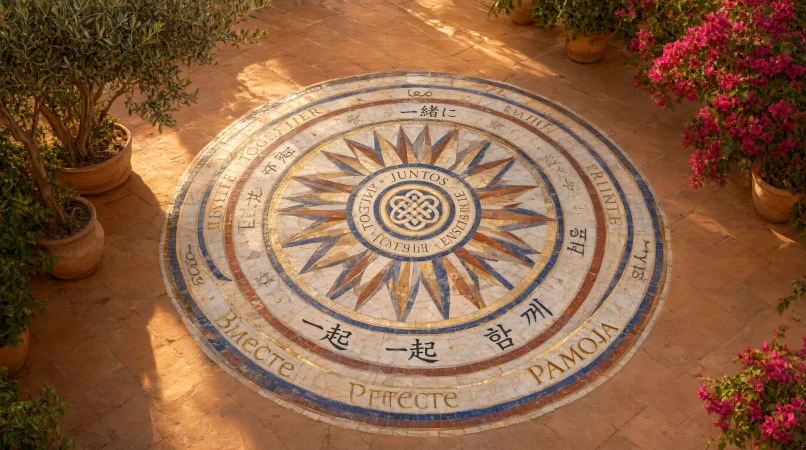
The word “together” represents unity, friendship, love, teamwork, and the special bond people share.
In this guide, you’ll discover together in different languages, including 70 translations, easy English pronunciations, and practical example sentences.
Each translation helps you understand how people express the idea of being together in everyday conversations around the world.
From Spanish and French to Japanese, Arabic, and Korean, these translations will help you explore the beauty of language and connection.
How to Say Together in Different Languages
The word “together” generally means being with another person or group, doing something jointly, or sharing an experience. However, its translation can change depending on the sentence and context.
For example, saying “We are together” can express a relationship, while “Let’s work together” emphasizes cooperation. Some languages also use different expressions for physical closeness, unity, or collective action.
The table below features 70 languages, their native translations, easy pronunciation guides, and short examples with English meanings.
Together in 70 Different Languages: Complete Translation Table
| # | Language | Native Translation | English Pronunciation | Example Sentence | English Meaning |
|---|---|---|---|---|---|
| 1 | Spanish | Juntos | HOON-tohs | Estamos juntos. | We are together. |
| 2 | French | Ensemble | ahn-SAHM-bluh | Nous sommes ensemble. | We are together. |
| 3 | German | Zusammen | tsoo-ZAH-men | Wir sind zusammen. | We are together. |
| 4 | Italian | Insieme | een-SYEH-meh | Stiamo insieme. | We are together. |
| 5 | Portuguese | Juntos | ZHOON-toos | Estamos juntos. | We are together. |
| 6 | Dutch | Samen | SAH-men | We zijn samen. | We are together. |
| 7 | Russian | Вместе | VMYES-tyeh | Мы вместе. | We are together. |
| 8 | Ukrainian | Разом | RAH-zom | Ми разом. | We are together. |
| 9 | Polish | Razem | RAH-zem | Jesteśmy razem. | We are together. |
| 10 | Czech | Spolu | SPOH-loo | Jsme spolu. | We are together. |
| 11 | Slovak | Spolu | SPOH-loo | Sme spolu. | We are together. |
| 12 | Slovenian | Skupaj | skoo-PIE | Smo skupaj. | We are together. |
| 13 | Croatian | Zajedno | zah-YED-noh | Mi smo zajedno. | We are together. |
| 14 | Serbian | Заједно | zah-YED-noh | Ми смо заједно. | We are together. |
| 15 | Bosnian | Zajedno | zah-YED-noh | Mi smo zajedno. | We are together. |
| 16 | Bulgarian | Заедно | zah-YED-noh | Ние сме заедно. | We are together. |
| 17 | Macedonian | Заедно | zah-YED-noh | Ние сме заедно. | We are together. |
| 18 | Romanian | Împreună | ihm-preh-OO-nuh | Suntem împreună. | We are together. |
| 19 | Hungarian | Együtt | ED-yoot | Együtt vagyunk. | We are together. |
| 20 | Greek | Μαζί | mah-ZEE | Είμαστε μαζί. | We are together. |
| 21 | Albanian | Së bashku | suh BAHSH-koo | Jemi së bashku. | We are together. |
| 22 | Swedish | Tillsammans | TIL-sah-mans | Vi är tillsammans. | We are together. |
| 23 | Norwegian | Sammen | SAH-men | Vi er sammen. | We are together. |
| 24 | Danish | Sammen | SAH-men | Vi er sammen. | We are together. |
| 25 | Finnish | Yhdessä | OOH-dehs-sah | Olemme yhdessä. | We are together. |
| 26 | Icelandic | Saman | SAH-man | Við erum saman. | We are together. |
| 27 | Irish | Le chéile | leh KHAY-leh | Táimid le chéile. | We are together. |
| 28 | Welsh | Gyda’n gilydd | guh-dan guh-LITH | Rydyn ni gyda’n gilydd. | We are together. |
| 29 | Scottish Gaelic | Còmhla | KHOHM-luh | Tha sinn còmhla. | We are together. |
| 30 | Basque | Elkarrekin | el-kah-RREH-kin | Elkarrekin gaude. | We are together. |
| 31 | Catalan | Junts | JOONTS | Estem junts. | We are together. |
| 32 | Galician | Xuntos | SHOON-tohs | Estamos xuntos. | We are together. |
| 33 | Turkish | Birlikte | beer-leek-TEH | Birlikteyiz. | We are together. |
| 34 | Arabic | معًا | MAH-an | نحن معًا. | We are together. |
| 35 | Hebrew | ביחד | beh-YAH-khad | אנחנו ביחד. | We are together. |
| 36 | Persian | با هم | bah HAHM | ما با هم هستیم. | We are together. |
| 37 | Urdu | ساتھ | SAATH | ہم ساتھ ہیں۔ | We are together. |
| 38 | Hindi | साथ | SAATH | हम साथ हैं। | We are together. |
| 39 | Bengali | একসাথে | ek-SHAH-theh | আমরা একসাথে আছি। | We are together. |
| 40 | Punjabi | ਇਕੱਠੇ | ik-KAT-theh | ਅਸੀਂ ਇਕੱਠੇ ਹਾਂ। | We are together. |
| 41 | Gujarati | સાથે | SAA-theh | આપણે સાથે છીએ. | We are together. |
| 42 | Marathi | एकत्र | ek-TRAH | आपण एकत्र आहोत. | We are together. |
| 43 | Nepali | सँगै | sung-GAI | हामी सँगै छौँ। | We are together. |
| 44 | Sinhala | එකට | EH-kah-tah | අපි එකට ඉන්නවා. | We are together. |
| 45 | Tamil | ஒன்றாக | ON-drah-gah | நாம் ஒன்றாக இருக்கிறோம். | We are together. |
| 46 | Telugu | కలిసి | kah-LEE-see | మనం కలిసి ఉన్నాం. | We are together. |
| 47 | Kannada | ಒಟ್ಟಿಗೆ | OT-ti-geh | ನಾವು ಒಟ್ಟಿಗೆ ಇದ್ದೇವೆ. | We are together. |
| 48 | Malayalam | ഒരുമിച്ച് | oh-roo-MICH | നമ്മൾ ഒരുമിച്ചാണ്. | We are together. |
| 49 | Mandarin Chinese | 一起 | ee-CHEE | 我们在一起。 | We are together. |
| 50 | Japanese | 一緒に | is-SHOH-nee | 私たちは一緒にいます。 | We are together. |
| 51 | Korean | 함께 | hahm-KKEH | 우리는 함께 있어요. | We are together. |
| 52 | Vietnamese | Cùng nhau | koong nyow | Chúng ta ở bên nhau. | We are together. |
| 53 | Thai | ด้วยกัน | dûay-kan | เราอยู่ด้วยกัน | We are together. |
| 54 | Indonesian | Bersama | ber-SAH-mah | Kita bersama. | We are together. |
| 55 | Malay | Bersama | ber-SAH-mah | Kita bersama. | We are together. |
| 56 | Filipino (Tagalog) | Magkasama | mag-kah-SAH-mah | Magkasama tayo. | We are together. |
| 57 | Burmese | အတူတူ | ah-too-too | ကျွန်တော်တို့ အတူတူရှိတယ်။ | We are together. |
| 58 | Khmer | ជាមួយគ្នា | chee-MOO-ay kNEE-ah | យើងនៅជាមួយគ្នា។ | We are together. |
| 59 | Lao | ນຳກັນ | nam-kan | ພວກເຮົາຢູ່ນຳກັນ. | We are together. |
| 60 | Mongolian | Хамтдаа | khahmt-DAH | Бид хамтдаа байна. | We are together. |
| 61 | Kazakh | Бірге | beer-GEH | Біз біргеміз. | We are together. |
| 62 | Uzbek | Birga | beer-GAH | Biz birgamiz. | We are together. |
| 63 | Azerbaijani | Birlikdə | beer-leek-DEH | Biz birlikdəyik. | We are together. |
| 64 | Georgian | ერთად | er-TAHD | ჩვენ ერთად ვართ. | We are together. |
| 65 | Armenian | Միասին | myah-SEEN | Մենք միասին ենք։ | We are together. |
| 66 | Amharic | አብረን | ah-BREN | አብረን ነን። | We are together. |
| 67 | Swahili | Pamoja | pah-MOH-jah | Tuko pamoja. | We are together. |
| 68 | Yoruba | Papọ̀ | pah-PAW | A wà papọ̀. | We are together. |
| 69 | Zulu | Ndawonye | ndah-WOH-nyeh | Sikunye ndawonye. | We are together. |
| 70 | Afrikaans | Saam | SAHM | Ons is saam. | We are together. |
Note: Pronunciations are approximate guides for English speakers. Some translations change according to grammatical gender, number, dialect, and context. In languages such as Spanish, Portuguese, and Italian, the form of “together” may also vary depending on who is being described.
Why Is the Word “Together” Important Across Languages?
“Together” is more than a simple vocabulary word. It communicates belonging, cooperation, affection, and shared experiences. Although languages use different words and expressions, the idea of connection is widely understood.
- Relationships: Expressing that two people are together or sharing their lives.
- Friendship: Describing friends spending time together.
- Teamwork: Explaining that people are working toward the same goal.
- Family: Showing unity and closeness among family members.
- Community: Describing people joining forces to support one another.
Understanding these meanings helps you select the right translation instead of relying on a direct word-for-word equivalent.
Together in Different Languages for Love and Relationships
When talking about love, “together” can describe a romantic relationship, emotional closeness, or a shared future. However, the exact expression may differ depending on the language.
If you are writing a romantic message, caption, or personal note, consider the full sentence rather than translating the word alone. This makes the message sound more natural and conveys the intended feeling.
Together in Different Languages for Friendship and Teamwork
The idea of being together is also important in friendships, workplaces, schools, and communities.
In Swahili, pamoja is commonly used to express togetherness. In Indonesian, bersama can describe being together or doing something jointly. In German, zusammen is widely used for shared activities and situations.
You can use these words when talking about:
- Working together on a project.
- Studying together for an examination.
- Traveling together with friends.
- Supporting one another through difficult times.
- Celebrating an achievement as a group.
How to Use Together in Everyday Conversations
Learning a translation becomes easier when you practice it in familiar situations. Instead of memorizing individual words, try using them in short, meaningful sentences.
Here are five useful English expressions and their meanings:
| English Expression | Meaning or Usage |
|---|---|
| We are together. | Describes being in the same place or being united. |
| Let’s stay together. | Suggests remaining close or united. |
| We can work together. | Expresses cooperation. |
| We learned together. | Describes a shared learning experience. |
| Together, we are stronger. | Expresses unity and mutual support. |
When translating these sentences, remember that a single word may need to change form or be replaced by a natural expression. This is especially important when the phrase refers to a romantic relationship rather than simply doing an activity with another person.
Tips for Learning “Together” Around the World
Learning how to say “together” in different languages can be enjoyable and practical. Use these tips to remember the translations and improve your communication skills.
1. Learn the word with a sentence.
A short example helps you understand how the word works in everyday speech.
2. Practice pronunciation aloud.
Read each phrase slowly, paying attention to unfamiliar sounds and syllable stress.
3. Compare related languages.
Some languages share similar words because of common linguistic roots or historical contact. Recognizing these patterns can make vocabulary easier to remember.
4. Consider the context.
The word used for “together” in a group activity may not be the best choice for describing a romantic relationship.
5. Review a few translations daily.
Practice five words at a time and revisit them regularly rather than attempting to memorize all 70 at once.
Frequently Asked Questions
1. How do you say “together” in different languages?
“Together” has many translations. Examples include juntos in Spanish, ensemble in French, zusammen in German, insieme in Italian, pamoja in Swahili, and birlikte in Turkish.
2. What is the most common word for “together” around the world?
There is no single word used worldwide. Each language has its own expression, such as together, ensemble, juntos, sammen, and bersama. The most appropriate choice depends on the language and context.
3. How do you say “together” in Japanese?
The common Japanese expression is 一緒に, pronounced issho ni. It is used when describing doing something together, such as eating, studying, or going somewhere with another person.
4. How do you say “together” in Arabic?
A common Arabic translation is معًا, pronounced approximately ma’an. It can express doing something together or being together, although the best wording depends on the sentence.
5. Why can “together” have different translations in the same language?
The translation may change because of grammar, context, and intended meaning. Describing a group activity, a romantic relationship, or a shared location may require different expressions. Using a complete sentence helps you choose the most natural translation.
Conclusion
Learning to say “together” in different languages offers a simple way to explore the world’s linguistic diversity and express connection across cultures.
From juntos in Spanish to ensemble in French and pamoja in Swahili, each expression reflects the idea of sharing experiences, building relationships, and working toward common goals.
Use this collection of 70 translations to expand your vocabulary, practice everyday conversations, and discover how different languages communicate togetherness.

I am Johnny Thomas, a passionate language enthusiast and writer. I enjoy exploring different languages, cultures, words, and expressions. I create helpful, easy-to-understand content to help readers discover languages and communicate confidently.