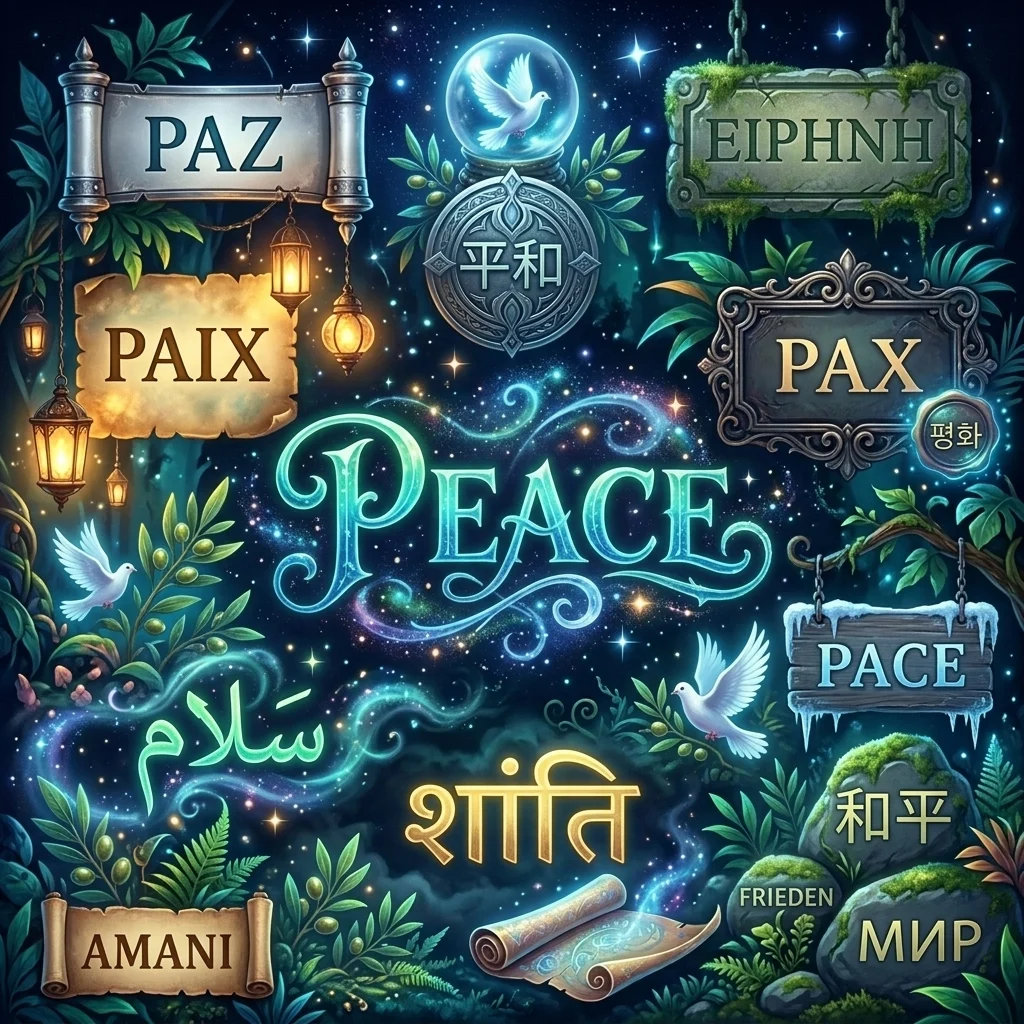
Peace is a universal idea that represents harmony, freedom from conflict, inner calm, and understanding between people.
Although the word may sound different across languages, its meaning often brings people together. Learning how to say peace in different languages is a meaningful way to explore cultures, communicate kindness, and appreciate the words people use to express hope and unity.
If you are learning a new language, writing a meaningful message, choosing a word for a tattoo, or exploring world cultures, this guide will help you discover peace in 70 different languages.
Each entry includes the native word or phrase, an easy English pronunciation, a practical example sentence, and its English meaning.
Peace in Different Languages: Quick Translations
Here are some popular translations of the word peace:
- Spanish: Paz
- French: Paix
- German: Frieden
- Italian: Pace
- Portuguese: Paz
- Arabic: سلام
- Hindi: शांति
- Urdu: امن
- Japanese: 平和
- Mandarin Chinese: 和平
- Russian: Мир
- Swahili: Amani
Some languages use different words for political peace, personal calm, or peaceful relationships. The examples below focus on common ways to express peace in everyday contexts.
How to Say Peace in 70 Different Languages
The following table features 70 languages, with native words, pronunciation guides, example sentences, and English translations. Pronunciations are approximate, and regional usage may vary.
| No. | Language | Peace in Native Language | Easy English Pronunciation | Example Sentence | English Meaning |
|---|---|---|---|---|---|
| 1 | English | Peace | PEES | We all want peace. | We all want peace. |
| 2 | Spanish | Paz | PAHS | Queremos vivir en paz. | We want to live in peace. |
| 3 | French | Paix | PEH | Nous voulons la paix. | We want peace. |
| 4 | German | Frieden | FREE-dən | Wir wünschen uns Frieden. | We wish for peace. |
| 5 | Italian | Pace | PAH-cheh | Vogliamo vivere in pace. | We want to live in peace. |
| 6 | Portuguese | Paz | PAHZ | Todos merecem paz. | Everyone deserves peace. |
| 7 | Dutch | Vrede | VRAY-duh | We willen vrede. | We want peace. |
| 8 | Swedish | Fred | FREHD | Vi vill ha fred. | We want peace. |
| 9 | Norwegian | Fred | FREHD | Vi ønsker fred. | We wish for peace. |
| 10 | Danish | Fred | FRETH | Vi ønsker fred. | We wish for peace. |
| 11 | Finnish | Rauha | ROW-hah | Toivomme rauhaa. | We hope for peace. |
| 12 | Icelandic | Friður | FREE-thur | Við viljum frið. | We want peace. |
| 13 | Polish | Pokój | POH-kooy | Chcemy pokoju. | We want peace. |
| 14 | Czech | Mír | MEER | Přejeme si mír. | We wish for peace. |
| 15 | Slovak | Mier | MYEHR | Túžime po mieri. | We long for peace. |
| 16 | Slovenian | Mir | MEER | Želimo si mir. | We wish for peace. |
| 17 | Croatian | Mir | MEER | Želimo mir. | We want peace. |
| 18 | Serbian | Мир | MEER | Желимо мир. | We want peace. |
| 19 | Bulgarian | Мир | MEER | Искаме мир. | We want peace. |
| 20 | Russian | Мир | MEER | Мы хотим мира. | We want peace. |
| 21 | Ukrainian | Мир | MEER | Ми хочемо миру. | We want peace. |
| 22 | Greek | Ειρήνη | ee-REE-nee | Θέλουμε ειρήνη. | We want peace. |
| 23 | Romanian | Pace | PAH-cheh | Vrem pace. | We want peace. |
| 24 | Hungarian | Béke | BAY-keh | Békét szeretnénk. | We would like peace. |
| 25 | Albanian | Paqe | PAH-cheh | Ne duam paqe. | We want peace. |
| 26 | Turkish | Barış | bah-RUSH | Barış istiyoruz. | We want peace. |
| 27 | Arabic | سلام | sah-LAAM | نريد السلام. | We want peace. |
| 28 | Hebrew | שלום | shah-LOHM | אנחנו רוצים שלום. | We want peace. |
| 29 | Persian | صلح | SOLH | ما صلح میخواهیم. | We want peace. |
| 30 | Hindi | शांति | SHAAN-tee | हमें शांति चाहिए। | We need peace. |
| 31 | Urdu | امن | uh-MUN | ہمیں امن چاہیے۔ | We need peace. |
| 32 | Bengali | শান্তি | SHAAN-tee | আমরা শান্তি চাই। | We want peace. |
| 33 | Punjabi | ਸ਼ਾਂਤੀ | SHAAN-tee | ਅਸੀਂ ਸ਼ਾਂਤੀ ਚਾਹੁੰਦੇ ਹਾਂ। | We want peace. |
| 34 | Gujarati | શાંતિ | SHAAN-tee | અમને શાંતિ જોઈએ છે. | We need peace. |
| 35 | Marathi | शांतता | SHAAN-tuh-taa | आम्हाला शांतता हवी आहे. | We need peace. |
| 36 | Nepali | शान्ति | SHAAN-tee | हामी शान्ति चाहन्छौँ। | We want peace. |
| 37 | Sinhala | සාමය | SAA-muh-yuh | අපට සාමය අවශ්යයි. | We need peace. |
| 38 | Tamil | அமைதி | uh-MAI-thee | எங்களுக்கு அமைதி வேண்டும். | We need peace. |
| 39 | Telugu | శాంతి | SHAAN-tee | మాకు శాంతి కావాలి. | We need peace. |
| 40 | Kannada | ಶಾಂತಿ | SHAAN-tee | ನಮಗೆ ಶಾಂತಿ ಬೇಕು. | We need peace. |
| 41 | Malayalam | സമാധാനം | suh-maa-DHAA-nam | ഞങ്ങൾക്ക് സമാധാനം വേണം. | We need peace. |
| 42 | Thai | สันติภาพ | san-tee-phaap | เราต้องการสันติภาพ | We want peace. |
| 43 | Vietnamese | Hòa bình | hwah BING | Chúng ta cần hòa bình. | We need peace. |
| 44 | Indonesian | Damai | dah-MAI | Kami menginginkan damai. | We want peace. |
| 45 | Malay | Keamanan | kuh-ah-MAH-nan | Kami mahukan keamanan. | We want peace and security. |
| 46 | Filipino (Tagalog) | Kapayapaan | kah-pah-yah-pah-AHN | Nais natin ang kapayapaan. | We want peace. |
| 47 | Cebuano | Kalinaw | kah-lee-NAW | Gusto namo og kalinaw. | We want peace. |
| 48 | Mandarin Chinese | 和平 | hé píng | 我们希望和平。 | We hope for peace. |
| 49 | Cantonese | 和平 | wo4 ping4 | 我哋希望有和平。 | We hope for peace. |
| 50 | Japanese | 平和 | heiwa | 私たちは平和を願っています。 | We wish for peace. |
| 51 | Korean | 평화 | pyeong-hwa | 우리는 평화를 원해요. | We want peace. |
| 52 | Mongolian | Энх тайван | enkh tai-WAN | Бид энх тайвныг хүсэж байна. | We want peace. |
| 53 | Kazakh | Бейбітшілік | bey-bit-shi-LEEK | Біз бейбітшілікті қалаймыз. | We want peace. |
| 54 | Uzbek | Tinchlik | tinch-LEEK | Biz tinchlik istaymiz. | We want peace. |
| 55 | Azerbaijani | Sülh | SYULH | Biz sülh istəyirik. | We want peace. |
| 56 | Armenian | Խաղաղություն | kha-gha-ghoo-TYOON | Մենք խաղաղություն ենք ուզում։ | We want peace. |
| 57 | Georgian | მშვიდობა | mshvee-DOH-bah | ჩვენ მშვიდობა გვინდა. | We want peace. |
| 58 | Swahili | Amani | ah-MAH-nee | Tunataka amani. | We want peace. |
| 59 | Zulu | Ukuthula | oo-koo-TOO-lah | Sifuna ukuthula. | We want peace. |
| 60 | Afrikaans | Vrede | FRAY-duh | Ons wil vrede hê. | We want peace. |
| 61 | Amharic | ሰላም | seh-LAHM | ሰላም እንፈልጋለን። | We want peace. |
| 62 | Yoruba | Àlàáfíà | ah-laa-FEE-ah | A fẹ́ àlàáfíà. | We want peace. |
| 63 | Igbo | Udo | OO-doh | Anyị chọrọ udo. | We want peace. |
| 64 | Hausa | Zaman lafiya | ZAH-man lah-FEE-yah | Muna son zaman lafiya. | We want peace. |
| 65 | Malagasy | Fandriampahalemana | fan-dree-am-pah-leh-MAH-nah | Mila fandriampahalemana isika. | We need peace. |
| 66 | Māori | Rangimārie | rah-ngee-MAA-ree-eh | E hiahia ana mātou ki te rangimārie. | We want peace. |
| 67 | Hawaiian | Maluhia | mah-loo-HEE-ah | Makemake mākou i ka maluhia. | We want peace. |
| 68 | Samoan | Filemu | fee-LEH-moo | Matou te mananaʻo i le filemu. | We want peace. |
| 69 | Haitian Creole | Lapè | lah-PEH | Nou vle lapè. | We want peace. |
| 70 | Esperanto | Paco | PAH-tsoh | Ni deziras pacon. | We wish for peace. |
Note: Words for peace can carry different shades of meaning, including freedom from war, harmony, tranquility, or personal calm. Some example sentences may be phrased differently depending on local usage.
Peace Translations Around the World
The word peace has deep cultural meaning. Although translations differ, many express a shared hope for safety, understanding, and harmony.
Why Is Peace Called “Paz” in Spanish and Portuguese?
Spanish and Portuguese both use paz. The word comes from Latin pax, which also means peace. Related words appear in other Romance languages, including Italian pace and Romanian pace.
Why Do Arabic and Hebrew Share Similar Peace-Related Words?
Arabic salaam (سلام) and Hebrew shalom (שלום) are related Semitic words associated with peace and well-being. Both are also widely used in greetings, making them meaningful in everyday communication as well as discussions about peace.
What Does “Shanti” Mean in South Asian Languages?
Shanti (शांति) is a common Hindi word for peace and is also used in several other South Asian languages, including Bengali and Punjabi in related forms. Depending on context, it can refer to social harmony, quietness, or inner calm.
Beautiful Words for Peace and Their Meanings
Some translations of peace are especially useful when writing thoughtful messages, creating artwork, or learning about other cultures.
- Amani: Swahili for peace; commonly used in everyday conversation.
- Shalom: Hebrew for peace, and also a greeting associated with well-being.
- Salaam: Arabic for peace; also used as a greeting.
- Pax: Latin for peace, often found in historical, religious, and cultural expressions.
- Paco: Esperanto for peace, used in a language designed for international communication.
- Rangimārie: Māori for peace or tranquility.
The best word depends on the meaning you want to express. A word used for international peace may not always be the most natural choice for describing a calm mind or a peaceful home.
How to Use the Word Peace in Everyday Conversations
Learning a translation becomes easier when you use it in a real sentence. Here are some simple examples in English to help you practice.
- Expressing a hope: “I hope for peace around the world.”
- Talking about home: “Our home is a place of peace.”
- Describing a feeling: “I feel peace when I spend time in nature.”
- Encouraging understanding: “Let’s solve this problem peacefully.”
- Sharing a wish: “May peace be with you.”
When learning a new language, practice the local word in different contexts. This helps you understand whether it refers mainly to peace between people, the absence of war, or a feeling of calm.
Tips for Learning Peace in Different Languages
You do not need to memorize all 70 translations at once. Use these practical steps to build your vocabulary.
- Group similar words together. Start with related words such as paz, paix, and pace.
- Learn the native spelling. Seeing the original script helps you recognize the word in books, signs, and messages.
- Practice pronunciation aloud. Use the simplified guides as a starting point, then refine your pronunciation by listening to native speakers.
- Connect each word to a situation. Imagine using it in a greeting, a conversation about world peace, or a message of encouragement.
- Review regularly. Practicing a few words each day can help you remember them over time.
Frequently Asked Questions
1. How do you say peace in different languages?
Some common translations are paz in Spanish, paix in French, Frieden in German, salaam in Arabic, shanti in Hindi, damai in Indonesian, and heiwa in Japanese.
2. What is the most common word for peace around the world?
There is no single word used worldwide. However, paz, paix, peace, salaam, and shanti are widely recognized within their respective languages and cultural contexts.
3. What is the Japanese word for peace?
The Japanese word for peace is 平和, pronounced heiwa. It is commonly used when discussing peace in society, international relations, and peaceful conditions.
4. What is the difference between peace and inner peace?
Peace can describe the absence of war or conflict between people and nations. Inner peace refers to a feeling of calm, balance, and emotional tranquility within a person.
5. Which language has a beautiful word for peace?
Beauty is subjective, but many people appreciate shalom in Hebrew, salaam in Arabic, amani in Swahili, and rangimārie in Māori. Each word carries cultural meaning beyond its basic English translation.
Conclusion
Learning peace in different languages reveals how cultures express a shared desire for harmony, safety, and understanding. From paz and paix to salaam, shanti, and amani, each translation offers a meaningful way to connect with people around the world.
Use this collection of 70 translations to expand your vocabulary, write thoughtful messages, and explore the many ways languages express peace.

I am Johnny Thomas, a passionate language enthusiast and writer. I enjoy exploring different languages, cultures, words, and expressions. I create helpful, easy-to-understand content to help readers discover languages and communicate confidently.