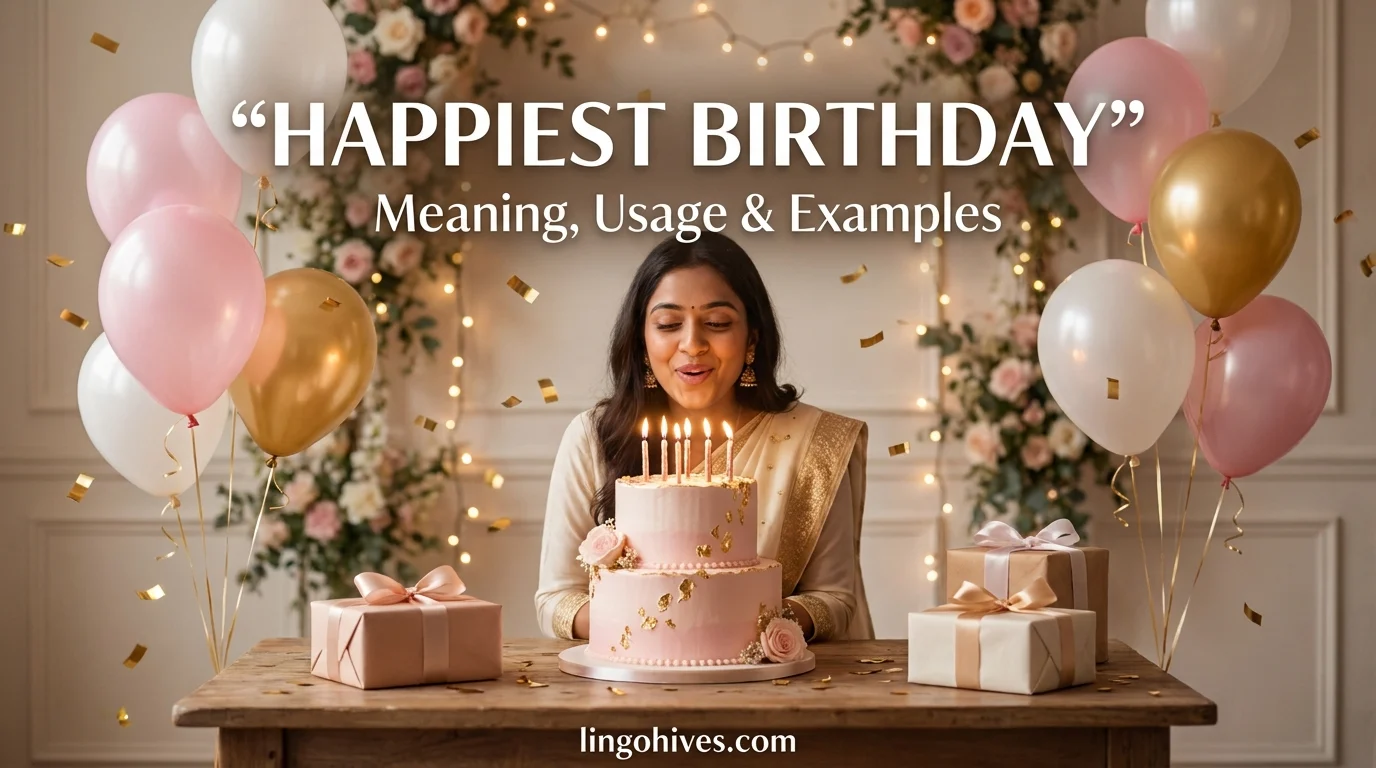
The phrase “happiest birthday” is commonly used in birthday messages, greeting cards, social media captions, and personal wishes. It expresses a warm desire for someone to have an especially joyful and memorable birthday. But is “happiest birthday” grammatically correct, and how is it different from the more familiar expression “happy birthday”?
Both expressions can be used in birthday greetings, but they have slightly different meanings and tones. “Happy birthday” is the standard and most widely accepted greeting, while “happiest birthday” adds extra warmth, excitement, and emotional emphasis. Understanding this difference can help you write more natural birthday messages in English. Whether you are wishing a friend, family member, colleague, or loved one, choosing the right expression makes your message sound more thoughtful and personal.
Quick Answer
“Happiest birthday” is an expressive birthday greeting that wishes someone the greatest possible happiness on their special day. “Happy birthday” is the standard greeting, while “happiest birthday” sounds more affectionate, enthusiastic, and personal. Both can be used in informal birthday messages.
Why Do People Confuse Happiest Birthday and Happy Birthday?
People sometimes confuse these expressions because both communicate good wishes on someone’s birthday.
The confusion mainly comes from the difference between the adjectives happy and happiest.
- Happy birthday: A traditional greeting wishing someone happiness.
- Happiest birthday: An enthusiastic expression wishing someone an exceptionally joyful birthday.
Although “happiest birthday” is understandable, it is less conventional than “happy birthday” in everyday English.
First Word: Happy
Happy is an adjective that describes a feeling of pleasure, joy, or satisfaction.
In birthday greetings, it expresses a wish that someone enjoys their special day.
Examples:
- Happy birthday to you!
- I hope you have a happy birthday.
- Wishing you a happy birthday filled with love.
- Have a happy and wonderful birthday!
Meaning: Happy means feeling or experiencing joy and pleasure.
Second Word: Happiest
Happiest is the superlative form of the adjective happy.
It describes the highest degree of happiness when comparing three or more people, things, or experiences, or when expressing an extreme degree.
In birthday wishes, it adds emotional emphasis and makes the greeting sound more affectionate.
Examples:
- Wishing you the happiest birthday ever!
- Have the happiest birthday, my dear friend.
- May your birthday be the happiest day of your year.
Meaning: Happiest means the most happy or experiencing the greatest amount of happiness.
Happiest Birthday vs Happy Birthday: Comparison Table
| Feature | Happy Birthday | Happiest Birthday |
| Meaning | A wish for happiness | A wish for maximum happiness |
| Word form | Positive adjective | Superlative adjective |
| Usage | Standard greeting | More expressive greeting |
| Tone | Friendly and traditional | Warm and enthusiastic |
| Popularity | Very common | Less conventional |
| Best for | General birthday wishes | Emotional birthday messages |
When Should You Use Each Expression?
Choosing between these expressions depends on your message and the relationship you have with the person.
When to Use Happy Birthday
Use “happy birthday” when you want a simple, natural, and universally understood greeting.
Examples:
- Wishing your teacher a happy birthday.
- Sending birthday wishes to a colleague.
- Writing a birthday card for a friend.
- Posting a traditional birthday greeting on social media.
When to Use Happiest Birthday
Use “happiest birthday” when you want to make your greeting sound more emotional, loving, or enthusiastic.
Examples:
- Wishing your best friend the happiest birthday.
- Sending a sweet message to your sister.
- Writing an affectionate birthday caption.
- Celebrating someone who means a lot to you.
Tip: “Wishing you the happiest birthday ever!” sounds more natural than using “Happiest Birthday!” alone in every situation.
15 Examples of Happiest Birthday and Happy Birthday in Sentences
Here are practical examples to help you understand both expressions.
- Happy birthday to my wonderful friend!
- Wishing you the happiest birthday ever!
- May your birthday bring you endless happiness.
- Have a very happy birthday filled with beautiful memories.
- Sending you the happiest birthday wishes!
- Happy birthday to someone who makes life brighter.
- I hope you have the happiest birthday surrounded by your loved ones.
- Wishing you a birthday full of laughter and happiness.
- Happy birthday, dear sister! Stay blessed always.
- May this year bring you success and joy. Happiest birthday!
- Have the happiest birthday, my best friend!
- Happy birthday to an amazing person.
- Wishing you a beautiful birthday and a wonderful year ahead.
- Sending lots of love and warm wishes on your special day.
- May your special day be filled with unforgettable moments. Happiest birthday to you!
Common Mistakes to Avoid
English learners sometimes make mistakes when using these expressions.
1. Treating both expressions as equally common
“Happiest birthday” is understandable, but “happy birthday” is the standard everyday greeting.
2. Using an incorrect adjective form
Incorrect: Wishing you the most happiest birthday.
Correct: Wishing you the happiest birthday.
The word “happiest” already expresses the superlative degree, so adding “most” is unnecessary.
3. Forgetting the word birthday
Incorrect: Happiest to you!
Better: Happiest birthday to you!
4. Using unnecessary words
Incorrect: I wish you a most happiest birthday ever.
Correct: I wish you the happiest birthday ever.
5. Assuming happiest birthday is grammatically wrong
The expression is not inherently incorrect. It is an informal, expressive greeting, especially when used in a complete sentence.
Memory Trick: How to Remember the Difference
Remember this simple trick:
- Happy = Normal happiness.
- Happiest = The highest degree of happiness.
Think of it this way:
If you want to send a simple birthday greeting, write “Happy Birthday.”
If you want to make your greeting more emotional and enthusiastic, write “Wishing you the happiest birthday!”
This easy trick will help you choose the right expression.
American vs British English
There is no significant difference between American and British English in the meaning or spelling of “happy” and “happiest.”
Both varieties use these expressions in the same way.
| Expression | American English | British English |
| Happy birthday | Correct | Correct |
| Happiest birthday | Correct in expressive greetings | Correct in expressive greetings |
| Happiest birthday ever | Common informal expression | Common informal expression |
The main difference is not regional grammar but personal writing style. Both American and British speakers commonly use “Happy Birthday” as the standard greeting.
Similar Words and Expressions
Several other expressions can communicate birthday wishes with different levels of warmth and enthusiasm.
- Many happy returns: A traditional expression wishing someone happiness on future birthdays.
- Best wishes: A general expression of goodwill.
- Wonderful birthday: A wish for an enjoyable celebration.
- Amazing birthday: An enthusiastic birthday wish.
- Joyful birthday: A wish for happiness and celebration.
- Blessed birthday: A wish expressing blessings and good fortune.
- Fantastic birthday: A cheerful and energetic greeting.
- Memorable birthday: A wish for an unforgettable celebration.
Final Verdict: Happiest Birthday or Happy Birthday?
Both expressions can be used to wish someone well on their birthday, but they have different levels of emphasis.
- Happy birthday is the standard, natural, and universally recognized greeting.
- Happiest birthday is a more emotional and expressive way to wish someone exceptional happiness.
If you are writing a simple birthday message, choose “Happy Birthday.” If you want to express extra love and excitement, use “Wishing you the happiest birthday ever!”
Frequently Asked Questions
1. Is “happiest birthday” grammatically correct?
Yes. “Happiest birthday” is grammatically understandable and commonly used in informal birthday wishes. However, “Happy Birthday” is the more conventional greeting in everyday English.
2. What does “happiest birthday” mean?
“Happiest birthday” means wishing someone an extremely joyful and wonderful birthday. It expresses extra affection, excitement, and happiness.
3. Is it better to say happy birthday or happiest birthday?
“Happy birthday” is better for standard greetings because it is natural and widely accepted. “Happiest birthday” is suitable when you want to make your message more expressive.
4. Can I write “Wishing you the happiest birthday ever”?
Yes. This is a natural and popular way to express warm birthday wishes. It communicates a desire for someone to experience an exceptionally happy birthday.
5. What is the difference between happy and happiest?
“Happy” is the positive form of the adjective, while “happiest” is its superlative form. Happy describes a joyful feeling, whereas happiest expresses the greatest degree of happiness.
6. Can I use “happiest birthday” on Instagram?
Yes. You can use “Happiest Birthday” in Instagram captions, stories, and personal messages. For a more natural caption, try “Wishing you the happiest birthday!”
7. Is “many happy returns” the same as “happy birthday”?
They are similar but not exactly the same. “Happy birthday” directly celebrates someone’s birthday, while “many happy returns” traditionally wishes them many more happy birthdays in the future.
Remember This
- Happy birthday = The standard birthday greeting.
- Happiest birthday = A more expressive wish for exceptional happiness.
- Happiest = The superlative form of happy.
- Wishing you the happiest birthday ever! = A natural and affectionate birthday message.
Conclusion
Understanding the difference between “happiest birthday” and “happy birthday” helps you communicate more naturally in English. Both expressions are used to celebrate someone’s special day, but “happy birthday” is the traditional greeting, while “happiest birthday” adds extra emotion and enthusiasm.
Remember that the best birthday wish is one that sounds sincere and thoughtful. Whether you choose a simple “Happy Birthday” or an affectionate “Wishing you the happiest birthday ever,” your message can make someone’s special day even more memorable.

I am Jimmy Michael, a language enthusiast and writer passionate about exploring different languages, words, and cultures. I create simple, useful content that helps readers understand languages better and discover new ways to communicate globally.