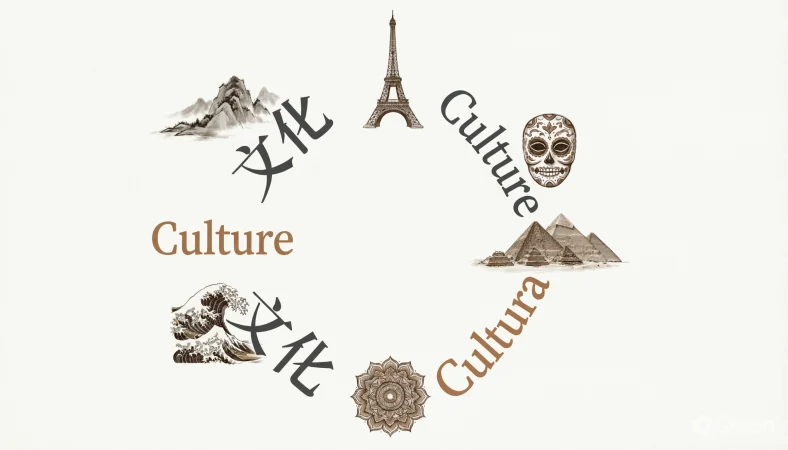
Culture shapes how people communicate, celebrate, eat, work, build relationships, and understand the world around them.
Learning how to say “culture” in different languages is therefore more than a vocabulary exercise it offers a small window into how communities describe their traditions, values, customs, and shared identity.
if you are researching culture in all languages, learning a new language, writing about global traditions, or looking for accurate culture translations, this guide gives you 70 commonly used equivalents.
Each entry includes the native word or phrase, an easy English pronunciation, a practical example, and its English meaning.
Culture in Different Languages: 70 Translations
The word “culture” can refer to traditions and customs, artistic expression, social values, or the shared way of life of a community. The exact meaning and usage can vary slightly between languages.
| # | Language | Native phrase | Easy English pronunciation | Real-life example | English meaning |
|---|---|---|---|---|---|
| 1 | English | culture | KUL-chur | Culture influences how we live. | Culture influences how we live. |
| 2 | Spanish | cultura | kool-TOO-rah | La cultura une a las personas. | Culture brings people together. |
| 3 | French | culture | kool-TEWR | La culture française est diverse. | French culture is diverse. |
| 4 | German | Kultur | kool-TOOR | Die Kultur ist reich an Traditionen. | The culture is rich in traditions. |
| 5 | Italian | cultura | kool-TOO-rah | La cultura italiana è famosa. | Italian culture is famous. |
| 6 | Portuguese | cultura | kool-TOO-rah | A cultura brasileira é vibrante. | Brazilian culture is vibrant. |
| 7 | Dutch | cultuur | KUL-tuur | De cultuur verandert voortdurend. | The culture is constantly changing. |
| 8 | Swedish | kultur | kool-TOOR | Svensk kultur har många traditioner. | Swedish culture has many traditions. |
| 9 | Norwegian | kultur | kool-TOOR | Norsk kultur är rik på historia. | Norwegian culture is rich in history. |
| 10 | Danish | kultur | kool-TOOR | Dansk kultur har gamle traditioner. | Danish culture has old traditions. |
| 11 | Finnish | kulttuuri | kool-too-ree | Suomen kulttuuri on monipuolinen. | Finnish culture is diverse. |
| 12 | Icelandic | menning | MEN-ning | Íslensk menning er einstök. | Icelandic culture is unique. |
| 13 | Irish | cultúr | KUL-toor | Tá cultúr saibhir ag Éirinn. | Ireland has a rich culture. |
| 14 | Welsh | diwylliant | dee-WITH-lee-ant | Mae diwylliant Cymru yn unigryw. | Welsh culture is unique. |
| 15 | Polish | kultura | kool-TOO-rah | Polska kultura jest bogata. | Polish culture is rich. |
| 16 | Czech | kultura | kool-TOO-rah | Česká kultura má dlouhou historii. | Czech culture has a long history. |
| 17 | Slovak | kultúra | kool-TOO-rah | Slovenská kultúra je zaujímavá. | Slovak culture is interesting. |
| 18 | Slovenian | kultura | kool-TOO-rah | Slovenska kultura je raznolika. | Slovenian culture is diverse. |
| 19 | Croatian | kultura | kool-TOO-rah | Hrvatska kultura je bogata. | Croatian culture is rich. |
| 20 | Serbian | култура | kool-TOO-rah | Српска култура има дугу историју. | Serbian culture has a long history. |
| 21 | Bulgarian | култура | kool-TOO-rah | Българската култура е богата. | Bulgarian culture is rich. |
| 22 | Macedonian | култура | kool-TOO-rah | Македонската култура е уникална. | Macedonian culture is unique. |
| 23 | Russian | культура | kool-TOO-rah | Русская культура очень разнообразна. | Russian culture is very diverse. |
| 24 | Ukrainian | культура | kool-TOO-rah | Українська культура має давні традиції. | Ukrainian culture has ancient traditions. |
| 25 | Belarusian | культура | kool-TOO-rah | Беларуская культура вельмі багатая. | Belarusian culture is very rich. |
| 26 | Lithuanian | kultūra | kool-TOO-rah | Lietuvos kultūra yra įvairi. | Lithuanian culture is diverse. |
| 27 | Latvian | kultūra | kool-TOO-rah | Latvijas kultūra ir bagāta. | Latvian culture is rich. |
| 28 | Estonian | kultuur | kool-TOOR | Eesti kultuur on huvitav. | Estonian culture is interesting. |
| 29 | Romanian | cultură | kool-TOO-rah | Cultura română are o istorie bogată. | Romanian culture has a rich history. |
| 30 | Hungarian | kultúra | kool-TOO-rah | A magyar kultúra gazdag. | Hungarian culture is rich. |
| 31 | Albanian | kulturë | kool-TOOR-uh | Kultura shqiptare është e pasur. | Albanian culture is rich. |
| 32 | Greek | πολιτισμός | po-lee-tee-zMOS | Ο πολιτισμός έχει μεγάλη σημασία. | Culture is very important. |
| 33 | Turkish | kültür | kool-TUR | Türk kültürü çok zengindir. | Turkish culture is very rich. |
| 34 | Arabic | ثقافة | tha-QAA-fah | الثقافة العربية متنوعة. | Arab culture is diverse. |
| 35 | Hebrew | תרבות | tar-BOOT | התרבות הישראלית מגוונת. | Israeli culture is diverse. |
| 36 | Persian | فرهنگ | far-HANG | فرهنگ ایرانی بسیار غنی است. | Iranian culture is very rich. |
| 37 | Urdu | ثقافت | sa-QAA-fat | پاکستانی ثقافت بہت متنوع ہے۔ | Pakistani culture is very diverse. |
| 38 | Hindi | संस्कृति | sun-SKRI-tee | भारतीय संस्कृति बहुत समृद्ध है। | Indian culture is very rich. |
| 39 | Bengali | সংস্কৃতি | shong-SKRI-tee | বাংলা সংস্কৃতি খুব সমৃদ্ধ। | Bengali culture is very rich. |
| 40 | Punjabi | ਸਭਿਆਚਾਰ | sab-BHYA-char | ਪੰਜਾਬੀ ਸਭਿਆਚਾਰ ਬਹੁਤ ਰੰਗੀਨ ਹੈ। | Punjabi culture is very colorful. |
| 41 | Gujarati | સંસ્કૃતિ | sun-SKRI-tee | ગુજરાતી સંસ્કૃતિ સમૃદ્ધ છે. | Gujarati culture is rich. |
| 42 | Marathi | संस्कृती | sun-SKROO-tee | मराठी संस्कृती खूप समृद्ध आहे. | Marathi culture is very rich. |
| 43 | Nepali | संस्कृति | sun-SKRI-tee | नेपाली संस्कृति विविध छ। | Nepali culture is diverse. |
| 44 | Sinhala | සංස්කෘතිය | sung-SKROO-tee-yah | ශ්රී ලංකාවේ සංස්කෘතිය පොහොසත්ය. | Sri Lankan culture is rich. |
| 45 | Tamil | கலாச்சாரம் | ka-laa-CHA-raam | தமிழ் கலாச்சாரம் பழமையானது. | Tamil culture is ancient. |
| 46 | Telugu | సంస్కృతి | sun-SKRU-tee | తెలుగు సంస్కృతి గొప్పది. | Telugu culture is great. |
| 47 | Kannada | ಸಂಸ್ಕೃತಿ | sun-SKRU-tee | ಕನ್ನಡ ಸಂಸ್ಕೃತಿ ಶ್ರೀಮಂತವಾಗಿದೆ. | Kannada culture is rich. |
| 48 | Malayalam | സംസ്കാരം | sams-KAA-ram | കേരള സംസ്കാരം സമ്പന്നമാണ്. | Kerala culture is rich. |
| 49 | Assamese | সংস্কৃতি | shong-SKRI-tee | অসমৰ সংস্কৃতি বৈচিত্ৰময়। | Assam’s culture is diverse. |
| 50 | Chinese | 文化 | wénhuà | 中国文化非常丰富。 | Chinese culture is very rich. |
| 51 | Japanese | 文化 | bun-ka | 日本文化は世界的に知られています。 | Japanese culture is known worldwide. |
| 52 | Korean | 문화 | mun-hwa | 한국 문화는 매우 다양합니다. | Korean culture is very diverse. |
| 53 | Vietnamese | văn hóa | van HWA | Văn hóa Việt Nam rất đa dạng. | Vietnamese culture is very diverse. |
| 54 | Thai | วัฒนธรรม | wat-than-na-tham | วัฒนธรรมไทยมีเอกลักษณ์. | Thai culture is distinctive. |
| 55 | Indonesian | budaya | boo-DAH-yah | Budaya Indonesia sangat beragam. | Indonesian culture is very diverse. |
| 56 | Malay | budaya | boo-DAH-yah | Budaya Malaysia sangat pelbagai. | Malaysian culture is very diverse. |
| 57 | Filipino | kultura | kool-TOO-rah | Ang kultura ng Pilipinas ay makulay. | Philippine culture is colorful. |
| 58 | Mongolian | соёл | SO-yol | Монгол соёл маш баялаг. | Mongolian culture is very rich. |
| 59 | Georgian | კულტურა | kool-TOO-rah | ქართული კულტურა მდიდარია. | Georgian culture is rich. |
| 60 | Armenian | մշակույթ | mush-a-KOYT | Հայկական մշակույթը հին է։ | Armenian culture is ancient. |
| 61 | Azerbaijani | mədəniyyət | ma-da-nee-YET | Azərbaycan mədəniyyəti zəngindir. | Azerbaijani culture is rich. |
| 62 | Kazakh | мәдениет | ma-da-nee-YET | Қазақ мәдениеті бай. | Kazakh culture is rich. |
| 63 | Uzbek | madaniyat | ma-da-nee-YAT | O‘zbek madaniyati boy. | Uzbek culture is rich. |
| 64 | Swahili | utamaduni | oo-ta-ma-DOO-nee | Utamaduni wa Afrika ni tofauti. | African culture is diverse. |
| 65 | Zulu | isiko | ee-SEE-koh | Isiko lethu libalulekile. | Our culture is important. |
| 66 | Xhosa | inkcubeko | een-KOO-beh-koh | Inkcubeko yethu ibalulekile. | Our culture is important. |
| 67 | Afrikaans | kultuur | kul-TOOR | Ons kultuur is belangrik. | Our culture is important. |
| 68 | Malagasy | kolontsaina | koo-loon-TSY-nah | Kolontsaina malagasy dia miavaka. | Malagasy culture is distinctive. |
| 69 | Esperanto | kulturo | kool-TOO-ro | Kulturo kunigas homojn. | Culture unites people. |
| 70 | Latin | cultura | kool-TOO-rah | Cultura mores hominum format. | Culture shapes human customs. |
How to Say “Culture” in Different Languages
The easiest way to remember these culture translations is to notice patterns. Many European languages use words that resemble “cultura,” while several South Asian languages use terms connected with broader ideas of refinement, heritage, civilization, or shared traditions.
In East Asian languages, the words are often written in their own scripts. For example, Chinese uses 文化, Japanese uses 文化, and Korean uses 문화. Although the written forms and pronunciations differ, all can refer to culture in a broad social sense.
Pronunciation also varies by region. The English pronunciation column is intentionally simplified for learners rather than presented as a substitute for native pronunciation.
Culture in All Languages: What Does the Word Mean?
“Culture” is a broad concept. It can describe the beliefs, customs, traditions, arts, language, food, celebrations, social practices, and values shared by a particular group.
For example, when someone talks about Pakistani culture, they may be referring to traditions, clothing, cuisine, languages, music, family customs, celebrations, and regional practices. The same principle applies when discussing Japanese, Brazilian, Egyptian, French, African, or any other culture.
The word can also describe culture within smaller communities, organizations, or groups. That is why its meaning depends partly on context.
Why Learn Culture Translations Around the World?
Knowing the word for “culture” in another language can be useful in many situations.
- Language learning: It is a useful vocabulary word for conversations about people and societies.
- Travel: Understanding cultural vocabulary can make conversations with local people easier.
- Education: Students can use these terms when studying geography, history, anthropology, and languages.
- Writing: Multilingual vocabulary can help writers discuss global traditions more naturally.
- Communication: Learning culturally important words can encourage greater respect for different communities.
- Research: Comparing words across languages can reveal interesting differences in how ideas are expressed.
Culture Around the World Is Diverse
There is no single definition of what a “culture” looks like. Even within one country, cultural practices can differ between regions, generations, ethnic communities, cities, and rural areas.
For this reason, it is better to think of culture as something dynamic rather than fixed. Food, music, language, clothing, celebrations, family traditions, and social habits can change over time while still retaining connections with the past.
When researching culture around the world, context matters. A country may contain many cultural traditions rather than one uniform culture.
Common Uses of the Word “Culture”
The word “culture” appears in several common expressions.
Cultural heritage refers to traditions, practices, monuments, knowledge, and other elements passed from one generation to another.
Popular culture describes widely shared entertainment, trends, media, and social interests.
Traditional culture generally refers to customs and practices associated with earlier generations.
Workplace culture describes the values, behaviors, expectations, and working practices within an organization.
Cultural diversity refers to the presence and interaction of different cultural groups and traditions.
These expressions show why translating “culture” requires attention to context, not just a dictionary equivalent.
Tips for Using “Culture” Correctly in Another Language
A direct translation is not always enough to sound natural. Before using a translated word, consider the sentence and the meaning you want to express.
For example, “culture” can refer to national traditions in one sentence and workplace behavior in another. Some languages may use related words or additional expressions depending on the context.
It is also useful to check whether the noun is singular or plural, whether it needs an article, and whether the language has formal and informal alternatives.
Most importantly, avoid assuming that every culture within a country is identical. Language learning becomes more accurate and respectful when cultural diversity is recognized.
Frequently Asked Questions About Culture in Different Languages
1. What is “culture” in different languages?
“Culture” has different words across languages. Examples include cultura in Spanish and Italian, Kultur in German, культура in Russian, ثقافة in Arabic, 文化 in Chinese and Japanese, and 문화 in Korean.
2. How do you say “culture” in all languages?
There is no practical list containing every language in existence because thousands of languages are spoken worldwide. This guide provides 70 examples covering languages from Europe, Asia, Africa, and other regions.
3. What is the most common translation of “culture”?
There is no single universal translation. Words such as cultura, Kultur, culture, and культура occur in several major languages, but the correct word depends on the target language.
4. How do you say “culture” in Asian languages?
Examples include 文化 in Chinese and Japanese, 문화 in Korean, वज़ाफ़त-related cultural vocabulary in South Asian languages, and วัฒนธรรม in Thai. The exact term and pronunciation depend on the language.
5. Why can “culture” have different meanings?
“Culture” is a broad concept that can describe traditions, beliefs, arts, customs, social behavior, heritage, or a group’s way of life. Different languages may divide or express these ideas in slightly different ways.
Conclusion
Learning how to say “culture” in different languages is a simple way to expand vocabulary while exploring how people describe traditions, heritage, and shared ways of life.
The 70 translations above provide a useful starting point for language learners, students, travelers, writers, and anyone interested in cultures around the world.
Remember that a translation is only the beginning. The most meaningful understanding comes from learning how each word is actually used by the people who speak the language.

I am Ashley Marie, a passionate language enthusiast who loves exploring different languages, cultures, words, and expressions. I enjoy sharing simple, useful language insights that help readers communicate confidently and discover the beauty of languages.