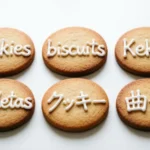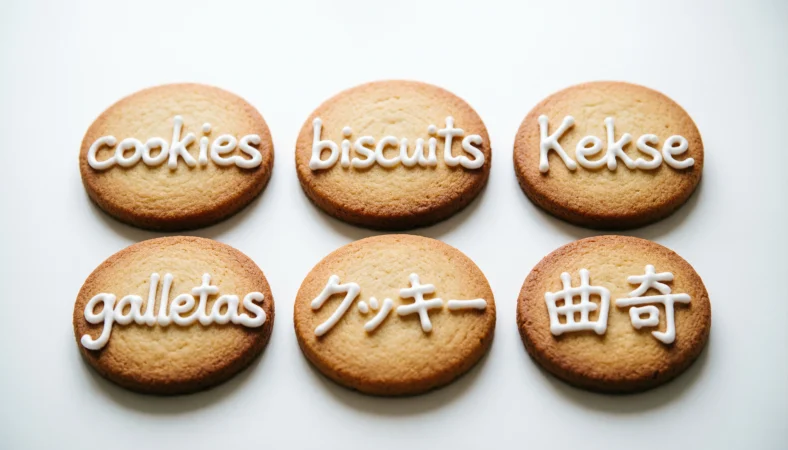
Cookies are enjoyed in almost every part of the world, but the word for them changes from language to language.
In some places, the familiar English word “cookie” is used, while others have traditional words for biscuits, small cakes, or baked treats.
If you want to learn how to say cookies in different languages, this guide gives you 70 useful translations in one easy-to-scan table. Each entry includes the native phrase, a simple English pronunciation, a practical example sentence, and its English meaning.
Cookies in All Languages: 70 Translations
| # | Language | Native phrase | Easy English pronunciation | Example sentence | English meaning |
|---|---|---|---|---|---|
| 1 | English | Cookies | KOO-keez | I baked some cookies today. | I baked some cookies today. |
| 2 | Spanish | Galletas | gah-YEH-tahs | Me gustan las galletas. | I like cookies. |
| 3 | French | Biscuits | bees-KWEE | J’aime les biscuits. | I like cookies. |
| 4 | German | Kekse | KEK-suh | Ich esse gerne Kekse. | I like eating cookies. |
| 5 | Italian | Biscotti | bee-SKOT-tee | Mi piacciono i biscotti. | I like cookies. |
| 6 | Portuguese | Biscoitos | bees-koy-tohs | Eu gosto de biscoitos. | I like cookies. |
| 7 | Dutch | Koekjes | KOOK-yuhs | Ik vind koekjes lekker. | I like cookies. |
| 8 | Russian | Печенье | puh-CHEN-yeh | Я люблю печенье. | I love cookies. |
| 9 | Ukrainian | Печиво | peh-CHEE-voh | Я люблю печиво. | I love cookies. |
| 10 | Polish | Ciasteczka | chas-TECH-kah | Lubię ciasteczka. | I like cookies. |
| 11 | Czech | Sušenky | soo-SHEN-kee | Mám rád sušenky. | I like cookies. |
| 12 | Slovak | Sušienky | soo-SHYEHN-kee | Mám rád sušienky. | I like cookies. |
| 13 | Hungarian | Sütik | SHOO-teek | Szeretem a sütiket. | I like cookies. |
| 14 | Romanian | Biscuiți | bees-KWITS | Îmi plac biscuiții. | I like cookies. |
| 15 | Bulgarian | Бисквити | bees-KVEE-tee | Обичам бисквити. | I love cookies. |
| 16 | Croatian | Kolačići | koh-LAH-chee-chee | Volim kolačiće. | I love cookies. |
| 17 | Serbian | Колачићи | koh-LAH-chee-chee | Волим колачиће. | I love cookies. |
| 18 | Slovenian | Piškoti | PISH-koh-tee | Rad imam piškote. | I like cookies. |
| 19 | Bosnian | Kolačići | koh-LAH-chee-chee | Volim kolačiće. | I love cookies. |
| 20 | Macedonian | Колачи | koh-LAH-chee | Сакам колачи. | I like cookies. |
| 21 | Greek | Μπισκότα | bees-KOH-tah | Μου αρέσουν τα μπισκότα. | I like cookies. |
| 22 | Albanian | Biskota | bees-KOH-tah | Më pëlqejnë biskotat. | I like cookies. |
| 23 | Turkish | Kurabiyeler | koo-rah-bee-YEH-lehr | Kurabiyeleri çok severim. | I really like cookies. |
| 24 | Azerbaijani | Peçenyelər | peh-chen-yeh-LAIR | Mən peçenyeləri sevirəm. | I love cookies. |
| 25 | Armenian | Թխվածքաբլիթներ | tukh-vats-kah-BLEET-ner | Ես սիրում եմ թխվածքաբլիթներ։ | I love cookies. |
| 26 | Georgian | ორცხობილა | orts-kho-bee-LAH | მე ორცხობილა მიყვარს. | I like cookies. |
| 27 | Hebrew | עוגיות | oo-GEE-yot | אני אוהב עוגיות. | I like cookies. |
| 28 | Arabic | بسكويت | bis-KWEET | أحب البسكويت. | I love cookies. |
| 29 | Persian | بیسکویت | bees-kweet | من بیسکویت دوست دارم. | I like cookies. |
| 30 | Urdu | کوکیز | KOO-keez | مجھے کوکیز پسند ہیں۔ | I like cookies. |
| 31 | Hindi | कुकीज़ | KOO-keez | मुझे कुकीज़ पसंद हैं। | I like cookies. |
| 32 | Bengali | কুকিজ | KOO-keez | আমি কুকিজ পছন্দ করি। | I like cookies. |
| 33 | Punjabi | ਕੁਕੀਜ਼ | KOO-keez | ਮੈਨੂੰ ਕੁਕੀਜ਼ ਪਸੰਦ ਹਨ। | I like cookies. |
| 34 | Gujarati | કૂકીઝ | KOO-keez | મને કૂકીઝ ગમે છે. | I like cookies. |
| 35 | Marathi | कुकीज | KOO-keez | मला कुकीज आवडतात. | I like cookies. |
| 36 | Nepali | कुकीहरू | KOO-kee-har-oo | मलाई कुकीहरू मन पर्छ। | I like cookies. |
| 37 | Sinhala | කුකීස් | KOO-keez | මම කුකීස් වලට කැමතියි. | I like cookies. |
| 38 | Tamil | குக்கீஸ் | KOO-keez | எனக்கு குக்கீஸ் பிடிக்கும். | I like cookies. |
| 39 | Telugu | కుకీలు | KOO-kee-loo | నాకు కుకీలు ఇష్టం. | I like cookies. |
| 40 | Kannada | ಕುಕೀಸ್ | KOO-keez | ನನಗೆ ಕುಕೀಸ್ ಇಷ್ಟ. | I like cookies. |
| 41 | Malayalam | കുക്കീസ് | KOO-keez | എനിക്ക് കുക്കീസ് ഇഷ്ടമാണ്. | I like cookies. |
| 42 | Thai | คุกกี้ | Kook-GEE | ฉันชอบคุกกี้ | I like cookies. |
| 43 | Vietnamese | Bánh quy | banh kwee | Tôi thích bánh quy. | I like cookies. |
| 44 | Indonesian | Kukis | KOO-kees | Saya suka kukis. | I like cookies. |
| 45 | Malay | Biskut | BEES-koot | Saya suka biskut. | I like cookies. |
| 46 | Filipino | Kuki | KOO-kee | Gusto ko ang mga kuki. | I like cookies. |
| 47 | Cebuano | Kokis | KOH-kees | Ganahan ko og kokis. | I like cookies. |
| 48 | Khmer | ខូគី | KOO-kee | ខ្ញុំចូលចិត្តខូគី។ | I like cookies. |
| 49 | Lao | ຄຸກກີ້ | Kook-GEE | ຂ້ອຍມັກຄຸກກີ້. | I like cookies. |
| 50 | Burmese | ကွတ်ကီး | KWOOT-kee | ကွတ်ကီးကို ကြိုက်တယ်။ | I like cookies. |
| 51 | Mandarin Chinese | 饼干 | BEENG-gahn | 我喜欢饼干。 | I like cookies. |
| 52 | Cantonese | 曲奇 | Kook-KAY | 我鍾意食曲奇。 | I like eating cookies. |
| 53 | Japanese | クッキー | KOO-kkee | クッキーが好きです。 | I like cookies. |
| 54 | Korean | 쿠키 | KOO-kee | 저는 쿠키를 좋아해요. | I like cookies. |
| 55 | Mongolian | Жигнэмэг | jeeg-NEH-meg | Би жигнэмэгт дуртай. | I like cookies. |
| 56 | Kazakh | Печенье | peh-CHEN-yeh | Мен печеньені жақсы көремін. | I love cookies. |
| 57 | Uzbek | Pechenye | peh-CHEN-yeh | Men pechenyeni yaxshi ko’raman. | I love cookies. |
| 58 | Turkmen | Köke | KUR-keh | Men kökäni gowy görýärin. | I like cookies. |
| 59 | Kyrgyz | Печенье | peh-CHEN-yeh | Мен печеньени жакшы көрөм. | I love cookies. |
| 60 | Tajik | Кулчақанд | kool-cha-KAND | Ман кулчақандро дӯст медорам. | I love cookies. |
| 61 | Swahili | Kuki | KOO-kee | Ninapenda kuki. | I like cookies. |
| 62 | Afrikaans | Koekies | KOO-kees | Ek hou van koekies. | I like cookies. |
| 63 | Amharic | ብስኩት | bis-KOOT | ብስኩት እወዳለሁ። | I like cookies. |
| 64 | Yoruba | Kúkì | KOO-kee | Mo fẹ́ràn kúkì. | I like cookies. |
| 65 | Hausa | Bìskît | BIS-keet | Ina son bìskît. | I like cookies. |
| 66 | Malagasy | Biskoty | bees-KOH-tee | Tiako ny biskoty. | I like cookies. |
| 67 | Icelandic | Smákökur | SMAU-kuh-kur | Mér finnst smákökur góðar. | I like cookies. |
| 68 | Estonian | Küpsised | KURP-see-sed | Mulle meeldivad küpsised. | I like cookies. |
| 69 | Latvian | Cepumi | TSEH-poo-mee | Man garšo cepumi. | I like cookies. |
| 70 | Lithuanian | Sausainiai | sow-SAI-nyai | Man patinka sausainiai. | I like cookies. |
How to Say Cookies in Different Languages
The easiest way to learn cookies in different languages is to focus on both the written word and how it sounds.
Some languages use a traditional word for a biscuit or baked sweet. Others have adopted a version of the English word “cookie.” For example, Japanese uses クッキー, Korean uses 쿠키, and Hindi commonly uses कुकीज़ in casual modern usage.
The pronunciation column above is intentionally simple rather than technical. It is designed to help English speakers get close to the natural sound without needing to learn an entire pronunciation system.
Cookies Around the World
Cookies are not exactly the same everywhere.
In English-speaking countries, “cookie” often refers to a small sweet baked treat that may contain chocolate chips, nuts, fruit, or other ingredients. In other regions, the closest everyday word may literally refer to a biscuit, small cake, or another type of baked snack.
This is why cookie translations do not always match word-for-word. A translation can depend on local food traditions, regional vocabulary, and whether someone means an American-style cookie or a broader category of biscuits and baked sweets.
Cookie vs. Biscuit: Why Translations Differ
One important detail is that “cookie” and “biscuit” can overlap in meaning.
In American English, a cookie is generally a sweet baked snack. In British English, the broader term “biscuit” is commonly used for many crisp or firm sweet baked goods.
Other languages make similar distinctions. A local word may describe the general category of biscuit rather than the specific American-style cookie.
So, when searching for cookies in all languages, it is useful to think about meaning rather than translating the English spelling alone.
Why Learn Cookie Translations?
Knowing how to say cookies in another language can be useful in everyday situations.
- Ordering food while traveling
- Reading bakery menus
- Understanding international recipes
- Learning useful food vocabulary
- Talking with friends from other countries
- Creating multilingual food content
- Practicing basic conversational phrases
Food vocabulary is also an easy way to start learning a new language because the words can be connected to familiar experiences.
How to Use These Cookie Translations Naturally
Start with a few languages that are relevant to your travel, family, studies, or interests. Learn the native word first, then practice it in a short sentence.
For example, instead of memorizing only the word for cookies, learn a useful sentence such as “I like cookies.” This makes the vocabulary easier to remember and gives you a practical phrase you can actually use.
Cookies in Different Languages for Travel
If you are visiting a bakery, café, supermarket, or restaurant, knowing the local word for cookies can make basic communication easier. It can also help when reading product labels or asking whether a particular baked item contains ingredients you want to avoid.
Remember that regional vocabulary can vary even within the same language. A word commonly used in one country may sound unusual or have a slightly different meaning somewhere else.
Common Questions About Cookies in Different Languages
1. What is “cookies” in different languages?
“Cookies” has different names around the world. Examples include “galletas” in Spanish, “biscuits” in French, “Kekse” in German, “biscotti” in Italian, “biscoitos” in Portuguese, “печенье” in Russian, “クッキー” in Japanese, and “쿠키” in Korean.
2. How do you say cookies in all languages?
There is no single word that covers every language because languages use different terms for cookies, biscuits, and baked sweets. This guide provides 70 commonly used translations with pronunciation and examples.
3. What is the word for cookie in Spanish?
The common Spanish word for cookie is “galleta.” The plural form is “galletas,” meaning cookies.
4. What is cookie called in Japanese?
Cookie is commonly written as “クッキー” in Japanese. It is a loanword based on the English word “cookie.”
5. Why do some languages translate cookie as biscuit?
Many languages use their established word for a small baked or sweet biscuit rather than adopting the English word “cookie.” The exact choice depends on local food vocabulary and the type of baked product being described.
Conclusion
Learning cookies in different languages is a simple and enjoyable way to explore international vocabulary.
While the exact translation can vary depending on local food traditions, the 70 examples above give you a useful starting point for understanding how people refer to cookies and similar baked treats around the world.
if you are learning languages, planning a trip, reading recipes, or simply curious about how to say cookies in different languages, these translations make it easier to connect a familiar food with new words and cultures.

I am Jimmy Michael, a language enthusiast and writer passionate about exploring different languages, words, and cultures. I create simple, useful content that helps readers understand languages better and discover new ways to communicate globally.