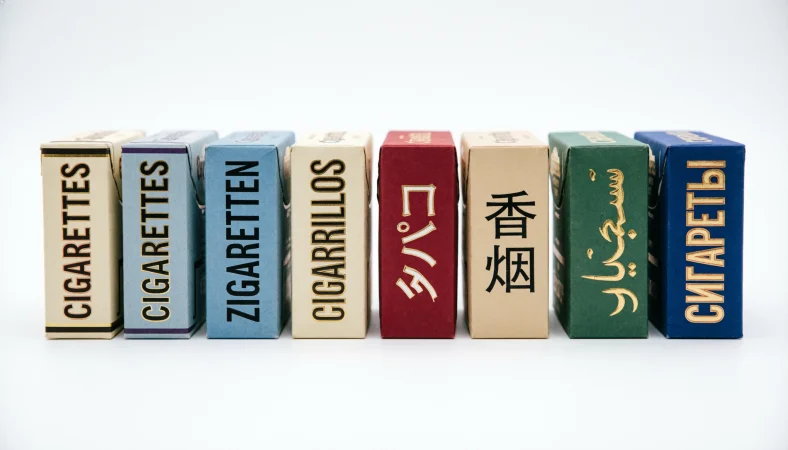
Wondering how to say “cigarettes” in different languages? Whether you are learning vocabulary, translating a menu or conversation, researching international.
Terminology, or simply curious about words around the world, this guide provides 70 useful translations in one place.
Below, you will find cigarettes in all languages with the native term, an easy English pronunciation, a practical example sentence, and the English meaning.
Because some languages use different grammatical forms depending on context, the examples use natural everyday phrasing wherever possible.
How to Say “Cigarettes” in Different Languages
The word “cigarettes” appears in many forms across the world’s languages. Some languages use a word closely related to the English term, while others have completely different vocabulary.
| # | Language | Native phrase | Easy English pronunciation | Real-life example | English meaning |
|---|---|---|---|---|---|
| 1 | English | cigarettes | sig-uh-RETS | He bought a pack of cigarettes. | He bought a pack of cigarettes. |
| 2 | Spanish | cigarrillos | see-gah-REE-yos | No llevo cigarrillos. | I don’t carry cigarettes. |
| 3 | French | cigarettes | see-gah-RET | Il a acheté des cigarettes. | He bought cigarettes. |
| 4 | German | Zigaretten | tsee-gah-RET-ten | Er kauft Zigaretten. | He is buying cigarettes. |
| 5 | Italian | sigarette | see-gah-RET-teh | Ha comprato delle sigarette. | He bought some cigarettes. |
| 6 | Portuguese | cigarros | see-GAH-roos | Ele comprou cigarros. | He bought cigarettes. |
| 7 | Dutch | sigaretten | see-gah-RET-ten | Hij koopt sigaretten. | He is buying cigarettes. |
| 8 | Swedish | cigaretter | see-gah-RET-ter | Han köper cigaretter. | He is buying cigarettes. |
| 9 | Norwegian | sigaretter | see-gah-RET-ter | Han kjøper sigaretter. | He is buying cigarettes. |
| 10 | Danish | cigaretter | see-gah-RET-ter | Han køber cigaretter. | He is buying cigarettes. |
| 11 | Finnish | savukkeet | SAH-vook-ket | Hän ostaa savukkeita. | He is buying cigarettes. |
| 12 | Icelandic | sígarettur | SEE-gah-ret-tur | Hann kaupir sígarettur. | He is buying cigarettes. |
| 13 | Irish | toitíní | TITCH-ee-nee | Cheannaigh sé toitíní. | He bought cigarettes. |
| 14 | Welsh | sigaréts | sig-ah-RETS | Prynodd sigaréts. | He bought cigarettes. |
| 15 | Scottish Gaelic | toitean | TOH-tyan | Cheannaich e toitean. | He bought cigarettes. |
| 16 | Polish | papierosy | pah-pyeh-ROH-sih | Kupił papierosy. | He bought cigarettes. |
| 17 | Czech | cigarety | TSEE-gah-reh-tee | Koupil cigarety. | He bought cigarettes. |
| 18 | Slovak | cigarety | TSEE-gah-reh-tee | Kúpil cigarety. | He bought cigarettes. |
| 19 | Slovenian | cigarete | tsee-gah-REH-teh | Kupil je cigarete. | He bought cigarettes. |
| 20 | Croatian | cigarete | tsee-gah-REH-teh | Kupio je cigarete. | He bought cigarettes. |
| 21 | Serbian | цигарете | tsee-gah-REH-teh | Купио је цигарете. | He bought cigarettes. |
| 22 | Bulgarian | цигари | tsee-GAH-ree | Той купи цигари. | He bought cigarettes. |
| 23 | Macedonian | цигари | tsee-GAH-ree | Тој купи цигари. | He bought cigarettes. |
| 24 | Russian | сигареты | see-gah-RET-y | Он купил сигареты. | He bought cigarettes. |
| 25 | Ukrainian | сигарети | see-gah-REH-tee | Він купив сигарети. | He bought cigarettes. |
| 26 | Belarusian | цыгарэты | tsy-gah-REH-ty | Ён купіў цыгарэты. | He bought cigarettes. |
| 27 | Lithuanian | cigaretės | tsee-gah-REH-tes | Jis perka cigaretes. | He is buying cigarettes. |
| 28 | Latvian | cigaretes | tsee-gah-REH-tes | Viņš pērk cigaretes. | He is buying cigarettes. |
| 29 | Estonian | sigaretid | see-gah-REH-tid | Ta ostab sigarette. | He is buying cigarettes. |
| 30 | Hungarian | cigaretták | tsee-gah-ret-TAHK | Cigarettákat vásárol. | He is buying cigarettes. |
| 31 | Romanian | țigări | tsee-GAHR | El cumpără țigări. | He is buying cigarettes. |
| 32 | Albanian | cigare | tsee-GAH-reh | Ai bleu cigare. | He bought cigarettes. |
| 33 | Greek | τσιγάρα | tsee-GAH-rah | Αγόρασε τσιγάρα. | He bought cigarettes. |
| 34 | Turkish | sigaralar | see-gah-rah-LAHR | Sigara satın alıyor. | He is buying cigarettes. |
| 35 | Maltese | sigaretti | see-gah-RET-tee | Huwa xtara sigaretti. | He bought cigarettes. |
| 36 | Arabic | سجائر | sa-JAA-ir | اشترى سجائر. | He bought cigarettes. |
| 37 | Hebrew | סיגריות | see-gar-YOT | הוא קנה סיגריות. | He bought cigarettes. |
| 38 | Persian | سیگارها | see-GAHR-hah | او سیگار خرید. | He bought cigarettes. |
| 39 | Kurdish (Kurmanji) | cixare | tsee-khah-REH | Ew cixare dikire. | He is buying cigarettes. |
| 40 | Armenian | ծխախոտ | tsuh-khah-KHOT | Նա ծխախոտ է գնում։ | He is buying cigarettes. |
| 41 | Georgian | სიგარეტი | see-gah-REH-tee | ის სიგარეტს ყიდულობს. | He is buying cigarettes. |
| 42 | Hindi | सिगरेट | sig-uh-RET | उसने सिगरेट खरीदी। | He bought cigarettes. |
| 43 | Urdu | سگریٹ | sig-uh-RET | اس نے سگریٹ خریدی۔ | He bought cigarettes. |
| 44 | Bengali | সিগারেট | shi-gah-RET | সে সিগারেট কিনেছে। | He bought cigarettes. |
| 45 | Punjabi | ਸਿਗਰਟ | sig-uh-RET | ਉਸਨੇ ਸਿਗਰਟ ਖਰੀਦੀ। | He bought cigarettes. |
| 46 | Gujarati | સિગારેટ | sig-uh-RET | તેણે સિગારેટ ખરીદી. | He bought cigarettes. |
| 47 | Marathi | सिगारेट | sig-uh-RET | त्याने सिगारेट विकत घेतली. | He bought cigarettes. |
| 48 | Nepali | चुरोट | CHOO-rot | उसले चुरोट किन्यो। | He bought cigarettes. |
| 49 | Sinhala | සිගරට් | sig-uh-RET | ඔහු සිගරට් මිලදී ගත්තා. | He bought cigarettes. |
| 50 | Tamil | சிகரெட்டுகள் | sig-uh-RET-too-gal | அவர் சிகரெட்டுகள் வாங்கினார். | He bought cigarettes. |
| 51 | Telugu | సిగరెట్లు | sig-uh-RET-loo | అతను సిగరెట్లు కొన్నాడు. | He bought cigarettes. |
| 52 | Kannada | ಸಿಗರೇಟುಗಳು | sig-uh-RET-oo-gah-loo | ಅವನು ಸಿಗರೇಟುಗಳನ್ನು ಖರೀದಿಸಿದನು. | He bought cigarettes. |
| 53 | Malayalam | സിഗരറ്റുകൾ | sig-uh-RET-oo-kal | അവൻ സിഗരറ്റുകൾ വാങ്ങി. | He bought cigarettes. |
| 54 | Thai | บุหรี่ | boo-REE | เขาซื้อบุหรี่ | He bought cigarettes. |
| 55 | Lao | ຢາສູບ | yah-SOOP | ລາວຊື້ຢາສູບ. | He bought cigarettes. |
| 56 | Khmer | បារី | bah-REE | គាត់ទិញបារី។ | He bought cigarettes. |
| 57 | Vietnamese | thuốc lá | took LAH | Anh ấy mua thuốc lá. | He bought cigarettes. |
| 58 | Indonesian | rokok | ROH-kok | Dia membeli rokok. | He bought cigarettes. |
| 59 | Malay | rokok | ROH-kok | Dia membeli rokok. | He bought cigarettes. |
| 60 | Filipino | sigarilyo | see-gah-RIL-yoh | Bumili siya ng sigarilyo. | He bought cigarettes. |
| 61 | Chinese (Mandarin) | 香烟 | shyahng-yen | 他买了香烟。 | He bought cigarettes. |
| 62 | Cantonese | 香煙 | hoeng-jin | 佢買咗香煙。 | He bought cigarettes. |
| 63 | Japanese | たばこ | tah-bah-koh | 彼はたばこを買った。 | He bought cigarettes. |
| 64 | Korean | 담배 | dam-bae | 그는 담배를 샀어요. | He bought cigarettes. |
| 65 | Mongolian | тамхи | TAM-khee | Тэр тамхи худалдаж авсан. | He bought cigarettes. |
| 66 | Swahili | sigara | see-GAH-rah | Alinunua sigara. | He bought cigarettes. |
| 67 | Amharic | ሲጋራ | see-gah-RAH | ሲጋራ ገዛ። | He bought cigarettes. |
| 68 | Afrikaans | sigarette | see-gah-RET-teh | Hy koop sigarette. | He is buying cigarettes. |
| 69 | Zulu | ugwayi | oo-GWHY-ee | Uthenge ugwayi. | He bought cigarettes. |
| 70 | Xhosa | icuba | ee-TSOO-bah | Uthenge icuba. | He bought cigarettes. |
Understanding Cigarettes Translations Around the World
The translations above show that there is no single universal word for cigarettes. Many European languages use terms that resemble “cigarette,” reflecting the historical spread of the word through related languages.
Other languages use completely different native vocabulary. For example, several Asian and African languages have their own established everyday terms rather than simply adapting the English word.
It is also important to distinguish between a word for a cigarette, cigarettes as a plural, and the broader concept of tobacco. The exact form can change according to grammar and context.
Why Cigarette Vocabulary Differs by Language
Language develops through history, trade, migration, and cultural contact. Tobacco terminology is a good example of this process.
Words in neighboring European languages can look remarkably similar, while languages from different linguistic families may use unrelated words. Even when two languages share a similar word, pronunciation and grammatical endings can differ substantially.
This is why a direct dictionary translation is not always enough. A natural example sentence provides useful context and helps show how the word actually appears in everyday communication.
Cigarettes in All Languages: Important Translation Tips
When searching for cigarettes in all languages, remember that “all languages” is not literally possible in a practical reference because thousands of living languages are spoken worldwide.
A list of 70 major and widely studied languages can nevertheless provide broad international coverage.
A few additional points are worth remembering:
- Singular and plural forms may be different.
- Some languages use grammatical cases that change the word ending.
- Informal and formal vocabulary can vary.
- Regional varieties may use alternative terms.
- A word for tobacco is not always the same as a word specifically meaning cigarettes.
- Pronunciation guides written with English letters are approximate rather than exact phonetic transcriptions.
How to Say “Cigarettes” in Different Languages for Travel
Knowing basic vocabulary can be useful when traveling or communicating across language barriers. However, the meaning of a word can depend on the situation.
For example, a phrase used in a shop may require a different grammatical form than the dictionary form. Likewise, asking about tobacco products in a public place may involve local laws and restrictions.
For language learners, the most useful approach is to learn the noun together with a short sentence. This makes it easier to understand how the word functions naturally rather than memorizing an isolated translation.
Common Questions About Cigarette Translations
1. What is “cigarettes” in Spanish?
“Cigarettes” in Spanish is cigarrillos. The word is commonly used for cigarettes in Spanish-speaking countries, although vocabulary can vary by region.
2. How do you say “cigarettes” in French?
In French, “cigarettes” is cigarettes. The spelling is very similar to English, but the pronunciation is different.
3. What is the word for cigarettes in German?
The German word is Zigaretten. It is the plural form commonly used for cigarettes.
4. How do you say “cigarettes” in Japanese?
In Japanese, a common everyday term is たばこ (tabako). Depending on context, Japanese speakers may use more specific terminology for cigarette products.
5. Which languages have a word similar to “cigarette”?
Many European languages have closely related forms, including French, Spanish, Italian, German, Dutch, Swedish, Norwegian, Danish, Polish, Czech, Romanian, and others. This similarity reflects the historical spread of the term across languages.
Conclusion
Learning cigarettes in different languages offers an interesting look at how vocabulary changes across cultures and language families.
From closely related European terms to completely different words in Asian and African languages, these 70 translations provide a useful international reference.
If you are researching cigarette translations, learning vocabulary, or looking for how to say cigarettes in different languages, the table above gives you the native expression, an accessible pronunciation guide, and a practical sentence for each language.

I am Johnny Thomas, a passionate language enthusiast and writer. I enjoy exploring different languages, cultures, words, and expressions. I create helpful, easy-to-understand content to help readers discover languages and communicate confidently.