Wondering how to say caramel in different languages? if you are learning a new language, traveling, creating multilingual content, or simply curious about food words around the world, this guide makes it easy to find the right translation.
Caramel is a familiar word in many languages, but its spelling, pronunciation, and usage can vary. In some languages, the word closely resembles English, while others use a completely different traditional term.
Below, you will find caramel in all languages in one easy-to-read table. Each entry includes the native phrase, an easy English pronunciation, a practical example sentence, and the English meaning.
Caramel in Different Languages: 70 Translations
| # | Language | Native phrase | Easy English pronunciation | Real-life example | English meaning |
|---|---|---|---|---|---|
| 1 | Spanish | caramelo | kah-rah-MEH-loh | Me gusta el caramelo. | I like caramel. |
| 2 | French | caramel | kah-rah-MEL | J’adore le caramel. | I love caramel. |
| 3 | German | Karamell | kah-rah-MELL | Ich mag Karamell. | I like caramel. |
| 4 | Italian | caramello | kah-rah-MEL-loh | Il caramello è dolce. | Caramel is sweet. |
| 5 | Portuguese | caramelo | kah-rah-MEH-loh | O caramelo é delicioso. | The caramel is delicious. |
| 6 | Dutch | karamel | kah-rah-MEL | Ik hou van karamel. | I love caramel. |
| 7 | Swedish | karamell | kah-rah-MELL | Jag älskar karamell. | I love caramel. |
| 8 | Norwegian | karamell | kah-rah-MELL | Jeg liker karamell. | I like caramel. |
| 9 | Danish | karamel | kah-rah-MEL | Jeg kan lide karamel. | I like caramel. |
| 10 | Finnish | karamelli | kah-rah-MEL-lee | Karamelli on makeaa. | Caramel is sweet. |
| 11 | Icelandic | karamella | kah-rah-MEL-lah | Ég elska karamellu. | I love caramel. |
| 12 | Irish | caramal | KAH-rah-mal | Is maith liom caramal. | I like caramel. |
| 13 | Welsh | caramel | kah-rah-MEL | Rwy’n hoffi caramel. | I like caramel. |
| 14 | Polish | karmel | KAR-mel | Lubię karmel. | I like caramel. |
| 15 | Czech | karamel | KAH-rah-mel | Mám rád karamel. | I like caramel. |
| 16 | Slovak | karamel | KAH-rah-mel | Mám rád karamel. | I like caramel. |
| 17 | Slovenian | karamela | kah-rah-MEH-lah | Rad imam karamelo. | I like caramel. |
| 18 | Croatian | karamela | kah-rah-MEH-lah | Volim karamelu. | I love caramel. |
| 19 | Serbian | карамела | kah-rah-MEH-lah | Волим карамелу. | I love caramel. |
| 20 | Bosnian | karamela | kah-rah-MEH-lah | Volim karamelu. | I love caramel. |
| 21 | Macedonian | карамел | kah-rah-MEL | Сакам карамел. | I like caramel. |
| 22 | Bulgarian | карамел | kah-rah-MEL | Обичам карамел. | I love caramel. |
| 23 | Russian | карамель | kah-rah-MEL | Я люблю карамель. | I love caramel. |
| 24 | Ukrainian | карамель | kah-rah-MEL | Я люблю карамель. | I love caramel. |
| 25 | Belarusian | карамель | kah-rah-MYEL | Я люблю карамель. | I love caramel. |
| 26 | Lithuanian | karamelė | kah-rah-meh-LEH | Aš mėgstu karamelę. | I like caramel. |
| 27 | Latvian | karamele | kah-rah-MEH-leh | Man garšo karamele. | I like caramel. |
| 28 | Estonian | karamell | kah-rah-MELL | Mulle meeldib karamell. | I like caramel. |
| 29 | Hungarian | karamell | KAH-rah-mell | Szeretem a karamellt. | I like caramel. |
| 30 | Romanian | caramel | kah-rah-MEL | Îmi place caramelul. | I like caramel. |
| 31 | Albanian | karamel | kah-rah-MEL | Më pëlqen karameli. | I like caramel. |
| 32 | Greek | καραμέλα | kah-rah-MEH-lah | Μου αρέσει η καραμέλα. | I like caramel. |
| 33 | Turkish | karamel | kah-rah-MEL | Karamel çok tatlıdır. | Caramel is very sweet. |
| 34 | Azerbaijani | karamel | kah-rah-MEL | Mən karamel sevirəm. | I love caramel. |
| 35 | Armenian | կարամել | kah-rah-MEL | Ես սիրում եմ կարամել։ | I love caramel. |
| 36 | Georgian | კარამელი | kah-rah-MEH-lee | მე მიყვარს კარამელი. | I love caramel. |
| 37 | Arabic | كراميل | kah-rah-MEEL | أحب الكراميل. | I love caramel. |
| 38 | Hebrew | קרמל | kah-rah-MEL | אני אוהב קרמל. | I love caramel. |
| 39 | Persian | کارامل | kah-rah-MEL | من کارامل دوست دارم. | I like caramel. |
| 40 | Urdu | کیریمل | keh-ree-MAL | مجھے کیریمل پسند ہے۔ | I like caramel. |
| 41 | Hindi | कैरमेल | kai-rah-MEL | मुझे कैरमेल पसंद है। | I like caramel. |
| 42 | Bengali | ক্যারামেল | kya-rah-MEL | আমি ক্যারামেল পছন্দ করি। | I like caramel. |
| 43 | Punjabi | ਕੈਰਾਮਲ | kai-rah-mal | ਮੈਨੂੰ ਕੈਰਾਮਲ ਪਸੰਦ ਹੈ। | I like caramel. |
| 44 | Gujarati | કારામેલ | kaa-rah-mel | મને કારામેલ ગમે છે. | I like caramel. |
| 45 | Marathi | कॅरमेल | ka-rah-mel | मला कॅरमेल आवडते. | I like caramel. |
| 46 | Nepali | क्यारामेल | kya-rah-mel | मलाई क्यारामेल मन पर्छ। | I like caramel. |
| 47 | Sinhala | කැරමල් | kah-rah-mal | මම කැරමල්ට කැමතියි. | I like caramel. |
| 48 | Tamil | கராமல் | kah-rah-mal | எனக்கு கராமல் பிடிக்கும். | I like caramel. |
| 49 | Telugu | కారమెల్ | kaa-rah-mel | నాకు కారమెల్ ఇష్టం. | I like caramel. |
| 50 | Kannada | ಕ್ಯಾರಮೆಲ್ | kya-rah-mel | ನನಗೆ ಕ್ಯಾರಮೆಲ್ ಇಷ್ಟ. | I like caramel. |
| 51 | Malayalam | കാരാമൽ | kaa-rah-mal | എനിക്ക് കാരാമൽ ഇഷ്ടമാണ്. | I like caramel. |
| 52 | Odia | କ୍ୟାରାମେଲ | kya-rah-mel | ମୁଁ କ୍ୟାରାମେଲ ପସନ୍ଦ କରେ। | I like caramel. |
| 53 | Mandarin Chinese | 焦糖 | jyaow-tahng | 我喜欢焦糖。 | I like caramel. |
| 54 | Japanese | キャラメル | kya-rah-meh-roo | キャラメルが好きです。 | I like caramel. |
| 55 | Korean | 캐러멜 | kae-ro-mel | 캐러멜을 좋아해요. | I like caramel. |
| 56 | Vietnamese | caramen | kah-rah-men | Tôi thích caramen. | I like caramel. |
| 57 | Thai | คาราเมล | kaa-rah-mel | ฉันชอบคาราเมล | I like caramel. |
| 58 | Indonesian | karamel | kah-rah-MEL | Saya suka karamel. | I like caramel. |
| 59 | Malay | karamel | kah-rah-MEL | Saya suka karamel. | I like caramel. |
| 60 | Filipino | karamelo | kah-rah-MEH-loh | Gusto ko ang karamelo. | I like caramel. |
| 61 | Swahili | karameli | kah-rah-MEH-lee | Ninapenda karameli. | I love caramel. |
| 62 | Afrikaans | karamel | kah-rah-MEL | Ek hou van karamel. | I love caramel. |
| 63 | Amharic | ካራሚል | kah-rah-meel | ካራሚል እወዳለሁ። | I like caramel. |
| 64 | Khmer | ការ៉ាមែល | kah-rah-mel | ខ្ញុំចូលចិត្តការ៉ាមែល។ | I like caramel. |
| 65 | Burmese | ကာရာမဲလ် | kah-rah-mel | ကာရာမဲလ်ကို ကြိုက်တယ်။ | I like caramel. |
| 66 | Mongolian | карамель | kah-rah-mel | Би карамельд дуртай. | I like caramel. |
| 67 | Kazakh | карамель | kah-rah-mel | Мен карамель ұнатамын. | I like caramel. |
| 68 | Uzbek | karamel | kah-rah-mel | Men karamelni yaxshi ko’raman. | I love caramel. |
| 69 | Basque | karamelu | kah-rah-MEH-loo | Karamelua gustatzen zait. | I like caramel. |
| 70 | Catalan | caramel | kah-rah-MEL | M’agrada el caramel. | I like caramel. |
What Does Caramel Mean?
Caramel is made by heating sugar until it develops a characteristic golden-brown color, rich flavor, and distinctive aroma. It can refer to the cooked sugar itself, a flavor, a sauce, or a confection made with ingredients such as butter, milk, or cream.
Because caramel is common in desserts and beverages worldwide, many languages have adopted words that sound remarkably similar to the English term.
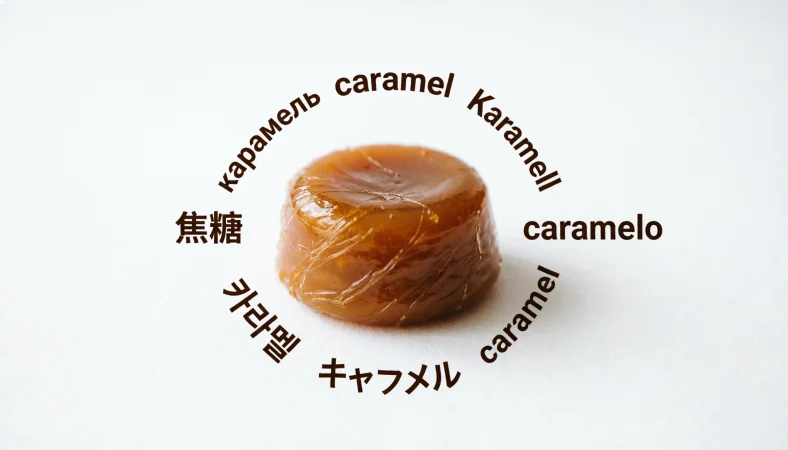
For example, caramel translations include caramelo in Spanish and Portuguese, caramello in Italian, karamel in Dutch and Turkish, карамель in Russian, and キャラメル in Japanese.
How to Say Caramel in Different Languages
The easiest way to learn how to say caramel in different languages is to focus on both the written word and a short sentence.
Simply memorizing a translation can be useful, but seeing the word in context makes it easier to remember how native speakers actually use it.
For example:
- Spanish: Me gusta el caramelo. — I like caramel.
- French: J’adore le caramel. — I love caramel.
- German: Ich mag Karamell. — I like caramel.
- Japanese: キャラメルが好きです。 — I like caramel.
- Mandarin Chinese: 我喜欢焦糖。 — I like caramel.
The examples above are especially useful for travelers, language learners, food enthusiasts, and anyone creating multilingual content.
Caramel in All Languages: What You May Notice
One interesting feature of these translations is how often the word resembles caramel in English.
Languages such as French, Dutch, Romanian, and Catalan use forms that are visually close to the English word. Other languages adapt the word to their own writing systems, producing forms such as карамель in Cyrillic scripts, كراميل in Arabic, キャラメル in Japanese, and 캐러멜 in Korean.
Mandarin Chinese is a notable example because 焦糖 is structurally different from the familiar European loanword pattern.
These differences show how food vocabulary can travel between cultures while still adapting to local pronunciation and writing systems.
Caramel Around the World
Caramel appears in countless foods and drinks around the world. It can be used in cakes, cookies, puddings, candies, ice cream, sauces, coffee drinks, and other desserts.
The exact meaning can sometimes depend on context. A word may describe caramel as a flavor, a cooked sugar ingredient, a sauce, or a candy.
That is why the practical examples in the table are useful. They show the translation as part of an everyday sentence instead of presenting an isolated word.
Tips for Learning Caramel Translations
If you are studying caramel in different languages, try these simple techniques:
- Learn the native spelling first.
- Say the word aloud several times.
- Memorize a short example sentence.
- Compare similar words across related languages.
- Practice the word when ordering desserts or drinks.
- Write the word in its native script if you are learning that writing system.
A short phrase such as “I like caramel” can be easier to remember than a dictionary entry by itself.
Why Are Caramel Words Similar in Many Languages?
Many European languages use words that are historically or phonetically related to forms of caramel. International food culture, trade, culinary terminology, and language contact have helped similar forms spread across borders.
However, similarity does not mean every language uses exactly the same word or pronunciation. Some languages have traditional culinary terms, while others commonly use an adapted foreign word.
This is why checking the local context is important when using caramel translations.
Frequently Asked Questions About Caramel in Different Languages
1. How do you say caramel in different languages?
There are many forms of the word. Examples include caramelo in Spanish, caramel in French, Karamell in German, karamel in Turkish, карамель in Russian, 焦糖 in Mandarin Chinese, and キャラメル in Japanese.
2. What is caramel called in Spanish?
Caramel is commonly called caramelo in Spanish. For example, “Me gusta el caramelo” means “I like caramel.”
3. What is caramel called in French?
In French, caramel is caramel. A common sentence is “J’adore le caramel,” meaning “I love caramel.”
4. What is caramel called in Japanese?
In Japanese, caramel is commonly written キャラメル. The word is used for caramel-flavored foods, sweets, and other products.
5. Why does caramel sound similar in so many languages?
Many languages use words that are historically related or adapted from similar international culinary vocabulary. As the ingredient and flavor became popular around the world, related forms of the word spread and were adjusted to local spelling and pronunciation.
Conclusion
Learning how to say caramel in different languages is a simple way to explore how food vocabulary connects cultures.
From caramelo in Spanish to 焦糖 in Mandarin Chinese and キャラメル in Japanese, the word takes many interesting forms around the world.
if you need caramel in all languages for language learning, travel, writing, or curiosity, these 70 translations provide a practical starting point for discovering caramel around the world.

I am Danny James, an Administrator at LingoHives, passionate about languages, communication, and cultural diversity. I enjoy helping people discover languages, understand words, and connect with different cultures through simple, useful, and engaging content.