The word “alone” is simple in English, but its translation can change depending on gender, grammar, context, and whether you mean being physically by yourself or feeling lonely.
If you want to know how to say alone in different languages, this guide gives you 70 useful translations with easy pronunciation and practical examples.
if you’re learning languages, writing a caption, traveling, studying vocabulary, or exploring “alone” in all languages, the table below makes the translations easy to compare.
Alone in Different Languages
| # | Language | Native phrase | Easy English pronunciation | Example sentence | English meaning |
|---|---|---|---|---|---|
| 1 | Spanish | solo | SOH-loh | Estoy solo. | I am alone. |
| 2 | French | seul | suhl | Je suis seul. | I am alone. |
| 3 | German | allein | ah-LINE | Ich bin allein. | I am alone. |
| 4 | Italian | solo | SOH-loh | Sono solo. | I am alone. |
| 5 | Portuguese | sozinho | soh-ZEEN-yoo | Estou sozinho. | I am alone. |
| 6 | Dutch | alleen | ah-LAYN | Ik ben alleen. | I am alone. |
| 7 | Swedish | ensam | EN-sam | Jag är ensam. | I am alone. |
| 8 | Norwegian | alene | ah-LEH-neh | Jeg er alene. | I am alone. |
| 9 | Danish | alene | ah-LEH-neh | Jeg er alene. | I am alone. |
| 10 | Finnish | yksin | OOK-sin | Olen yksin. | I am alone. |
| 11 | Icelandic | einn | AYT-n | Ég er einn. | I am alone. |
| 12 | Irish | aonair | EE-nir | Tá mé i m’aonar. | I am alone. |
| 13 | Welsh | ar fy mhen fy hun | ar vee men vee heen heen | Rwyf ar fy mhen fy hun. | I am alone. |
| 14 | Scottish Gaelic | aonar | EE-nar | Tha mi nam aonar. | I am alone. |
| 15 | Polish | sam | sahm | Jestem sam. | I am alone. |
| 16 | Czech | sám | sahm | Jsem sám. | I am alone. |
| 17 | Slovak | sám | sahm | Som sám. | I am alone. |
| 18 | Slovenian | sam | sahm | Sam sem. | I am alone. |
| 19 | Croatian | sam | sahm | Sam sam. | I am alone. |
| 20 | Serbian | sam | sahm | Sam sam. | I am alone. |
| 21 | Bosnian | sam | sahm | Sam sam. | I am alone. |
| 22 | Bulgarian | сам | sahm | Аз съм сам. | I am alone. |
| 23 | Macedonian | сам | sahm | Јас сум сам. | I am alone. |
| 24 | Russian | один | ah-DEEN | Я один. | I am alone. |
| 25 | Ukrainian | сам | sahm | Я сам. | I am alone. |
| 26 | Belarusian | адзін | ah-DZEEN | Я адзін. | I am alone. |
| 27 | Lithuanian | vienas | VYEH-nas | Aš esu vienas. | I am alone. |
| 28 | Latvian | viens | VYENS | Es esmu viens. | I am alone. |
| 29 | Estonian | üksi | UHK-see | Ma olen üksi. | I am alone. |
| 30 | Hungarian | egyedül | EH-gyed-ool | Egyedül vagyok. | I am alone. |
| 31 | Romanian | singur | SEEN-goor | Sunt singur. | I am alone. |
| 32 | Albanian | vetëm | VEH-tuhm | Jam vetëm. | I am alone. |
| 33 | Greek | μόνος | MOH-nos | Είμαι μόνος. | I am alone. |
| 34 | Turkish | yalnız | YAHN-luhz | Yalnızım. | I am alone. |
| 35 | Maltese | waħdu | WAH-doo | Jien waħdi. | I am alone. |
| 36 | Arabic | وحدي | WAH-dee | أنا وحدي. | I am alone. |
| 37 | Hebrew | לבד | leh-VAHD | אני לבד. | I am alone. |
| 38 | Persian | تنها | tan-HA | من تنها هستم. | I am alone. |
| 39 | Hindi | अकेला | uh-KAY-lah | मैं अकेला हूँ। | I am alone. |
| 40 | Urdu | اکیلا | uh-KAY-lah | میں اکیلا ہوں۔ | I am alone. |
| 41 | Bengali | একা | EH-kah | আমি একা। | I am alone. |
| 42 | Punjabi | ਇਕੱਲਾ | ih-KALL-ah | ਮੈਂ ਇਕੱਲਾ ਹਾਂ। | I am alone. |
| 43 | Gujarati | એકલો | EK-loh | હું એકલો છું. | I am alone. |
| 44 | Marathi | एकटा | EH-kuh-tah | मी एकटा आहे. | I am alone. |
| 45 | Nepali | एक्लै | EK-lai | म एक्लै छु। | I am alone. |
| 46 | Sinhala | තනියම | tah-nee-yah-ma | මම තනියම ඉන්නවා. | I am alone. |
| 47 | Tamil | தனியாக | tah-nee-YAH-gah | நான் தனியாக இருக்கிறேன். | I am alone. |
| 48 | Telugu | ఒంటరిగా | on-tah-ree-GAH | నేను ఒంటరిగా ఉన్నాను. | I am alone. |
| 49 | Kannada | ಒಬ್ಬಂಟಿಯಾಗಿ | ob-ban-ti-YAH-gee | ನಾನು ಒಬ್ಬಂಟಿಯಾಗಿ ಇದ್ದೇನೆ. | I am alone. |
| 50 | Malayalam | ഒറ്റയ്ക്ക് | OT-tak-kye | ഞാൻ ഒറ്റയ്ക്കാണ്. | I am alone. |
| 51 | Thai | คนเดียว | khon-diao | ฉันอยู่คนเดียว | I am alone. |
| 52 | Vietnamese | một mình | moot minh | Tôi ở một mình. | I am alone. |
| 53 | Indonesian | sendirian | sen-dee-REE-an | Saya sendirian. | I am alone. |
| 54 | Malay | bersendirian | ber-sen-dee-REE-an | Saya bersendirian. | I am alone. |
| 55 | Filipino | mag-isa | mag-EE-sa | Mag-isa ako. | I am alone. |
| 56 | Chinese (Mandarin) | 独自 | doo-ZH | 我独自一人。 | I am alone. |
| 57 | Japanese | 一人で | hee-TOH-ree deh | 一人でいます。 | I am alone. |
| 58 | Korean | 혼자 | HON-jah | 저는 혼자예요. | I am alone. |
| 59 | Mongolian | ганцаараа | gants-TSAH-rah | Би ганцаараа байна. | I am alone. |
| 60 | Georgian | მარტო | MAR-toh | მე მარტო ვარ. | I am alone. |
| 61 | Armenian | մենակ | meh-NAHK | Ես մենակ եմ. | I am alone. |
| 62 | Azerbaijani | tək | tek | Mən təkəm. | I am alone. |
| 63 | Kazakh | жалғыз | zhal-GHUHZ | Мен жалғызбын. | I am alone. |
| 64 | Uzbek | yolg‘iz | yol-GHEEZ | Men yolg‘izman. | I am alone. |
| 65 | Swahili | peke yangu | PEH-keh YAHN-goo | Niko peke yangu. | I am alone. |
| 66 | Afrikaans | alleen | ah-LAYN | Ek is alleen. | I am alone. |
| 67 | Zulu | ngedwa | ngeh-DWEH | Ngedwa lapha. | I am alone here. |
| 68 | Xhosa | ndedwa | n-DEH-dwah | Ndedwa apha. | I am alone here. |
| 69 | Latin | solus | SOH-loos | Solus sum. | I am alone. |
| 70 | Esperanto | sola | SOH-lah | Mi estas sola. | I am alone. |
Note: Some languages change the form of “alone” according to gender, number, or grammatical context. The examples above use common first-person forms where appropriate.
How to Say “Alone” in Different Languages
The most useful way to learn alone translations is to remember the phrase together with a complete sentence rather than memorizing a single isolated word.
For example, Spanish uses solo, French uses seul, German uses allein, and Japanese commonly uses 一人で (hitori de) when describing being by oneself.
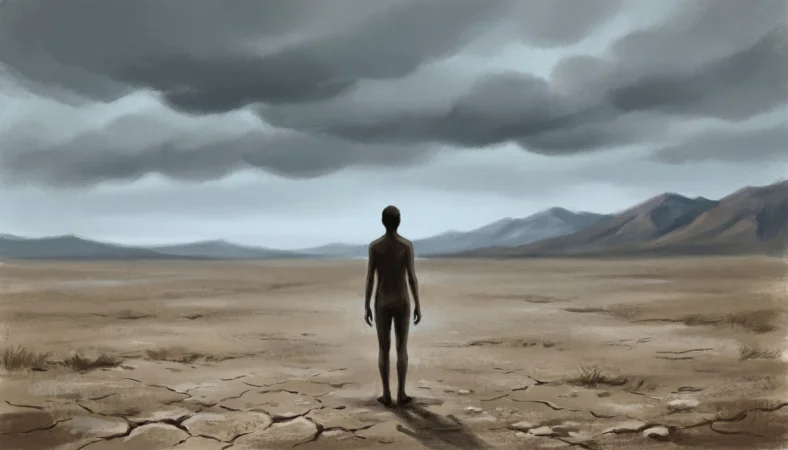
Some languages also distinguish between “alone” and “lonely.” These ideas are related but are not always interchangeable. “Alone” usually describes being without other people, while “lonely” describes an emotional feeling.
“Alone” Around the World
The translations for “alone” around the world show how differently languages express the same basic idea. Some use a single adjective, while others use an expression meaning “by myself” or “without anyone else.”
In languages such as Arabic, Hindi, Urdu, and Punjabi, grammatical gender can affect the form used by a speaker. In other languages, the same expression can work more broadly regardless of gender.
This is why learning the phrase in context is often more useful than relying on a direct dictionary translation.
Alone vs. Lonely: What Is the Difference?
“Alone” and “lonely” are not always synonyms.
Alone means being by yourself or without other people. It can be completely neutral and can even be positive.
Lonely describes sadness or emotional isolation. Someone can be alone without feeling lonely, and someone can feel lonely even when surrounded by other people.
For example:
- “I am alone at home” describes a situation.
- “I feel lonely” describes an emotion.
Understanding this difference helps you choose the right “alone” in different languages translation for your situation.
How to Use “Alone” in Everyday Conversation
When learning a new translation, focus on natural phrases rather than individual vocabulary.
Useful sentence patterns include:
- “I am alone.”
- “She is alone.”
- “He lives alone.”
- “I went there alone.”
- “I want to be alone.”
- “Are you alone?”
The exact translation can change depending on tense, gender, politeness, and sentence structure. For accurate everyday communication, learning a complete phrase is usually better than translating word-for-word.
Common Reasons People Search for “Alone” Translations
People look up how to say “alone” in different languages for many reasons. Language learners may want basic vocabulary, travelers may need practical phrases, and writers may be looking for culturally appropriate wording.
The word is also popular for social media captions, tattoos, poetry, personal writing, usernames, and language-learning projects. In these cases, checking the grammatical form is especially important because a visually attractive translation is not necessarily the form a native speaker would naturally use.
Frequently Asked Questions
1. How do you say “alone” in different languages?
“Alone” has different translations depending on the language. Examples include solo in Spanish and Italian, seul in French, allein in German, один in Russian, وحدي in Arabic, 一人で in Japanese, and 혼자 in Korean.
2. What is “alone” in all languages?
There is no single universal word for “alone.” Every language has its own expression, and some languages use different forms depending on gender, grammar, or context. The table above provides 70 commonly used translations.
3. How do you say “I am alone” in another language?
The correct phrase depends on the language. For example, Estoy solo means “I am alone” in Spanish, Ich bin allein in German, Je suis seul in French, and 私は一人です can express the idea in Japanese.
4. Is “alone” the same as “lonely” in every language?
No. Although the concepts are closely related, most languages distinguish between physically being alone and emotionally feeling lonely. Context is important when choosing a translation.
5. Which languages have gender-specific forms of “alone”?
Several languages can change the form according to the speaker’s gender. Examples include Spanish, French, Italian, Portuguese, Hindi, Urdu, Punjabi, Russian, and Greek. The appropriate form depends on the grammatical rules of the language.
Conclusion
Learning how to say alone in different languages is a simple way to expand your vocabulary while discovering how different cultures express the idea of being by yourself.
From European languages such as Spanish and French to Asian, African, and Middle Eastern languages, the translations vary in form and context.
For the most natural result, learn the complete example sentence rather than the word alone. That approach helps you understand pronunciation, grammar, and everyday usage at the same time.

I am Jimmy Michael, a language enthusiast and writer passionate about exploring different languages, words, and cultures. I create simple, useful content that helps readers understand languages better and discover new ways to communicate globally.