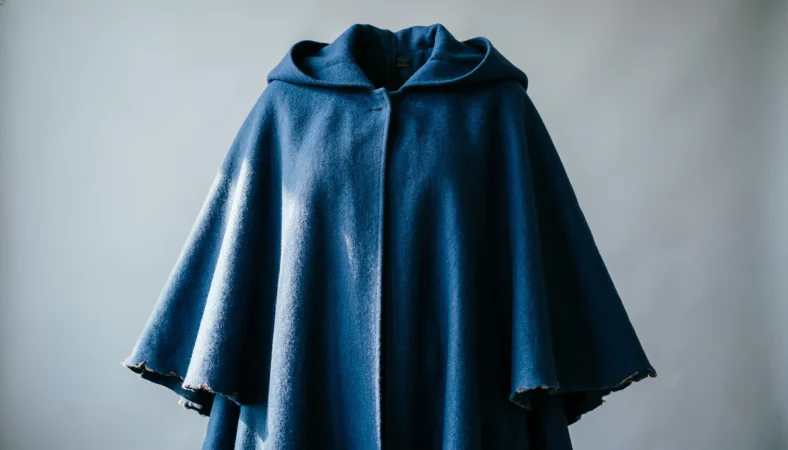
Wondering how to say “cloak” in different languages? A cloak is a loose outer garment traditionally worn over other clothing for warmth, protection, or style.
The word also appears frequently in fantasy stories, historical descriptions, games, films, and fashion.
This guide provides cloak translations in 70 languages, including the native word, an easy English pronunciation, a practical example sentence, and its English meaning.
if you are researching cloak in all languages, learning vocabulary, writing a multilingual story, or simply curious about how the word is expressed around the world, this list gives you a useful starting point.
Cloak in Different Languages
The translation of “cloak” can vary depending on the type of garment and cultural context. Some languages use a word meaning cloak directly, while others use a broader term for a cape, mantle, robe, or outer covering.
| # | Language | Native phrase | Easy English pronunciation | Example sentence | English meaning |
|---|---|---|---|---|---|
| 1 | English | cloak | klohk | He wore a black cloak. | He wore a black cloak. |
| 2 | Spanish | capa | KAH-pah | Ella lleva una capa negra. | She is wearing a black cloak. |
| 3 | French | cape | kahp | Il porte une cape noire. | He is wearing a black cloak. |
| 4 | German | Umhang | OOM-hahng | Er trägt einen schwarzen Umhang. | He is wearing a black cloak. |
| 5 | Italian | mantello | mahn-TEL-loh | Indossa un mantello nero. | He is wearing a black cloak. |
| 6 | Portuguese | capa | KAH-pah | Ele usa uma capa preta. | He wears a black cloak. |
| 7 | Dutch | mantel | MAHN-tel | Hij draagt een zwarte mantel. | He is wearing a black cloak. |
| 8 | Swedish | mantel | MAHN-tel | Han bär en svart mantel. | He is wearing a black cloak. |
| 9 | Danish | kappe | KAP-peh | Han bærer en sort kappe. | He is wearing a black cloak. |
| 10 | Norwegian | kappe | KAP-peh | Han har på seg en svart kappe. | He is wearing a black cloak. |
| 11 | Finnish | viitta | VEE-tah | Hän käyttää mustaa viittaa. | He is wearing a black cloak. |
| 12 | Icelandic | kápa | KOW-pah | Hann klæðist svartri kápu. | He is wearing a black cloak. |
| 13 | Irish | clóca | KLOH-ka | Tá clóca dubh air. | He is wearing a black cloak. |
| 14 | Welsh | clogyn | KLOG-in | Mae ganddo glogyn du. | He has a black cloak. |
| 15 | Scottish Gaelic | brat | braht | Tha brat dubh air. | He is wearing a black cloak. |
| 16 | Latin | pallium | PAL-lee-um | Pallium nigrum gerit. | He wears a black cloak. |
| 17 | Greek | μανδύας | man-THEE-as | Φοράει έναν μαύρο μανδύα. | He is wearing a black cloak. |
| 18 | Russian | плащ | plashch | Он носит черный плащ. | He wears a black cloak. |
| 19 | Ukrainian | плащ | plashch | Він носить чорний плащ. | He wears a black cloak. |
| 20 | Polish | płaszcz | pwahshch | On ma czarny płaszcz. | He has a black cloak. |
| 21 | Czech | plášť | plahshť | Má černý plášť. | He has a black cloak. |
| 22 | Slovak | plášť | plahshť | Má čierny plášť. | He has a black cloak. |
| 23 | Slovenian | plašč | plahshch | Nosi črn plašč. | He wears a black cloak. |
| 24 | Croatian | ogrtač | oh-GR-tach | On nosi crni ogrtač. | He wears a black cloak. |
| 25 | Serbian | огртач | oh-GR-tach | Он носи црни огртач. | He wears a black cloak. |
| 26 | Bosnian | ogrtač | oh-GR-tach | On nosi crni ogrtač. | He wears a black cloak. |
| 27 | Bulgarian | наметало | nah-meh-TAH-loh | Той носи черно наметало. | He wears a black cloak. |
| 28 | Macedonian | наметка | nah-MET-kah | Тој носи црна наметка. | He wears a black cloak. |
| 29 | Romanian | mantie | MAHN-tee-eh | El poartă o mantie neagră. | He is wearing a black cloak. |
| 30 | Hungarian | köpeny | KUR-peny | Fekete köpenyt visel. | He wears a black cloak. |
| 31 | Albanian | mantelë | mahn-TEH-leh | Ai vesh një mantel të zi. | He wears a black cloak. |
| 32 | Lithuanian | apsiaustas | ap-see-OWS-tas | Jis dėvi juodą apsiaustą. | He is wearing a black cloak. |
| 33 | Latvian | apmetnis | ap-MET-nis | Viņš valkā melnu apmetni. | He wears a black cloak. |
| 34 | Estonian | keep | KAYP | Ta kannab musta keepi. | He is wearing a black cloak. |
| 35 | Turkish | pelerin | peh-leh-REEN | Siyah bir pelerin giyiyor. | He is wearing a black cloak. |
| 36 | Azerbaijani | plaş | plash | O, qara plaş geyinir. | He wears a black cloak. |
| 37 | Armenian | թիկնոց | tik-NOTS | Նա սև թիկնոց է կրում։ | He is wearing a black cloak. |
| 38 | Georgian | მოსასხამი | moh-SAS-kha-mee | მას შავი მოსასხამი აცვია. | He is wearing a black cloak. |
| 39 | Persian | شنل | shen-EL | او یک شنل سیاه پوشیده است. | He is wearing a black cloak. |
| 40 | Arabic | عباءة | ah-BAH-yah | هو يرتدي عباءة سوداء. | He is wearing a black cloak. |
| 41 | Hebrew | גלימה | glee-MAH | הוא לובש גלימה שחורה. | He is wearing a black cloak. |
| 42 | Hindi | चोगा | CHOH-gah | वह काला चोगा पहनता है। | He wears a black cloak. |
| 43 | Urdu | چغہ | CHUGH-ah | وہ کالا چغہ پہنتا ہے۔ | He wears a black cloak. |
| 44 | Bengali | আলখাল্লা | al-khal-LAH | সে একটি কালো আলখাল্লা পরে। | He wears a black cloak. |
| 45 | Punjabi | ਚੋਗਾ | CHOH-gah | ਉਹ ਕਾਲਾ ਚੋਗਾ ਪਾਉਂਦਾ ਹੈ। | He wears a black cloak. |
| 46 | Gujarati | ઝભ્ભો | ZHAH-bhoh | તે કાળો ઝભ્ભો પહેરે છે. | He wears a black cloak. |
| 47 | Marathi | झगा | ZHAH-gah | तो काळा झगा घालतो. | He wears a black cloak. |
| 48 | Nepali | लबादा | lah-BAH-dah | उसले कालो लबादा लगाएको छ। | He is wearing a black cloak. |
| 49 | Tamil | மேலங்கி | MAY-lahn-gee | அவன் கருப்பு மேலங்கி அணிந்திருக்கிறான். | He is wearing a black cloak. |
| 50 | Telugu | పైవస్త్రం | PIE-vas-tram | అతను నల్లని పైవస్త్రం ధరిస్తాడు. | He wears a black cloak. |
| 51 | Kannada | ಮೇಲಂಗಿ | MAY-lahn-gee | ಅವನು ಕಪ್ಪು ಮೇಲಂಗಿ ಧರಿಸುತ್ತಾನೆ. | He wears a black cloak. |
| 52 | Malayalam | മേലങ്കി | MAY-lahn-gee | അവൻ കറുത്ത മേലങ്കി ധരിക്കുന്നു. | He wears a black cloak. |
| 53 | Sinhala | සළුව | SAH-loo-vah | ඔහු කළු සළුවක් පැළඳ සිටී. | He is wearing a black cloak. |
| 54 | Chinese | 斗篷 | dohng-peng | 他穿着黑色斗篷。 | He is wearing a black cloak. |
| 55 | Japanese | マント | man-toh | 彼は黒いマントを着ています。 | He is wearing a black cloak. |
| 56 | Korean | 망토 | mang-toh | 그는 검은 망토를 입고 있다. | He is wearing a black cloak. |
| 57 | Mongolian | нөмрөг | NUR-mrög | Тэр хар нөмрөг өмссөн. | He is wearing a black cloak. |
| 58 | Thai | เสื้อคลุม | suea-kloom | เขาสวมเสื้อคลุมสีดำ | He is wearing a black cloak. |
| 59 | Vietnamese | áo choàng | ow chahng | Anh ấy mặc một chiếc áo choàng đen. | He is wearing a black cloak. |
| 60 | Indonesian | jubah | JOO-bah | Dia memakai jubah hitam. | He is wearing a black cloak. |
| 61 | Malay | jubah | JOO-bah | Dia memakai jubah hitam. | He is wearing a black cloak. |
| 62 | Filipino | balabal | bah-lah-BAHL | Nagsuot siya ng itim na balabal. | He wore a black cloak. |
| 63 | Swahili | joho | JOH-hoh | Amevaa joho jeusi. | He is wearing a black cloak. |
| 64 | Afrikaans | mantel | MAHN-tel | Hy dra ‘n swart mantel. | He is wearing a black cloak. |
| 65 | Zulu | ingubo | in-GOO-boh | Ugqoke ingubo emnyama. | He is wearing a black cloak. |
| 66 | Xhosa | ingubo | in-GOO-boh | Unxibe ingubo emnyama. | He is wearing a black cloak. |
| 67 | Hausa | alkyabba | al-KYAB-bah | Ya sa alkyabbar baki. | He is wearing a black cloak. |
| 68 | Yoruba | aṣọ àwọ̀n | ah-SHAW ah-WAWN | Ó wọ aṣọ àwọ̀n dúdú. | He is wearing a black cloak. |
| 69 | Igbo | uwe mwụda | oo-WEH MOO-dah | Ọ na-eyi uwe mwụda ojii. | He is wearing a black cloak. |
| 70 | Māori | korowai | koh-roh-WAI | Kei te mau ia i te korowai. | He is wearing a cloak. |
How to Say “Cloak” in Different Languages
The English word cloak does not always have a perfect one-to-one translation. In some languages, the closest word can also mean a mantle, cape, robe, overcoat, or traditional outer garment.
For example, Spanish capa, Portuguese capa, French cape, and Japanese マント are commonly associated with cloak-like garments. In other languages, the translated word can have a broader cultural meaning.
This is important when using cloak translations for travel, creative writing, language learning, or historical research. Context can determine which word sounds most natural.
Cloak in All Languages: What the Translations Have in Common
Across different regions, words for cloak often describe something worn over the body rather than a tightly fitted item of clothing.
Several languages have words connected with traditional robes or outer coverings. Others use terms that are closer to a cape. This reflects the fact that cloak-like garments have developed differently across cultures.
A cloak may be worn for:
- Warmth and protection from weather
- Traditional or ceremonial purposes
- Historical clothing
- Religious or formal occasions
- Fantasy costumes and storytelling
- Fashion and theatrical performances
Cloak Around the World
Cloak-like clothing has appeared in many cultures throughout history. Long outer garments were practical because they could cover other clothing while providing protection against cold, wind, and rain.
The concept also remains popular in modern entertainment. Fantasy novels, films, role-playing games, historical dramas, and costumes often feature characters wearing distinctive cloaks.
Because of this, knowing how to say cloak around the world can be useful beyond ordinary language learning. It can help with multilingual writing, character design, costume research, and cultural vocabulary.
Cloak vs. Cape, Robe, Mantle, and Coat
Although these words are sometimes used interchangeably, they can describe different types of clothing.
A cloak is generally a loose outer garment that hangs from the shoulders. A cape is usually shorter and may cover only part of the body. A robe is often a longer garment that can be worn as a primary item of clothing.
A mantle can refer to a loose covering or traditional outer garment, while a coat is usually a more structured piece of clothing with sleeves.
The exact distinction varies by language and culture, so the best translation depends on the context.
How to Use These Cloak Translations
If you are learning a language, start by remembering the native word and then practice it in a short sentence. Using a word in context is generally more useful than memorizing a translation by itself.
If you are writing a story or translating a fantasy character description, check whether the local word suggests a cloak, cape, robe, or another outer garment. This can make the wording feel more natural to native speakers.
For everyday language, cultural context matters just as much as the dictionary definition.
Frequently Asked Questions
1. How do you say “cloak” in different languages?
“Cloak” has different translations depending on the language. Examples include capa in Spanish, Umhang in German, mantello in Italian, плащ in Russian, 斗篷 in Chinese, マント in Japanese, and 망토 in Korean.
2. What is the Spanish word for cloak?
The common Spanish word for cloak is capa. It can also refer to a cape, depending on the context.
3. What is “cloak” in Japanese?
The Japanese word commonly used for a cloak is マント. It is especially familiar in descriptions of fantasy, costumes, and cape-like outer garments.
4. Is cloak the same as cape?
Not always. A cloak is generally a loose outer garment covering much of the body, while a cape is often shorter and may cover only the shoulders and upper body. However, the distinction varies between languages and cultures.
5. Why are there different words for cloak around the world?
Languages developed their own vocabulary based on local clothing traditions, history, climate, and culture. As a result, the closest translation of “cloak” may refer to a cape, mantle, robe, or another type of outer garment.
Conclusion
Learning cloak in different languages reveals how a simple clothing word can have several cultural meanings. From European terms such as capa, Umhang, and mantello to Asian words such as 斗篷, マント, and 망토, the concept appears in many forms around the world.
Use the 70-language table as a quick reference for how to say cloak in different languages, language learning, multilingual writing, and understanding cloak in all languages.

I am Danny James, an Administrator at LingoHives, passionate about languages, communication, and cultural diversity. I enjoy helping people discover languages, understand words, and connect with different cultures through simple, useful, and engaging content.