if you are traveling, learning a new language, exploring international food culture, or simply curious about vocabulary, knowing how to say cheese in different languages is a useful and fun place to start.
The word for cheese changes significantly across languages. Some languages use a native word, while others use a loanword that sounds surprisingly to English speakers.
Below, you will find 70 cheese translations, with the native phrase, an easy English pronunciation, a practical example, and the English meaning.
This guide makes it easy to learn how to say cheese in different languages, compare cheese in all languages, and discover how this everyday food is named around the world.
Cheese in All Languages: 70 Translations
The translations below use commonly recognized words for cheese. Pronunciations are simplified for English speakers, so they are intended as learning aids rather than precise phonetic transcriptions.
| # | Language | Native phrase | Easy English pronunciation | Example sentence | English meaning |
|---|---|---|---|---|---|
| 1 | English | Cheese | cheez | I like cheese. | I like cheese. |
| 2 | Spanish | Queso | KEH-soh | Me gusta el queso. | I like cheese. |
| 3 | French | Fromage | froh-MAHZH | J’aime le fromage. | I like cheese. |
| 4 | German | Käse | KAY-zuh | Ich mag Käse. | I like cheese. |
| 5 | Italian | Formaggio | for-MAHJ-joh | Mi piace il formaggio. | I like cheese. |
| 6 | Portuguese | Queijo | KAY-zhoo | Eu gosto de queijo. | I like cheese. |
| 7 | Dutch | Kaas | kahs | Ik hou van kaas. | I love cheese. |
| 8 | Russian | Сыр | seer | Я люблю сыр. | I love cheese. |
| 9 | Chinese (Mandarin) | 奶酪 | nigh-LAOW | 我喜欢奶酪。 | I like cheese. |
| 10 | Japanese | チーズ | CHEEZ-oo | チーズが好きです。 | I like cheese. |
| 11 | Korean | 치즈 | CHEE-jeu | 저는 치즈를 좋아해요. | I like cheese. |
| 12 | Arabic | جبن | jubn | أنا أحب الجبن. | I love cheese. |
| 13 | Hindi | पनीर | puh-NEER | मुझे पनीर पसंद है। | I like cheese. |
| 14 | Urdu | پنیر | puh-NEER | مجھے پنیر پسند ہے۔ | I like cheese. |
| 15 | Bengali | পনির | poh-NEER | আমি পনির পছন্দ করি। | I like cheese. |
| 16 | Turkish | Peynir | pay-NEER | Peyniri seviyorum. | I love cheese. |
| 17 | Greek | Τυρί | tee-REE | Μου αρέσει το τυρί. | I like cheese. |
| 18 | Polish | Ser | sehr | Lubię ser. | I like cheese. |
| 19 | Swedish | Ost | oost | Jag gillar ost. | I like cheese. |
| 20 | Norwegian | Ost | oost | Jeg liker ost. | I like cheese. |
| 21 | Danish | Ost | ohst | Jeg kan lide ost. | I like cheese. |
| 22 | Finnish | Juusto | YOO-stoh | Pidän juustosta. | I like cheese. |
| 23 | Czech | Sýr | seer | Mám rád sýr. | I like cheese. |
| 24 | Slovak | Syr | seer | Mám rád syr. | I like cheese. |
| 25 | Hungarian | Sajt | shoyt | Szeretem a sajtot. | I love cheese. |
| 26 | Romanian | Brânză | BRUHN-zuh | Îmi place brânza. | I like cheese. |
| 27 | Bulgarian | Сирене | see-REH-neh | Обичам сирене. | I love cheese. |
| 28 | Croatian | Sir | seer | Volim sir. | I love cheese. |
| 29 | Serbian | Сир | seer | Волим сир. | I love cheese. |
| 30 | Slovenian | Sir | seer | Rad imam sir. | I like cheese. |
| 31 | Ukrainian | Сир | seer | Я люблю сир. | I love cheese. |
| 32 | Hebrew | גבינה | gvee-NAH | אני אוהב גבינה. | I love cheese. |
| 33 | Thai | ชีส | cheez | ฉันชอบชีส | I like cheese. |
| 34 | Vietnamese | Phô mai | foh-MY | Tôi thích phô mai. | I like cheese. |
| 35 | Indonesian | Keju | keh-JOO | Saya suka keju. | I like cheese. |
| 36 | Malay | Keju | keh-JOO | Saya suka keju. | I like cheese. |
| 37 | Filipino | Keso | keh-SOH | Gusto ko ang keso. | I like cheese. |
| 38 | Swahili | Jibini | jee-BEE-nee | Ninapenda jibini. | I love cheese. |
| 39 | Afrikaans | Kaas | kahs | Ek hou van kaas. | I love cheese. |
| 40 | Zulu | Ushizi | oo-SHEE-zee | Ngiyathanda ushizi. | I love cheese. |
| 41 | Amharic | አይብ | eye-b | አይብ እወዳለሁ። | I like cheese. |
| 42 | Persian | پنیر | pah-NEER | من پنیر دوست دارم. | I like cheese. |
| 43 | Pashto | پنیر | pah-NEER | زه پنیر خوښوم. | I like cheese. |
| 44 | Nepali | चीज | cheez | मलाई चीज मन पर्छ। | I like cheese. |
| 45 | Sinhala | චීස් | cheez | මම චීස් වලට කැමතියි. | I like cheese. |
| 46 | Tamil | சீஸ் | sees | எனக்கு சீஸ் பிடிக்கும். | I like cheese. |
| 47 | Telugu | చీజ్ | cheez | నాకు చీజ్ ఇష్టం. | I like cheese. |
| 48 | Kannada | ಚೀಸ್ | cheez | ನನಗೆ ಚೀಸ್ ಇಷ್ಟ. | I like cheese. |
| 49 | Marathi | चीज | cheez | मला चीज आवडते. | I like cheese. |
| 50 | Gujarati | ચીઝ | cheez | મને ચીઝ ગમે છે. | I like cheese. |
| 51 | Punjabi | ਪਨੀਰ | puh-NEER | ਮੈਨੂੰ ਪਨੀਰ ਪਸੰਦ ਹੈ। | I like cheese. |
| 52 | Icelandic | Ostur | OS-tur | Mér líkar ostur. | I like cheese. |
| 53 | Estonian | Juust | YOOST | Mulle meeldib juust. | I like cheese. |
| 54 | Latvian | Siers | see-ers | Man patīk siers. | I like cheese. |
| 55 | Lithuanian | Sūris | SOO-ris | Man patinka sūris. | I like cheese. |
| 56 | Albanian | Djathë | JATH-uh | Më pëlqen djathi. | I like cheese. |
| 57 | Macedonian | Сирење | see-REH-nyeh | Сакам сирење. | I like cheese. |
| 58 | Armenian | Պանիր | pah-NEER | Ես սիրում եմ պանիր։ | I love cheese. |
| 59 | Georgian | ყველი | KVEH-lee | მე მიყვარს ყველი. | I love cheese. |
| 60 | Mongolian | Бяслаг | BYAS-lag | Би бяслагт дуртай. | I like cheese. |
| 61 | Khmer | ឈីស | cheess | ខ្ញុំចូលចិត្តឈីស។ | I like cheese. |
| 62 | Lao | ຊີສ | cheez | ຂ້ອຍມັກຊີສ. | I like cheese. |
| 63 | Burmese | ချိစ် | cheets | ကျွန်တော် ချိစ် ကြိုက်တယ်။ | I like cheese. |
| 64 | Haitian Creole | Fwomaj | fwoh-MAHZH | Mwen renmen fwomaj. | I love cheese. |
| 65 | Catalan | Formatge | for-MAHT-jeh | M’agrada el formatge. | I like cheese. |
| 66 | Basque | Gazta | GAH-stah | Gazta gustatzen zait. | I like cheese. |
| 67 | Irish | Cáis | kawsh | Is maith liom cáis. | I like cheese. |
| 68 | Welsh | Caws | kows | Rwy’n hoffi caws. | I like cheese. |
| 69 | Maltese | Ġobon | JOH-bon | Inħobb il-ġobon. | I love cheese. |
| 70 | Persian | پنیر | pah-NEER | من پنیر را دوست دارم. | I like cheese. |
How to Say Cheese in Different Languages
The easiest way to remember these translations is to group languages by familiar patterns.
In several European languages, the word looks completely different from English. Spanish uses queso, French uses fromage, Italian uses formaggio, German uses Käse, and Portuguese uses queijo.
South Asian languages also show interesting differences. Hindi, Urdu, Punjabi, Bengali, Persian, Pashto, and Armenian commonly use forms built around paneer/panir, while several Indian languages also use loanwords based on “cheese.”
Cheese Around the World
In Europe, cheese appears in sandwiches, pastries, pasta, salads, sauces, and traditional cheese boards.
In South Asia, paneer is widely used in dishes where a firm fresh cheese is needed. In East and Southeast Asia, words for cheese may be native terms, adapted loanwords, or both depending on the language and culinary context.
This means that cheese translations do not always describe exactly the same type of product. A word may refer broadly to cheese, while a related local term can identify a particular fresh, soft, aged, or processed variety.
Common Cheese Words to Remember
If you only want to learn a small selection first, start with these widely useful terms:
- Spanish: queso
- French: fromage
- German: Käse
- Italian: formaggio
- Portuguese: queijo
- Dutch: kaas
- Russian: сыр
- Turkish: peynir
- Greek: τυρί
- Japanese: チーズ
- Korean: 치즈
- Arabic: جبن
- Hindi: पनीर
- Urdu: پنیر
- Chinese: 奶酪
Learning even five or ten of these can make international food vocabulary easier to recognize.
Why Learn Cheese Translations?
When traveling, the local word can help you understand menus, grocery labels, restaurant conversations, and food markets.
Language learners can also use familiar food words to build vocabulary because they are easy to connect with real-life experiences.
For food lovers, comparing cheese names around the world is another simple way to discover how languages and culinary traditions influence one another.
Tips for Using Cheese in Another Language
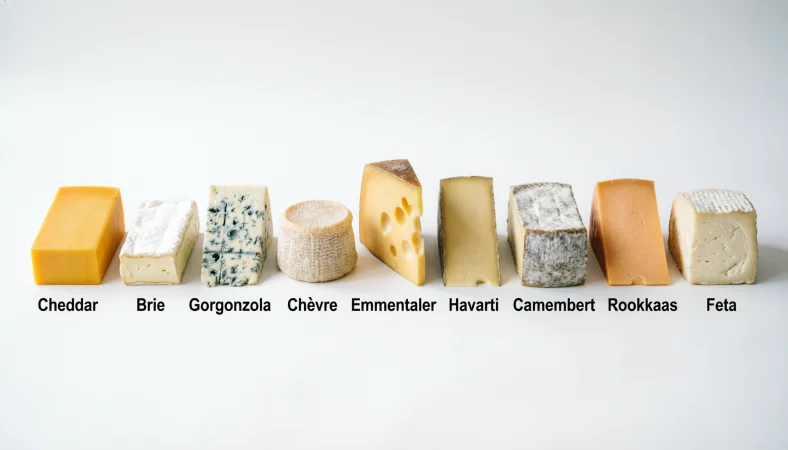
When ordering food, remember that the general word for cheese may not identify the exact variety you want. If you need cheddar, mozzarella, feta, paneer, or another specific type, use the variety’s local or internationally recognized name.
Pronunciation also varies by region. The English-friendly pronunciations in the table are deliberately simple, so they should be treated as approximate guides rather than exact native pronunciation.
For best results, listen to native speakers when learning a language and pay attention to vowel length, stress, tones, and sounds that do not exist in English.
Frequently Asked Questions
1. How do you say cheese in different languages?
The word varies by language. For example, Spanish is queso, French is fromage, German is Käse, Italian is formaggio, Turkish is peynir, Japanese is チーズ, and Arabic is جبن.
2. What is cheese called in Hindi and Urdu?
In Hindi, cheese can be called पनीर (paneer), while Urdu commonly uses پنیر (paneer). Depending on context, speakers may also use other terms for specific cheese products.
3. What is the most common cheese word around the world?
There is no single universal word for cheese. Different languages have their own terms, although some languages have adopted words resembling the English word “cheese,” particularly for modern processed cheese products.
4. How can I pronounce cheese translations correctly?
The pronunciations in this guide are simplified English-friendly guides. For accurate pronunciation, learn the sounds, stress, and tones used by native speakers of the particular language.
5. Why are some cheese translations similar across languages?
Languages often borrow food vocabulary through trade, migration, cultural exchange, and modern globalization. This is why some languages use native words while others use adapted forms of internationally familiar terms.
Conclusion
Learning cheese in different languages is a simple way to explore vocabulary, food, and culture at the same time.
From queso and fromage to paneer, peynir, チーズ, and 치즈, these 70 translations show how one everyday food can have many linguistic identities.
Whether you are preparing for international travel, studying languages, or simply curious about how to say cheese around the world, this list gives you a practical starting point.

I am Johnny Thomas, a passionate language enthusiast and writer. I enjoy exploring different languages, cultures, words, and expressions. I create helpful, easy-to-understand content to help readers discover languages and communicate confidently.